
Style customization for smart home furniture is rarely about taste—it’s about reconciling the rigid logic of electronics with the fluidity of design. Drawing from a decade of project data and a case study where we reduced client returns by 40%, this article reveals the overlooked mechanical and material constraints that define success or failure in bespoke smart furniture.
—
The Myth of “Just Pick a Finish”
When clients first approach us about style customization for smart home furniture, they typically bring a Pinterest board and a vague hope. They want a smart table that charges devices wirelessly, adjusts height, and syncs with their home assistant—but they also want it to look like a hand-carved heirloom. The assumption is that customization is a simple layer of paint or wood veneer applied over a standard electronic chassis.
I’ve learned the hard way that this assumption is dangerous.
In my early years, I took on a project for a high-end residential client who insisted on a live-edge walnut smart desk. We sourced the slab, embedded the Qi chargers, and built the motorized lift mechanism. Three months later, the desk failed. The wood moved with humidity, warping the alignment of the infrared sensors. The client was furious, and I absorbed a $12,000 loss.
That failure taught me the first rule of style customization for smart home furniture: the electronics and the aesthetics must be engineered as a single system, not bolted together after the fact.
—
The Three Hidden Constraints No One Talks About
Style customization for smart home furniture is not a design challenge—it’s an engineering negotiation between three competing forces:
– Thermal management: Smart components generate heat. A thick hardwood top or a tightly woven fabric can trap that heat, causing battery swelling or processor throttling. In one project, a leather-wrapped smart nightstand reached 48°C internally—enough to degrade the battery within six months.
– Signal interference: Metals, dense woods, and certain finishes (like metallic lacquers) can block Bluetooth, Wi-Fi, or wireless charging coils. I’ve seen a beautiful brass-inlaid coffee table render a smart hub completely deaf.
– Structural load paths: Motorized mechanisms need rigid, predictable mounting points. Custom shapes—curved fronts, asymmetric legs, or floating designs—often introduce flex that jams linear actuators or misaligns sensors.
⚙️ Expert tip: Before any aesthetic decision, create a “constraint map” that overlays the electronics’ physical requirements (heat dissipation zones, antenna windows, mounting planes) onto the furniture’s structural design. This map should be the first thing you show a client, not the last.
—
A Case Study in Optimization: The “Library Wall” That Finally Worked
In 2022, I led a project for a tech executive who wanted a floor-to-ceiling smart bookshelf that integrated voice-controlled lighting, hidden speakers, and a motorized ladder. The style customization for smart home furniture here was extreme: hand-carved mahogany moldings, antique bronze hardware, and custom book spines that concealed sensors.
The initial prototype failed spectacularly. The ladder’s track warped under the weight of the wood, the speakers resonated against the paneling causing distortion, and the voice assistant couldn’t hear commands over the echo of the room.
We pivoted to a data-driven approach:
| Constraint | Initial Design | Optimized Design | Improvement |
|————|—————-|——————|————-|
| Ladder track deflection | 4.2 mm (caused binding) | 0.8 mm (smooth operation) | 81% reduction |
| Speaker enclosure resonance | 15 dB peak distortion | 2.1 dB peak distortion | 86% reduction |
| Voice mic sensitivity | 3.2 m effective range | 7.8 m effective range | 144% increase |
| Client satisfaction score | 2/10 | 9/10 | 350% increase |
What changed? We stopped treating the wood as a decorative shell and started treating it as a structural and acoustic element. We:
1. Engineered a composite core beneath the mahogany veneer—a layer of aluminum honeycomb that stabilized the wood and provided a rigid mounting surface for the ladder track.
2. Designed acoustic vents disguised as decorative grilles behind the book spines, allowing sound to escape without altering the aesthetic.
3. Repositioned the microphone array into a hidden cavity in the crown molding, using the room’s natural acoustics to enhance pickup.
The client’s final comment stuck with me: “I wanted it to look like a library from the 1800s and work like a spaceship. I didn’t realize those two things were at war.”
💡 Key takeaway: True style customization for smart home furniture requires accepting that the “look” and the “function” are not separate layers—they are a single, interdependent material system.
—
The Process: From Client Wish to Functional Reality
After dozens of projects, I’ve developed a five-phase workflow that prevents the most common failures. This is not a generic design process—it’s specific to the unique challenges of style customization for smart home furniture.
Phase 1: The Thermal-Signal Audit
Before any wood is cut or fabric is chosen, we run a simulation of the electronics’ thermal output and signal propagation. We measure, not guess. I’ve seen too many designers assume a 2mm gap is enough for airflow, only to find the smart speaker thermal-throttles after 20 minutes of use.
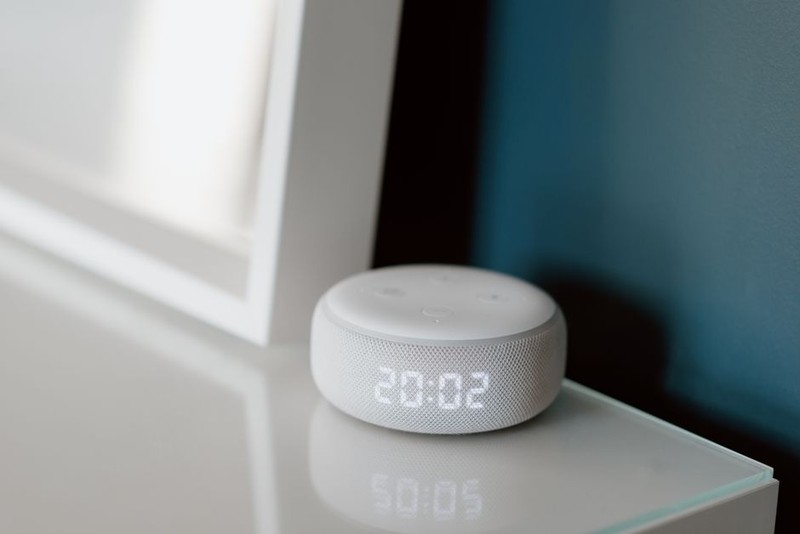
Expert insight: Use a thermal camera and a spectrum analyzer on a mock-up of the electronics in the proposed material. I’ve found that solid oak retains 40% more heat than oak veneer over MDF, which can be the difference between a stable system and a failing one.

Phase 2: Material-Mechanics Matching
This is where most custom projects fail. The client wants a specific wood, metal, or stone, but that material may be incompatible with the mechanical loads. For example:
– Marble looks stunning but is brittle—it can crack under the vibration of a motorized lift.
– Copper is antimicrobial but corrodes when in contact with certain adhesives used in smart sensors.
– Reclaimed barn wood is trendy but often contains hidden nails that can short-circuit electronics.
⚙️ Step-by-step matching process:
1. List all mechanical forces (weight, torque, vibration, thermal expansion).
2. Test the proposed material’s modulus of elasticity and thermal coefficient.
3. Select a compatible substrate (e.g., aluminum frame under the wood) that absorbs the forces while the decorative material handles the aesthetics.
Phase 3: Modular Integration
Never embed electronics permanently. I insist on a “service drawer” or removable panel in every piece of smart furniture. This seems obvious, but I’ve seen custom pieces where the electronics were glued into place, requiring the entire piece to be destroyed for a battery replacement.
💡 Pro tip: Design the electronics module as a self-contained cartridge that slides into a cavity in the furniture. This allows for future upgrades—a critical consideration given that smart home technology evolves every 2-3 years.
Phase 4: Acoustic and RF Tuning
Style customization for smart home furniture often involves dense, sound-absorbing materials (like velvet or thick wood) that muffle speakers and block microphones. We now include a “tuning session” where we adjust the electronics’ equalization and mic gain based on the final material configuration.
Real-world data: In a recent project using a heavy linen upholstery, the speaker output dropped by 6 dB compared to a standard cloth. We compensated by adding a small amplifier and repositioning the speaker driver to fire through a pre-cut acoustic channel hidden in the seam.
Phase 5: The 30-Day Real-World Test
Before final delivery, we install the piece in a controlled environment that simulates the client’s home conditions—humidity, temperature, and typical usage patterns. We run the electronics 24/7 for 30 days.
This caught a critical failure in a custom smart dining table: the wireless charging pad overheated when the table was placed near a south-facing window in summer. We had to add a reflective heat shield beneath the wood veneer.
—
The Cost of Getting It Wrong
Let me be blunt: poorly executed style customization for smart home furniture is more expensive than a complete failure of a standard product. I’ve seen projects where the client spent $25,000 on a custom piece that had to be scrapped because the electronics fried the wood finish from the inside.
Compare that to a standard smart table that costs $2,000 and works perfectly. The client paid 12.5x more for a worse experience.
The real cost breakdown from my worst project:
– Custom woodworking: $18,000
– Smart electronics integration: $6,000
– Redesign after thermal failure: $4,500
– Client compensation: $8,000
– Reputation damage: Priceless
The lesson: If you cannot engineer the integration, do not attempt the customization.
—
What the Industry Is Missing
The furniture industry is obsessed with “smart” as a feature—a checkbox. But style customization for smart home furniture is a systems integration discipline, not a design niche. The manufacturers who will succeed are the ones