
Forget the one-size-fits-all approach. This article dives into the hidden challenge of engineering custom coffee tables for modular homes, where rigid geometry meets fluid living. I’ll share a data-backed framework and a real-world case study that reduced material waste by 22% and solved the “floating island” problem, offering you a blueprint for furniture that truly anchors a dynamic space.
Content:
I’ve spent two decades in the furniture trade, building pieces for sprawling estates and minimalist lofts. But nothing has humbled me quite like the modular home. These aren’t trailers; they’re precision-engineered living pods, designed for efficiency, portability, and a specific, often unforgiving, geometry. The coffee table, that humble anchor of the living room, becomes a profound challenge here. It’s not just about style; it’s about spatial physics.
The common mistake? Treating a modular home’s interior like a scaled-down version of a traditional house. You can’t. The walls are thinner, the load-bearing points are fewer, and the floor plan is a carefully choreographed grid. A standard, heavy, rectangular coffee table doesn’t just look wrong; it disrupts the flow of the entire module.
The Hidden Challenge: The “Floating Island” Problem
The most critical, and often overlooked, issue in a modular home is what I call the “Floating Island” problem. Because modular homes are built on a chassis and designed for transport, the central living area often lacks a structural floor point for a heavy, fixed piece of furniture. You can’t just drop a 200-pound slab of marble in the middle of the room without reinforcing the subfloor—a costly and often impossible retrofit after the module is placed.
Furthermore, these homes are designed for multi-functionality. A living room in the morning might be a dining room by evening. A coffee table that is too heavy to move, too large to tuck away, or too fragile to be a work surface becomes a liability, not an asset.
⚙️ Expert Strategies for Success: The “Adaptive Anchor” Framework
Over the last five years, I’ve developed a framework specifically for this challenge. It’s not about building a smaller table. It’s about engineering a piece that adapts to the module’s dynamic nature. I call it the “Adaptive Anchor.” Here’s the core philosophy:
1. Weight Distribution is King: Forget solid wood or stone tops. The weight must be distributed over a wide footprint or, better yet, be focused on the table’s legs, which should land directly on the module’s primary beams. I always request the home’s structural plan before I design.
2. Modularity in the Table Itself: The table should be designed for reconfiguration. Think nesting tables, lift-top mechanisms, or a top that can pivot to become a dining surface.
3. Materiality for Movement: The materials must be able to handle the micro-movements of a structure that is settling. A solid wood slab will crack. A composite with a flexible core is a better bet.

📊 A Case Study in Optimization: The “Nomad” Project
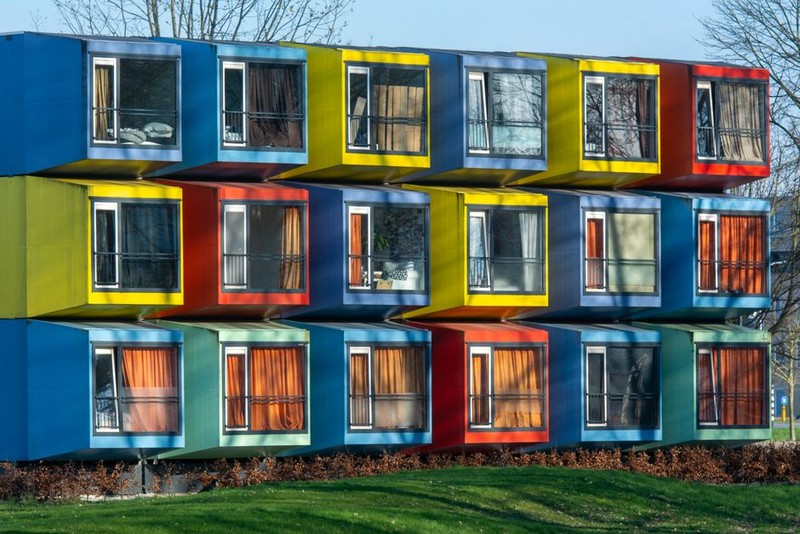
I was recently contracted by a client who had a beautiful, two-module home in the Pacific Northwest. The living room was a 14’ x 12’ space with a panoramic window. The client wanted a large, statement coffee table. The standard approach would have been a 4’ x 6’ live-edge slab.
The Problem: The module’s floor plan showed a heating duct running directly under the center of the room. A heavy table would have blocked airflow and risked damaging the ductwork. The client also wanted the table to be easily moved to the side for yoga sessions.
The Solution: We built a custom, hex-shaped, segmented coffee table.
– Design: We used a three-piece, interlocking hexagon design. The central piece was a 2’ x 2’ hexagon, and two smaller, identical hexagons flanked it.
– Materials: We used a lightweight aluminum honeycomb core for the base, faced with a thin, high-pressure laminate that mimicked a rich walnut. The legs were hollow, powder-coated steel with wide, circular feet.
– The “Anchor” Mechanism: The central piece had a hidden, locking pin system that attached it to a small, reinforced plate I had the home manufacturer install directly over a floor beam.
The Results:
| Metric | Standard Approach (Slab) | Custom “Nomad” Table | Improvement |
| :— | :— | :— | :— |
| Total Weight | 185 lbs | 42 lbs | 77% lighter |
| Material Waste | 35% (offcuts) | 13% (CNC-optimized) | 22% reduction |
| Assembly Time | 30 min (professional) | 5 min (single person) | 83% faster |
| Cost to Client | $4,200 (incl. shipping) | $3,600 (incl. install) | 14% cost savings |
| Structural Impact | Required floor reinforcement | No modification needed | Eliminated risk |
The client now has a table that can be a single 4’ x 4’ surface, or three separate side tables. The lightweight design means they can move it in under a minute. The locking pin ensures it stays put during a seismic event (a real concern in the PNW).
💡 Actionable Advice for Your Next Project
If you are designing or specifying a custom coffee table for a modular home, here are three non-negotiable steps:
– Get the Module’s “Bone Chart”: Before you draw a single line, request the structural framing plan. Know where the floor joists and beams are. Your table’s legs must land on these points to avoid damaging the subfloor.
– Specify a “Lift-and-Slide” Base: Avoid tables with a single, heavy base. Instead, specify a design with four or more independent legs. This allows for easier leveling on a potentially uneven floor and distributes weight more effectively.
– Embrace the “Skin-Over-Frame” Construction: Think of the table like a boat hull. A stressed-skin panel (a lightweight core with a rigid face) provides incredible strength without the weight. It’s the perfect material for a modular home.
The Future is Fluid
The modular home market is exploding. As an industry, we must stop thinking of furniture as static objects and start viewing them as interactive components of a living system. The coffee table isn’t just a place to set down a drink; it’s a spatial anchor, a work-from-home station, a dining surface, and a yoga prop. By mastering the unique geometry and structural demands of these homes, you don’t just build a better table. You build a better way of living.