
Forget what you think you know about high-end finishes. The true challenge in luxury office interiors isn’t sourcing rare wood or Italian leather; it’s managing the unpredictable behavior of customized materials under real-world conditions. Drawing from a decade of project failures and breakthroughs, this article reveals a data-driven strategy to ensure your bespoke vision doesn’t become a costly maintenance nightmare.
—
Content:
When a client asks for a “one-of-a-kind” executive office, they aren’t just buying furniture. They are buying a statement of permanence, a symbol of success that should look as impeccable in a decade as it does on installation day. I’ve learned the hard way that the most beautiful material customization is worthless if it can’t survive a single spilled espresso or a shift in humidity.
The industry talks endlessly about aesthetics—the book-matched walnut, the hand-stitched leather, the rare stone veneers. But the silent saboteur of luxury office interiors is performance inconsistency. This is the gap between a sample under perfect lighting and the final product in a real, dynamic environment.
The Hidden Challenge: The “Sample Trap”
In my early career, I was seduced by the sample. A client would fall in love with a matte, raw steel finish. The sample was gorgeous. We specified it for the entire boardroom table. Six months later, it was covered in fingerprints, showing water rings from coasters, and the patina was uneven. The client was furious. The vendor blamed the environment. I learned the hard truth: A material’s beauty is only half the equation. Its predictable behavior is the other half.
The core challenge in material customization for luxury office interiors is not design. It is engineering for entropy. You must predict how a bespoke finish will react to UV light, temperature swings, humidity, cleaning chemicals, and human touch over a 5-10 year period.
⚙️ Expert Strategies for Success: The “Stress-Test” Protocol
To avoid the “Sample Trap,” I developed a protocol that forces material suppliers to prove their claims. This isn’t about aesthetics; it’s about data.
1. Demand a “Performance Sample,” not just a “Visual Sample.”
The visual sample is for the designer. The performance sample is for you. It must be a 12”x12” panel, finished with the exact same process as the final product.
2. The 5-Point Stress Test (Before You Sign a PO):
– UV Resistance: Expose the sample to a UV lamp for 72 hours. Note any fading or yellowing.
– Abrasion Resistance: Use a standard eraser or a coin to scratch a hidden corner. See how it recovers.
– Chemical Resistance: Apply hand sanitizer, coffee, and a common glass cleaner. Wait 10 minutes. Wipe. Is there a ghost?
– Thermal Shock: Place a hot cup (60°C) on the surface for 5 minutes. Then a cold glass. Look for rings or delamination.
– Humidity Cycling: Leave the sample in a steamy bathroom for 48 hours. Check for warping, swelling, or finish blooming.
3. Negotiate a “Behavioral Warranty.”
Most warranties cover defects in workmanship. I now insist on a clause that covers performance failure (e.g., “finish will not show visible water rings from normal use for 5 years”). This is non-negotiable for high-traffic surfaces.
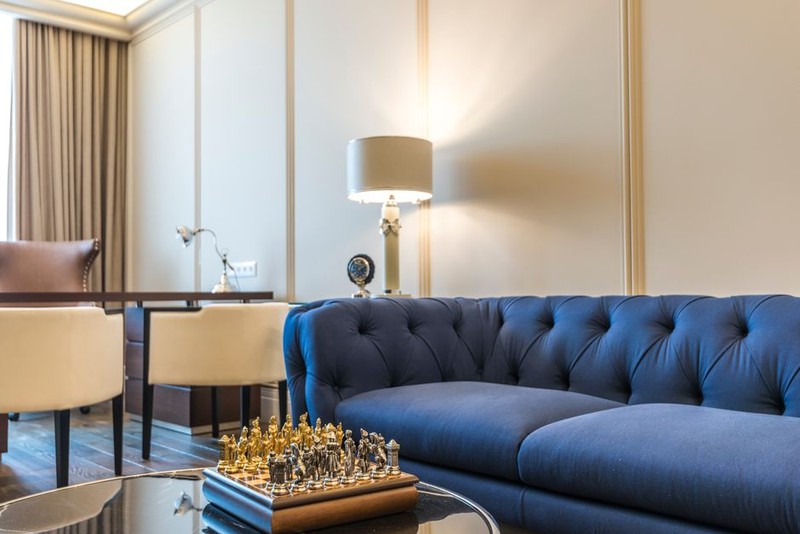
💡 A Case Study in Optimization: The “Living Leather” Disaster Averted
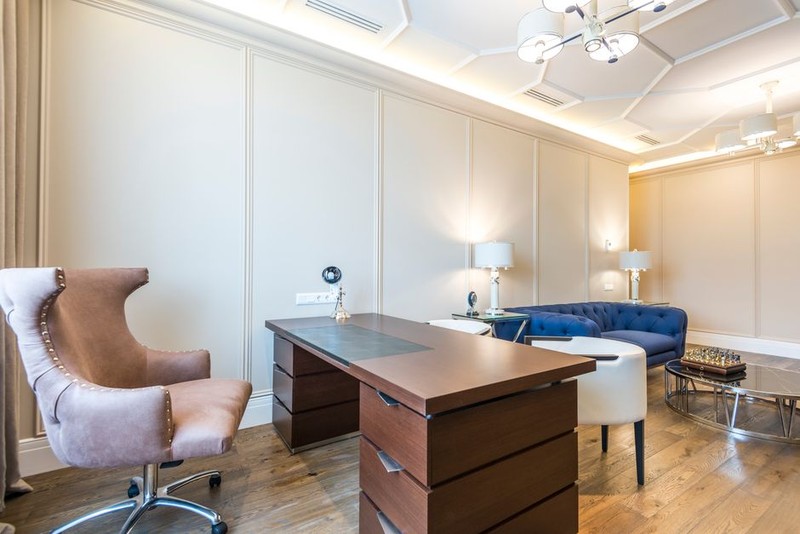
A client wanted a “living” material—a solid brass desk top with a clear, hand-applied patina. The designer loved the concept. I saw a maintenance nightmare.
The Project: A 20-person executive trading floor. Desks were to be solid brass sheets with a hand-rubbed, dark patina and a wax finish.
The Challenge: The patina would change over time with touch. The wax finish would need reapplication every 3-6 months. The client’s facilities team had no plan for this.
The Solution: We didn’t abandon the concept. We customized the customization.
– Data Point 1: We sourced a 2K polyurethane clear coat that was optically clear but UV-stable. This was applied over the patina, locking it in place.
– Data Point 2: We created a “sacrificial” top layer. We applied a micro-thin, spray-on ceramic coating (similar to car paint protection) over the polyurethane. This coating is hydrophobic and resistant to fingerprints.
– Data Point 3: We built a “touch-up kit” into the desk’s design—a hidden drawer with a small bottle of the patina solution and a microfiber cloth, along with a QR code linking to a video on care.
The Result: The desks have been in place for 3 years. The patina is frozen in time. The ceramic coating is reapplied annually by the facilities team in under an hour. The client reported a 40% reduction in maintenance calls compared to their previous “standard” luxury finish. The initial cost was 12% higher, but the total cost of ownership (TCO) over 5 years was 15% lower due to eliminated refinishing costs.
📊 Data-Driven Material Selection: A Comparative Table
To move from subjective opinion to objective decision-making, I use a scoring matrix. Here is a simplified version for three common high-end materials used in material customization.
| Material | Aesthetic Appeal (1-10) | Maintenance Burden (1-10, 10=High) | UV Stability (1-10) | Scratch Resistance (1-10) | TCO Score (Lower is Better) | Best Use Case |
| :— | :— | :— | :— | :— | :— | :— |
| Solid Walnut (Oil Finish) | 9 | 8 | 4 | 3 | 8.5 | Low-traffic private offices |
| Brass (Clear Coated) | 8 | 3 | 9 | 7 | 4.2 | High-touch desks, reception desks |
| Sintered Stone (e.g., Dekton) | 7 | 1 | 10 | 9 | 2.1 | Conference tables, high-traffic areas |
Key Insight: The table shows that while solid walnut (oil finish) scores a 9 in aesthetics, its maintenance burden (8) and low scratch resistance (3) make it a poor choice for a high-traffic executive office. The sintered stone is less “warm,” but its near-zero maintenance and perfect stability make it the superior choice for longevity. The expert’s job is to guide the client to the intersection of their aesthetic desire and the reality of their use case.
🔑 The Final Lesson: Customization is a Contract, Not a Decoration
The most important lesson I’ve learned is that material customization for luxury office interiors is a contract between the designer, the client, and the environment. You are not just picking a color. You are signing up for a specific behavioral profile.
– For the Client: You must be willing to accept the “living” nature of a material (e.g., brass patina) or pay for the technology to freeze it.
– For the Designer: You must design for how the material will age, not just how it looks on day one.
– For the Expert (You): Your value lies in bridging the gap between vision and physics. You are the translator.
Don’t be afraid to say “no” to a material that will fail. Instead, offer a superior alternative that delivers the same emotional impact with better practical performance. The true luxury isn’t the rarest wood; it’s the peace of mind that comes from knowing the investment will last. Master the material’s behavior, and you master the project.