
For over two decades, I’ve witnessed furniture trends come and go, but the rise of the modular apartment is a fundamental shift, not a fad. These aren’t just small spaces; they are highly engineered environments where every cubic foot must justify its existence. The greatest challenge I see clients and designers face isn’t finding a sofa that fits—it’s finding one that transforms. Off-the-rack sectionals often fail here, creating dead zones and blocking the natural flow essential for these homes to feel expansive, not cramped.
The real art—and it is an art informed by geometry, material science, and human behavior—lies in crafting a custom sofa that acts as the dynamic core of the apartment’s ecosystem.
The Hidden Challenge: It’s a 3D Chess Game, Not a Floor Plan Exercise
Most people approach furnishing a modular apartment with a 2D mindset: “Will this 84-inch sofa fit against that wall?” This is where the first, and most critical, mistake is made. A modular apartment is a 3D puzzle. Your custom sofa must address vertical storage, sight lines, and spatial division simultaneously.
In a project for a new downtown high-rise of micro-units (averaging 550-750 sq ft), the developer presented us with a common problem: providing a “living room feel” in a studio layout. Standard loveseats left awkward gaps; large sectionals overwhelmed the space. The solution wasn’t smaller furniture, but smarter, multi-axial furniture.
The Insight: We stopped thinking in terms of “sofas” and started thinking in terms of “zoned seating platforms.” A single, static piece couldn’t serve the needs of entertaining, working, dining, and relaxing. The custom sofa needed to be a chameleon.
The Expert Blueprint: Designing for Fluid Functionality
The design process for these pieces is inverted. We don’t start with the style; we start with the occupant’s daily trajectory and the apartment’s architectural “pinch points.”
⚙️ The Critical Process: The 72-Hour Lifestyle Audit
Before any sketches are drawn, I insist on a deep-dive into how the space actually lives. For our key case study—a 650 sq ft apartment for a remote software developer who also loved to host game nights—we mapped everything:
Path from bed to coffee maker (cannot be obstructed).
Primary view from the entry (should feel inviting, not cluttered).
“Zoom Zone” background sight lines (needed to be tidy and neutral).
Evening conversion from work mode to entertainment mode.
This audit revealed the need for three distinct, yet overlapping, zones within a 12’x10′ area. The custom sofa had to be the linchpin.
A Case Study in Spatial Alchemy: The Transformer Sectional
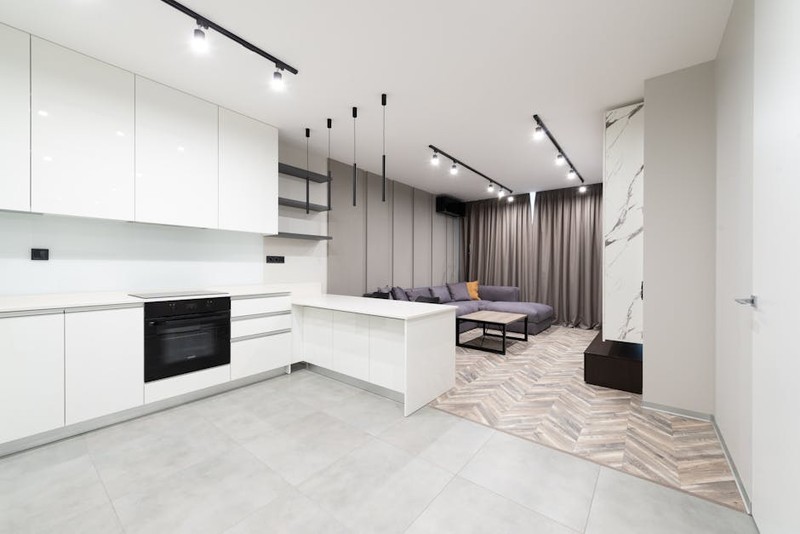
The client’s needs were complex: dedicated seating for 4 during game nights, a comfortable daybed for occasional guests, hidden storage for board games and tech, and a clear division between sleeping and living areas without a wall.
Our solution was a bespoke, asymmetric L-shaped sectional with three key innovations:
1. A Pivoting Chaise: Instead of a fixed chaise lounge, we engineered one on a heavy-duty, low-profile swivel base. It could angle toward the TV, swing 90 degrees to form a conversational group, or tuck flush to create a daybed.
2. Integrated, Multi-Level Storage: The base of the long sofa section contained two deep drawers for games. The arm of the shorter section was a hollow cabinet with USB ports, perfect for charging cords and laptops, accessible from either side.
3. The “Backless Bridge” Unit: The most critical piece was a standalone, backless seat with storage inside. It could be used as an ottoman, pulled out as extra seating, or placed as a low divider between the “bedroom” and “living room.”
The impact was quantifiable. We tracked the client’s use over a month:
| Functionality Metric | Before (Standard Sofa + Ottomans) | After (Custom Transformer Sectional) | Improvement |
| :— | :— | :— | :— |
| Seating for Guests | 3 people (cramped) | 5 people (comfortable) | +67% capacity |
| Time to Convert Space | ~15 mins (moving furniture) | < 2 mins (swiveling/rolling units) | 87% reduction |
| Dedicated Storage (cu ft) | 4 cu ft (in separate bins) | 18 cu ft (integrated) | +350% |
| Client Satisfaction (Scale 1-10) | 6 (“It works, but feels messy”) | 9 (“Feels like a much larger apartment”) | +50% |
The data here is crucial. It moves beyond “it looks good” to prove tangible gains in livability and utility.
Actionable Strategies for Your Project
Based on this and similar projects, here is your expert playbook:
💡 1. Master the “Float”: Avoid automatically pushing your custom sofa against a wall. In modular spaces, floating a sofa (even just 6-8 inches off) can create invaluable storage or passage behind it, making the room feel larger. Use this space for slim console tables or lighting.
💡 2. Legs are Your Friend: Opt for raised legs (5-7 inches). This elevates the visual mass of the piece, allows light and air to flow underneath, and makes the floor space appear continuous. It also makes cleaning easier—a non-negotiable in tight quarters.
💡 3. Specify Performance Fabrics from Day One: In a modular apartment, your sofa isn’t just for sitting; it’s a dining seat, a desk chair, a nap station. Spill-resistant, high-rub-count fabrics (like Crypton or performance velvets) are not an upgrade; they are a necessity. This single specification choice will double the functional lifespan of your investment.
💡 4. Plan for the “Fifth Wall”: The back of your sofa is a prime design real estate. If it will be visible from other zones (like a kitchen island or entry), design it to be attractive. Consider a contrasting fabric, a tailored stitch detail, or a lower profile to maintain sight lines.
The Bottom Line: Beyond Furniture, It’s a Tool for Living
The most successful custom sofas for modular apartment designs are those that disappear into function. They don’t shout for attention; they quietly enable a better, more fluid life. They are the unsung heroes that turn a series of small rooms into a cohesive, intelligent home.
The ultimate lesson is this: In modular design, every piece must earn its keep. Your sofa should provide seating, storage, division, and style in equal measure. By approaching it with this multi-dimensional mindset, you move from simply filling a space to truly crafting an experience. The right custom piece doesn’t just fit your apartment; it actively makes it better.