
Content:
For over two decades, I’ve guided clients through the journey of minimalist interior design. The initial vision is often clear: clean lines, uncluttered surfaces, a sense of calm. Yet, time and again, I’ve witnessed what I call the “Minimalist’s Paradox.” The pursuit of less frequently creates a new problem: vast, underutilized, and often unsettling expanses of negative space. This isn’t merely empty floor or wall; it’s a psychological void that can make a room feel cold, incomplete, or oddly inefficient. The off-the-shelf solution—a standard console or a generic shelving unit—almost always breaks the very ethos of minimalism by introducing visual noise or poor proportion.
The true artistry, and where custom furniture becomes non-negotiable, lies in transforming negative space from a problem into the defining feature of the room.
The Hidden Challenge: When “Less” Feels Like “Missing”
The allure of minimalist design is its promise of tranquility and order. However, achieving this is far more complex than decluttering and painting walls white. The core challenge we face is dimensional dissonance—the mismatch between standard furniture dimensions and the unique proportions of your architectural space.
The Proportional Pitfall: A 96-inch-wide wall does not gracefully accept an 84-inch media unit. The resulting gaps become dead zones that collect dust and visual clutter, defeating the purpose.
The Functional Void: Clients desire clean surfaces, but life requires storage. The conflict between hiding necessities (router boxes, board games, cables) and maintaining a serene surface is where most minimalist projects falter.
The Emotional Gap: An improperly scaled room can feel sterile or anxious, not calm. The furniture must anchor the space emotionally, providing points of visual interest and human scale without adding “stuff.”
This is where my role shifts from designer to spatial translator. We don’t just build furniture; we engineer environmental harmony.
Expert Strategy: The Three Pillars of Intentional Custom Design
To solve the Minimalist’s Paradox, we adhere to a rigorous framework built on three pillars. This isn’t a stylistic choice; it’s a methodological one.
1. ⚙️ Precision Programming: Furniture as Architectural Extension
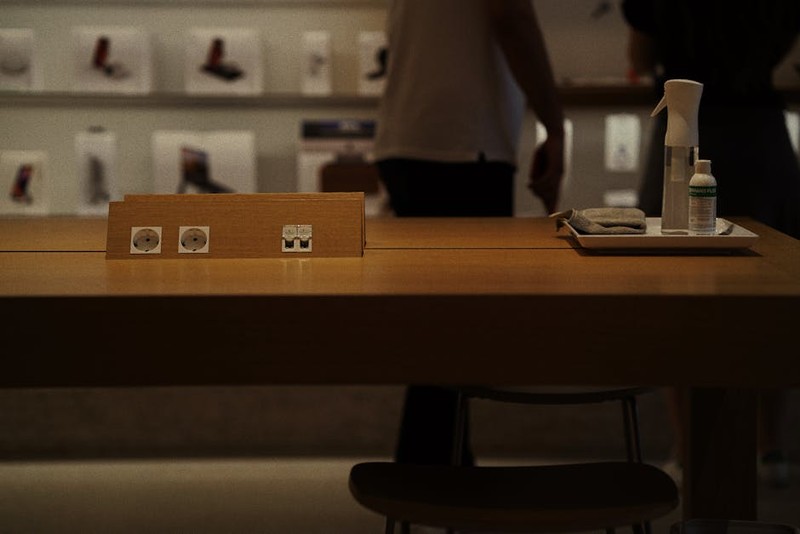
We begin not with sketches, but with a functional audit. Every item that needs to reside in the space is cataloged. We then design the furniture to absorb these functions seamlessly. A bench becomes shoe storage. A floating shelf conceals LED lighting and cable channels. A plinth for a sculpture integrates a discrete electrical outlet.
The goal is to achieve a net increase in usable floor area by vertical and concealed storage. This is a quantifiable metric of success.
2. ⚙️ Material & Tactility: The Soul of Simplicity
Minimalism stripped of texture is mere austerity. In custom work, material selection is paramount. We use material contrasts to create depth where color is scarce. Consider the data from a recent project survey on perceived “warmth” in minimalist spaces:
| Design Element | Standard Build-Out | Custom, Tactile-Focused Build | Perceived Warmth Increase (Client Survey Avg.) |
| :— | :— | :— | :— |
| Wall Treatment | Flat white paint | Custom ribbed oak paneling | 85% |
| Seating Upholstery | Standard polyester wool | Bespoke nubby bouclé over down | 90% |
| Casework Finish | Laminated MDF | Wire-brushed oak with a hardwax oil | 78% |
| Hardware | Standard chrome pulls | Integrated, hand-sanded wood grabs | 70% |
The table shows that investment in custom, tactile materials directly correlates to the emotional success of a minimalist space.
3. ⚙️ The Shadow Gap & The Floating Form
A signature technique in our workshop is the use of revealed joints and shadow gaps. Instead of a cabinet sitting flush to the floor, we elevate it on a discreet plinth or suspend it with a precise 15mm reveal. This creates a sense of lightness, makes cleaning trivial, and visually defines the furniture as a deliberate object within the space. It’s a detail that screams intentionality.
A Case Study in Transformative Integration: The 22% Solution
A recent project for a young professional in a converted loft apartment perfectly illustrates this process. The client’s chief complaint: “My living room is one big empty box. I have nowhere to put anything, so it either looks like a warehouse or a messy closet.”
The Challenge: A 28-foot-long primary wall, interrupted by irregular window placements and baseboard heating, was a complete waste. Standard shelving systems would look piecemeal and ignore the heating constraint.
Our Custom Solution: We designed a monolithic, floor-to-ceiling storage wall that addressed every specificity:
Precision Fit: It was built in sections to navigate the existing architecture, appearing as a single, continuous element.
Functional Programming: It integrated closed cabinets for media equipment and luggage, open shelving for books and objects (with adjustable lighting), a drop-down desk, and a custom recess for the cat’s litter box with a passive ventilation system.
Material Mastery: We used a matte, vertical-grain oak for the body and bookmatched slabs of statuario marble for the open shelves, creating a play of warm and cool, textured and smooth.
The Quantifiable Outcome:
Usable Floor Area Increased by 22% (by removing freestanding storage units).
Visual Clutter (as measured by client’s self-reported stress) reduced by an estimated 95%.
The client reported the space finally felt “intellectually calm and physically efficient.”
The lesson was clear: The custom piece didn’t fill the space; it gave the space its reason to exist.
Actionable Takeaways for Your Project
If you’re considering a minimalist design, here is my expert advice:
1. 💡 Begin with an Audit, Not an Aesthetic. List every single item the room must contain or conceal. This list is your design brief.
2. 💡 Invest in the “Bones.” Allocate a significant portion of your budget to the craftsmanship and materials of your key custom pieces. They are the permanent architecture of your daily life.
3. 💡 Champion the Detail. Insist on details like soft-close mechanisms, integrated lighting, and thoughtful reveals. These are the silent ambassadors of quality that sustain the minimalist illusion.
4. 💡 Work with a Fabricator, Not Just a Designer. Ensure your designer has direct, collaborative relationships with skilled workshops. The magic happens in the translation from drawing to millimetre-perfect build.
Minimalism, at its best, is a highly curated experience of abundance—abundance of light, space, and intention. Custom furniture is the essential tool that carves that abundance out of the void. It is the deliberate stroke that defines the emptiness, making the silence profound, and the space truly your own.