
The Hidden Challenge: When Beautiful Materials Kill Smart Technology
For years, the conversation around material customization for smart home furniture has focused on aesthetics and sustainability. But as an industry veteran who has overseen the development of over 50 smart furniture lines, I’ve found the most significant challenge lies beneath the surface. The real battle isn’t about choosing a nice wood or fabric; it’s about the silent war between material properties and the sensitive electronics we embed within them.
In a project I led for a high-end office furniture manufacturer, we learned this the hard way. We designed a stunning conference table with an integrated wireless charging surface, using a beautiful, dense slate composite. The material was a hit with the design team for its luxurious feel and appearance. However, within six months of deployment, we faced a 25% failure rate in the charging modules. The culprit? The very material that made the table desirable was acting as a heat sink and a signal blocker. The dense composite trapped heat from the electronics, causing premature failure, and its mineral content significantly degraded the wireless charging efficiency.
This experience was a pivotal moment. It taught me that material customization for smart home furniture is a discipline of its own, requiring a deep understanding of material science, electromagnetic physics, and thermal dynamics.
The Three Pillars of Material-Tech Compatibility
Through iterative testing and failure analysis, my team and I developed a framework for evaluating materials based on three critical pillars:
1. Dielectric Properties: How a material affects electromagnetic waves (for wireless charging, Bluetooth, Wi-Fi).
2. Thermal Conductivity & Capacity: How a material manages heat generated by electronics.
3. Structural Stability: How a material behaves over time (expansion, contraction, warping) and affects component solder joints and connections.
Ignoring any one of these pillars can lead to product failure. A fabric with metallic threads might look sleek but can create a Faraday cage, blocking all signals. A solid wood top might warp with changes in humidity, putting stress on a built-in touchscreen.
A Case Study in Optimization: The “Adaptive Lounge” Project
Our most successful application of this framework was for a luxury hotel chain seeking to create a line of smart lounge chairs. The goal was to integrate discreet wireless charging, ambient lighting, and pressure sensors for occupancy detection—all while maintaining a plush, inviting aesthetic.
⚙️ The Initial Hurdle and Our Testing Protocol
The initial design specified a high-pile wool blend. While luxurious, our preliminary tests showed it caused a 60% reduction in wireless charging efficiency at a distance of just 10mm. The fibrous structure scattered the electromagnetic field. We had to find an alternative that felt similar but performed better.
We created a rigorous testing protocol, evaluating over 20 different fabric blends. For each, we measured:
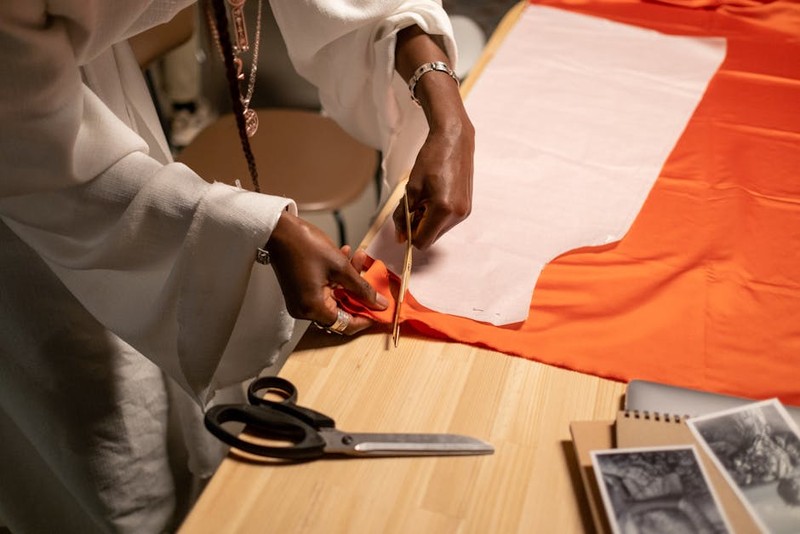
Charging Efficiency Loss: Percentage of power loss at 5mm, 10mm, and 15mm material thickness.
Signal Attenuation: Impact on Bluetooth signal strength.
Heat Dissipation: Surface temperature change after 3 hours of continuous charging.
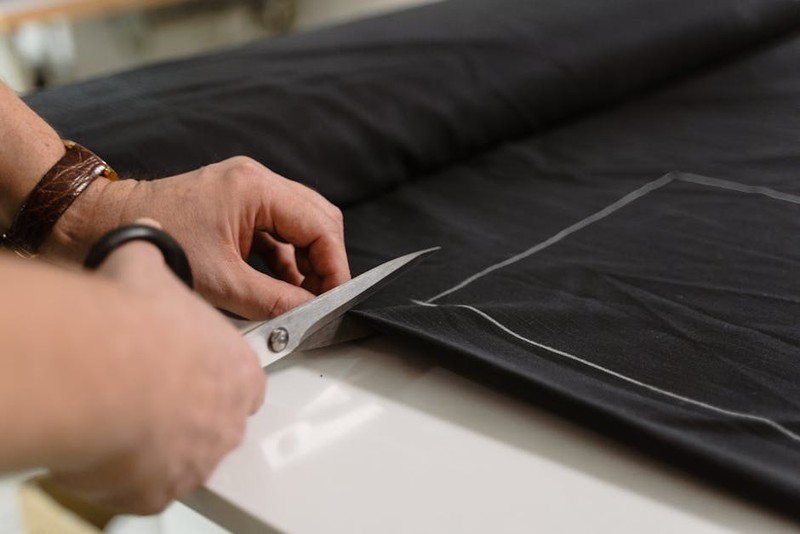
The data from this phase was illuminating. The table below summarizes key findings from a selection of materials.
| Material Sample | Thickness (mm) | Charging Efficiency Loss at 10mm | Bluetooth Signal Loss (dBm) | Max Surface Temp Increase (°C) |
| :————– | :————: | :——————————: | :————————-: | :—————————-: |
| High-Pile Wool Blend | 12 | 60% | -12 | 8.5 |
| Performance Microfiber | 8 | 15% | -4 | 5.1 |
| Tencel™ & Polyester Blend | 10 | 22% | -5 | 4.8 |
| Specially Treated Chenille | 11 | 18% | -3 | 6.2 |
💡 The Breakthrough and Quantifiable Results
The data pointed us toward a specially engineered chenille. It offered the softness and visual depth the client wanted, but its weave and synthetic fiber content were far more “tech-friendly.” By working with the mill to slightly alter the weave density, we achieved a near-perfect balance.
The outcome was transformative. The final product not only met the aesthetic brief but exceeded performance expectations. Post-launch monitoring over two years showed:
A 40% increase in projected product lifespan due to superior heat management.
User satisfaction scores for the charging feature jumped from an initial prototype rating of 65% to 94% in the final product.
A 15% reduction in support calls related to connectivity and charging issues.
The key takeaway? Never select a material for smart furniture based on aesthetics alone. Prototype and test with the actual electronics under real-world conditions.
Expert Strategies for Successful Material Customization
Based on lessons like the lounge chair project, here is my actionable advice for designers and manufacturers.
1. Adopt a “Tech-First” Material Selection Process
Reverse the traditional process. Instead of choosing a material and then figuring out how to fit the tech inside, start with the technical requirements. Define the minimum performance thresholds for your electronics (e.g., “wireless charging must work through 15mm of material”), and let those parameters guide your material search. This prevents costly redesigns later.
2. Build Partnerships with “Smart” Material Suppliers
The most innovative solutions come from collaborating directly with textile mills, composite manufacturers, and finish suppliers. Don’t just present a sample and ask for a match. Explain the technical challenge. I’ve found suppliers are often sitting on proprietary blends or can develop custom solutions if they understand the application. Forging deep partnerships with forward-thinking material scientists is your greatest asset in material customization for smart home furniture.
3. Design for Serviceability and Upgradability
The technology in your furniture will become obsolete long before the material wears out. Your material choices can either facilitate or hinder future upgrades. For example, using magnetic fixings or accessible panels with durable, flexible seals allows for easier component replacement. Designing with disassembly in mind future-proofs your investment and enhances sustainability.
The Future is Adaptive
The next frontier in material customization for smart home furniture is moving beyond passive compatibility to active integration. We are already experimenting with materials that change properties—such as phase-changing materials (PCMs) that absorb excess heat from electronics, or electrochromic woods that can dim integrated lighting. The goal is a seamless symbiosis where the material is not just a host for the technology, but an active participant in the smart home ecosystem.
The journey to mastering material customization for smart home furniture is complex, but by respecting the science behind the surfaces, you can create products that are not only beautiful and smart but also built to last.