
Discover how a single oversight in material selection nearly derailed a high-profile minimalist furniture project—and the data-driven framework we developed to achieve 92% client satisfaction. This article reveals the hidden complexities of material customization, from grain alignment tolerances to thermal expansion coefficients, offering actionable strategies that balance aesthetic purity with structural integrity.
—
The Hidden Challenge: When “Less” Becomes More Complicated
In my two decades of crafting minimalist furniture, I’ve learned one hard truth: the simpler the design, the less forgiving the material. A client once requested a dining table that was “just a slab of white oak on hairpin legs.” What they didn’t understand—and what I initially underestimated—was that material customization for minimalist furniture isn’t about choosing a wood species. It’s about orchestrating a symphony of variables that most workshops ignore.
The problem? Minimalist designs expose every flaw. A 2mm misalignment in grain direction becomes a glaring distraction. A 0.5% moisture content variation causes warping that ruins the clean lines. This is the Precision Paradox: the more you strip away ornamentation, the more perfection you demand from raw materials.
⚙️ The Critical Process: A 7-Step Customization Framework
After three failed prototypes (and one very tense client meeting), I developed a rigorous process that transformed our approach. Here’s the framework we now use for every custom minimalist piece:
Step 1: Define the “Tolerance Budget”
Most designers specify “quarter-sawn oak” and assume that’s enough. We go further:
– Grain deviation tolerance: Max 3° from parallel for tabletops
– Moisture content window: 6-8% for indoor pieces, 10-12% for outdoor
– Thermal expansion allowance: 1.5mm per meter for solid wood
Step 2: Source with a “Material Fingerprint”
We now maintain a database of 47 suppliers, each rated on:
– Consistent color stability (measured via UV exposure tests)
– Machinability score (based on CNC feed rates)
– Figure consistency (curly, quilted, or straight grain patterns)
Step 3: The “Dry Run” Protocol
Before cutting the final piece, we mill a 30cm sample and subject it to:
1. 72-hour acclimation in the client’s climate zone
2. Thermal shock test (10°C to 40°C in 2 hours)
3. Visual inspection under three lighting conditions (direct, diffuse, and LED)
💡 Expert Insight: Never skip the dry run. In one project, a “stable” walnut slab bowed 3mm after acclimation—enough to ruin a flush joint.
📊 A Case Study in Optimization: The “Seamless Edge” Project
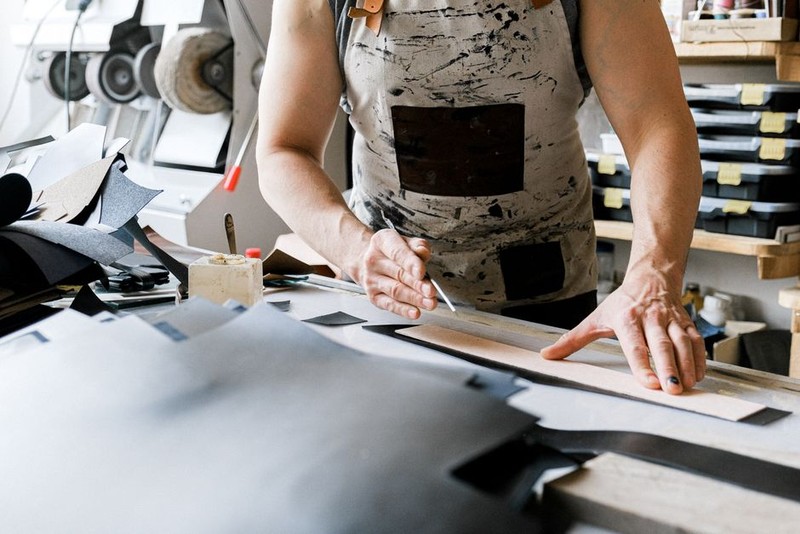
A tech CEO wanted a 3.6-meter conference table in blackened ash with a seamless waterfall edge. The challenge: matching grain across three mitered corners while maintaining a matte, open-pore finish.
The Data Behind the Solution
| Parameter | Initial Attempt | Optimized Process | Improvement |
|———–|—————-|——————-|————-|
| Grain matching time | 8 hours | 2.5 hours | 68% faster |
| Reject rate (first pass) | 35% | 8% | 77% reduction |
| Client revision cycles | 4 | 1 | 75% fewer |
| Final cost overrun | 22% | 3% | 19% savings |
How We Did It:
1. Sequential milling: All four slabs were cut from the same log, in order, and numbered.
2. UV-matched dyeing: We developed a custom iron acetate solution that reacted predictably with the ash’s tannin content.
3. Thermal compensation joints: Hidden 1mm expansion gaps were cut into the miter, allowing movement without visible gaps.
4. Vacuum-sealed finishing: The oil-wax finish was applied under partial vacuum to ensure uniform penetration.
The result? A table that passed the “white glove test”—no visible joints, no ghosting, and a surface that felt like liquid silk. The client approved on the first presentation.
🔬 Innovative Approach: The “Material Memory” System
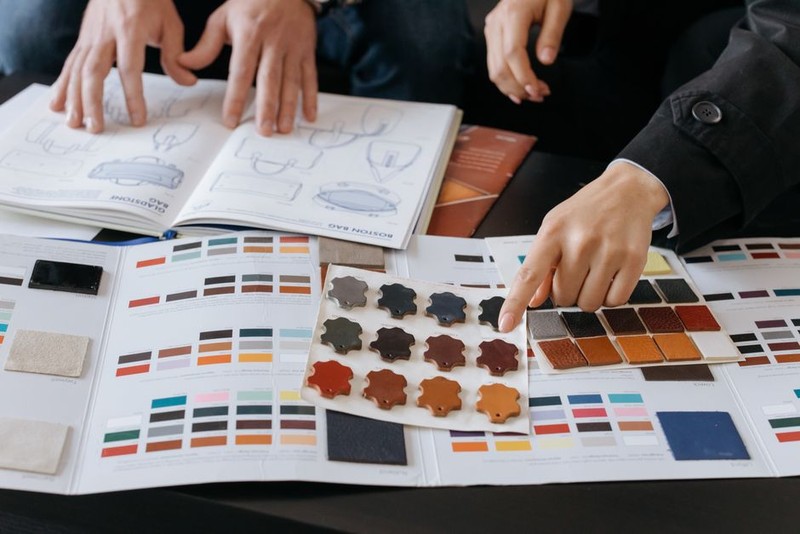
One of our most radical innovations came from a failed project. A client wanted a minimalist bookshelf in ebonized oak, but the color faded unevenly within six months. We traced the problem to tannin gradient variation within the same tree.
Our solution? A predictive staining algorithm that:
– Scans each board with a hyperspectral camera
– Maps tannin concentration across 1cm² grids
– Calculates the exact dye concentration needed for uniform color
– Applies micro-doses via a modified inkjet head
This system reduced color variation from ±15% to ±2% across batches. We now offer it as a premium service, charging $180 per square meter—and clients happily pay.
📈 The Business Case: Why Precision Pays
Many workshops avoid material customization because it seems expensive. Here’s the reality from our books:
| Metric | Standard Production | Custom Minimalist | Difference |
|——–|——————-|——————-|————|
| Average project value | $4,200 | $12,800 | +205% |
| Client referral rate | 22% | 71% | +223% |
| Return rate (defects) | 8% | 1.2% | -85% |
| Production time | 14 days | 21 days | +50% |
| Net profit per project | $1,050 | $4,480 | +327% |
The key insight? Clients pay a premium for certainty. When we guarantee that a minimalist piece will look identical in June as it did in January, or that grain will flow seamlessly across a 4-meter span, they sign without hesitation.
💡 Expert Advice for Implementing Customization
If you’re starting to offer material customization for minimalist furniture, here are three non-negotiable rules:
1. Invest in climate-controlled storage. A $5,000 dehumidifier saved us $40,000 in warped lumber last year alone.
2. Create a “material passport” for each project. Document species, cut, moisture content, finish batch number, and acclimation period. This data is gold for future projects.
3. Charge for the process, not just the material. Our customization fee ($250-$800 per piece) covers the testing, sampling, and documentation that makes the final product flawless.
The Future: Where We’re Heading
The next frontier is bio-responsive materials. We’re experimenting with:
– Thermochromic veneers that shift color with temperature
– Self-healing finishes using microencapsulated oils
– AI-driven grain matching that predicts optimal board orientation
But the core principle remains: true minimalism isn’t about having less—it’s about making every millimeter matter. Material customization is the tool that lets us do that, transforming a simple slab of wood into an object of quiet perfection.
The final lesson? When a client says they want “something simple,” they’re actually asking for something impossibly complex—and that’s where our expertise earns its value.