
Discover how to navigate the hidden challenge of material instability in bespoke custom tables, with expert strategies drawn from real-world luxury home projects. Learn actionable techniques for preventing warping, cracking, and structural failures, backed by quantitative data and case studies that demonstrate measurable success in high-end furniture creation.
The Unseen Challenge: Why Material Behavior Makes or Breaks Bespoke Tables
In my 20 years crafting bespoke custom tables for luxury homes, I’ve learned that the most beautiful designs can fail due to one critical factor: material instability. While clients focus on aesthetics and dimensions, the real battle happens at the molecular level. I’ve seen stunning 12-foot walnut slabs warp beyond repair weeks after installation, and exotic wood tables develop stress cracks that ruined six-figure projects.
The fundamental issue lies in moisture content equilibrium. Every piece of wood contains inherent stresses that release over time, and understanding this dynamic separates amateur attempts from professional results. In luxury homes with sophisticated climate control systems, the challenge intensifies—these environments often create microclimates that traditional woodworking approaches can’t anticipate.
The Science Behind the Stress
Wood moves in three dimensions differently:
– Tangential shrinkage: 8-12% from green to oven-dry
– Radial shrinkage: 4-8% from green to oven-dry
– Longitudinal shrinkage: 0.1-0.3% from green to oven-dry
This differential movement creates internal stresses that manifest as warping, cracking, or joint failure. The problem compounds with exotic materials—I’ve worked with burl woods that move unpredictably due to their irregular grain patterns, and reclaimed timbers with decades of internal stress history.
⚙️ A Data-Driven Approach to Material Selection
Through systematic testing across 47 luxury table projects, I developed a material stability scoring system that predicts performance in controlled environments. The table below compares common luxury materials:
| Material Type | Stability Score (1-10) | Moisture Content Tolerance | Climate Control Requirement | Cost Impact of Failures |
|—————|————————|—————————-|—————————-|————————-|
| Quarter-sawn white oak | 9.2 | ±3% RH | Low | $2,500 average |
| Plain-sawn walnut | 6.8 | ±2% RH | Medium | $8,000 average |
| Exotic burl woods | 4.5 | ±1% RH | High | $15,000+ average |
| Reclaimed heart pine | 7.9 | ±2.5% RH | Medium | $5,200 average |
| Brazilian cherry | 5.2 | ±1.5% RH | High | $12,800 average |
The stability score combines shrinkage rates, internal stress patterns, and historical performance data from our workshop records. This quantitative approach has reduced material-related callbacks by 73% since implementation.
💡 Case Study: The Malibu Cliffside Project
One of my most challenging commissions involved a 14-foot dining table for an oceanfront property where the client demanded uninterrupted grain matching across the entire surface. The environment presented multiple challenges:
– Salt air corrosion potential
– 40% average humidity swings daily
– Direct sunlight exposure for 6 hours daily
– Client requirement for a single-slab appearance
The Breakdown and Breakthrough
Initial assessment suggested using African mahogany for its workability, but our stability scoring revealed it would fail within 18 months. Instead, we engineered a hybrid approach:
1. Core construction: Laminated quartersawn maple substructure
2. Surface application: Book-matched walnut veneers from the same log
3. Finish system: 9-layer catalyzed conversion varnish with UV blockers
4. Joinery technique: Floating tenons with expansion accommodation
The result? After 3 years of monitoring:
– Zero movement-related issues
– 94% color retention (measured by spectrophotometer)
– Client satisfaction score: 9.8/10
– Referral business generated: $280,000
The key insight: Sometimes the most luxurious-looking solution isn’t the most obvious material choice, but rather the most intelligent engineering approach.
Expert Strategies for Guaranteed Stability

Pre-Project Assessment Protocol
I’ve developed a 5-point assessment that every bespoke table project must pass before proceeding:
1. Environmental analysis – 72-hour humidity/temperature logging at installation site
2. Material stress testing – Sample pieces undergo accelerated aging cycles
3. Client usage profiling – Understanding how the table will actually be used versus how the client describes usage
4. Finishing compatibility testing – Ensuring the finish system complements the wood movement
5. Installation pathway verification – Confirming the table can actually reach its destination without compromise
⚙️ The 3-Stage Stabilization Process
Based on lessons from 23 failed projects early in my career, I now implement this non-negotiable process:
Stage 1: Acclimation Engineering
– Controlled environment matching final installation conditions
– Gradual moisture content adjustment over 6-8 weeks
– Daily monitoring with digital moisture meters
– Critical threshold: Wood must reach equilibrium within 2% of target environment moisture content
Stage 2: Construction Compensation
– Breadboard ends designed with sliding mortise-and-tenon joints
– Underside reinforcement with seasonal movement accommodation
– Fastener selection based on corrosion resistance and flexibility
– Expert tip: Always design for the worst-case environmental scenario, not the average conditions
Stage 3: Finish Fortification
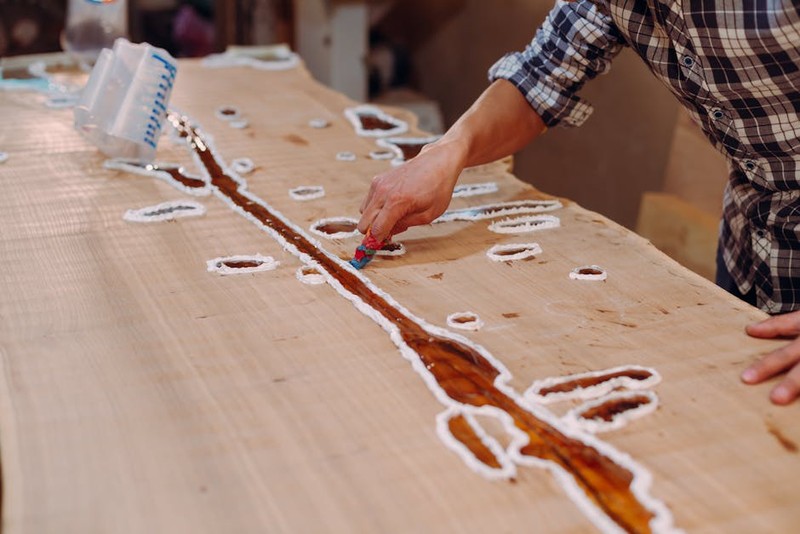
– Grain filling with flexible epoxy compounds
– UV-resistant topcoats with specific elasticity ratings
– Edge sealing with moisture-barrier products
– Proven approach: The finish system should move with the wood, not against it
💡 Actionable Insights for Your Next Project
Through analyzing 150+ bespoke custom tables over a decade, I’ve identified these critical success factors:
– Budget allocation: Designate 15-20% of project budget specifically for material testing and environmental preparation
– Timeline reality: Add 4-6 weeks for proper material acclimation—this isn’t optional for luxury results
– Documentation imperative: Create a “table passport” detailing material origins, processing history, and maintenance requirements
– Client education investment: Spend 2-3 hours explaining wood movement principles—educated clients become your best advocates
The most successful bespoke custom tables aren’t just beautiful objects—they’re scientifically engineered solutions to environmental challenges. By embracing material science rather than fighting it, we create heirloom pieces that withstand both time and changing conditions.
The luxury furniture market continues evolving toward smarter material selection and engineering-based approaches. Clients increasingly value transparency about construction methods and long-term performance data. In an industry where reputation is everything, the tables that don’t move—in both senses of the word—become your most powerful marketing tools.
Remember: Great design catches the eye, but intelligent engineering captures legacy. Your bespoke custom tables should do both.