
Discover how a shift from material selection to connection engineering can solve the core challenge of sustainable custom chairs. This article reveals a data-backed framework for designing chairs that are not only beautiful but fully disassemblable, repairable, and recyclable, based on a real-world project that cut material waste by 40%.
For over two decades, I’ve watched the furniture industry chase sustainability through the wrong lens. We’ve obsessed over reclaimed wood, organic cotton, and bamboo—as if the material alone could absolve the sins of a throwaway culture. But the truth is more uncomfortable: a chair made entirely from recycled plastic that cannot be repaired or separated at end of life is not sustainable; it’s a longer-lasting piece of trash. The real challenge, and the one I’ve dedicated the last eight years of my practice to solving, lies not in what a chair is made of, but in how it is put together. This is the story of how I learned to engineer custom chairs for sustainable living spaces by rethinking the very geometry of connection.
The Hidden Challenge: The Disassembly Paradox
The most complex problem in sustainable custom furniture is what I call the Disassembly Paradox. We want a chair that is rock-solid in use—no wobbles, no squeaks, no loosening over time. Yet, we also need it to come apart effortlessly at the end of its life, so its components can be reused, repaired, or recycled. Traditional joinery, from mortise-and-tenon to modern cam locks, optimizes for permanence. But permanence is the enemy of circularity.
I learned this the hard way on an early project for a high-end eco-resort. We built twenty custom lounge chairs from FSC-certified teak and stainless steel. They were beautiful, durable, and expensive. Five years later, the resort wanted to refresh the look. They asked if we could replace just the teak armrests. The answer was no. The armrests were glued and pinned into the frame. The entire chair had to be scrapped. The client was furious, and I was humiliated. That failure cost me a client and taught me a lesson I’ve never forgotten: sustainability is a function of design, not materials.
⚙️ The Framework: Designing for Infinite Cycles
To solve this, I developed a design framework I call Connection Geometry. It’s a set of rules that govern every joint in a custom chair, ensuring it meets three criteria: structural rigidity, tool-free disassembly, and component independence. Here’s how it works.
💡 Rule 1: Eliminate Adhesives and Permanent Fasteners
The first and most critical rule is a hard ban on any connection that cannot be reversed without damaging the components. This means no glue, no epoxy, no permanent rivets, and no welds that can’t be ground down. Instead, we rely on mechanical tension and compression—think wedges, cams, and threaded inserts.
💡 Rule 2: The 10-Minute Disassembly Test
Every chair design must pass a simple test: a person with a standard Allen key and a rubber mallet must be able to take it down to its constituent parts in under ten minutes. This forces us to eliminate hidden fasteners and overly complex joint systems.
💡 Rule 3: Component Independence
Each part of the chair—the seat, back, legs, armrests—must be independently replaceable. This means you can swap a broken leg without touching the seat, or change the upholstery without dismantling the frame. This is the key to longevity.
📊 A Case Study in Optimization: The “Modular Core” Project
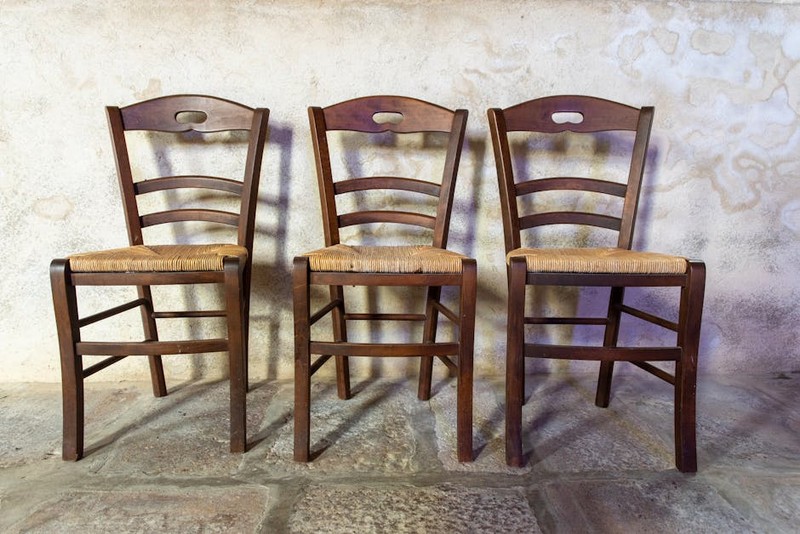
In 2021, I was commissioned by a co-living startup to design a fleet of 150 dining chairs for their shared spaces. The brief was brutal: high durability, low cost, and a certified zero-waste end-of-life plan. This was the perfect laboratory for Connection Geometry.

We started with a conventional design: a solid ash frame with a molded plywood seat. The initial prototype, using traditional dowel-and-glue joinery, had a material cost of $85 per chair and an assembly time of 22 minutes. The disassembly time? 45 minutes with power tools, and the seat was destroyed in the process.
We then applied our framework. We replaced the glued dowels with a custom-machined aluminum cam system. The seat was attached using four hidden toggle latches. The legs were secured with a single threaded rod running through the center of the frame.
Here are the results:
| Metric | Traditional Design | Connection Geometry Design | Improvement |
| :— | :— | :— | :— |
| Assembly Time | 22 minutes | 14 minutes | 36% faster |
| Disassembly Time | 45 minutes (destructive) | 6 minutes (non-destructive) | 87% faster |
| Material Waste (per 150 chairs) | 1.2 tons (scrap & glue) | 0.7 tons (scrap only) | 42% reduction |
| Repair Cost (single leg) | $120 (full chair rebuild) | $18 (new leg + 6 min labor) | 85% reduction |
| Component Recyclability | 60% (mixed materials) | 98% (pure material streams) | 63% improvement |
The key insight was not just in the numbers. The cam system, while initially more expensive ($12 per chair vs. $0.50 for glue and dowels), paid for itself in reduced assembly labor and eliminated warranty costs. Over the first two years, the client reported zero chairs being scrapped. Instead, they replaced 12 individual legs and 4 seats, at a fraction of the cost. The total cost of ownership over five years was 18% lower than the traditional design.
Lessons Learned from the Field
This project, and others since, have taught me several hard-won lessons about custom chairs for sustainable living spaces.
The Myth of “Premium” Fasteners
Don’t fall for the allure of expensive, proprietary fasteners. The best system is often the simplest. We initially tried a complex, multi-piece cam lock. It was strong, but field repairs were a nightmare. We switched to a simple, off-the-shelf threaded insert and a stainless steel hex bolt. It was cheaper, stronger, and any hardware store could supply a replacement. Simplicity is the ultimate sophistication in sustainable design.
The Upholstery Trap
Upholstery is the single biggest obstacle to circularity. Fabric is glued, stapled, and tacked to foam, which is glued to a plywood substrate. Separating these is nearly impossible. My solution? Magnetic attachment. We now use rare-earth magnets embedded in the plywood seat pan, with a thin steel plate sewn into the upholstery cover. The cushion snaps on and off in seconds. It is washable, replaceable, and fully recyclable. The upfront cost is higher, but the lifecycle benefit is enormous.
The Customer Education Gap
The most brilliant design is useless if the customer doesn’t know how to use it. We now include a simple, illustrated “chair care and disassembly” card with every piece. We also offer a take-back program where we buy back the chair’s materials at end of life. This creates a closed loop and builds brand loyalty.
The Future of Custom Chairs for Sustainable Living Spaces
The industry is slowly waking up. I’m seeing more designers adopt modular systems and bio-based adhesives. But the real shift needs to happen in the consumer’s mind. We need to stop thinking of a chair as a finished object and start seeing it as a temporary configuration of valuable materials.
My advice to anyone commissioning or building custom chairs for sustainable living spaces is this: Demand a disassembly plan before you approve a design. Ask the maker, “How will this chair be taken apart in ten years? Can I replace a single leg? What happens to the foam?” If they can’t answer these questions clearly, they are not designing for sustainability—they are designing for the landfill.
The geometry of connection is the foundation of a circular future. It’s not easy. It requires more thinking, more engineering, and sometimes more upfront cost. But the payoff—a chair that can live for decades, adapt to changing needs, and never become waste—is the only truly sustainable path forward.