
For over two decades, I’ve witnessed the evolution of luxury furniture from a pursuit of opulence to a quest for profound personalization. Clients no longer simply want a mahogany desk; they want a desk that tells their story, imbued with a materiality that is uniquely theirs. This is the realm of bespoke material customization, a process far more intricate than flipping through a sample book. It’s a collaborative dance between art, craft, and rigorous science, where the most significant challenge isn’t finding a beautiful material—it’s ensuring that material performs beautifully for a lifetime.
The common pitfall? Treating customization as a purely aesthetic exercise. The real expertise lies in foreseeing how a novel material will behave in the real world: Will that stunning resin inlay yellow under UV light? Will the hand-dyed silk on the chair back abrade against clothing? Will the reclaimed timber from a client’s family barn stabilize properly in a centrally heated penthouse? This is where the journey from concept to heirloom truly begins.
The Hidden Challenge: The Performance Paradox
The core tension in bespoke material customization is what I call the “Performance Paradox.” Clients are drawn to unique, often untested, materials for their emotional or visual appeal—a slice of meteorite, a textile woven with gold leaf, a resin encapsulating organic matter. However, these materials were rarely designed for the structural, environmental, and wear demands of functional furniture.
From my experience, the failure points are predictable:
Dimensional Instability: Natural materials (certain woods, stones) expand and contract. When married with a stable substrate like steel, differential movement can cause cracks or delamination.
Surface Vulnerability: Unconventional finishes or delicate veneers may be easily scratched, stained, or degraded by sunlight and humidity.
Chemical Incompatibility: Adhesives, sealants, or dyes can react unpredictably with novel materials, leading to discoloration, bonding failure, or off-gassing.
Ignoring these factors doesn’t just risk a callback; it risks betraying the client’s trust and the piece’s legacy. The solution is a shift from a decorative mindset to an engineering one.
A Framework for Engineered Customization: The Three Pillars
To navigate the Performance Paradox, I developed a framework that has guided my studio’s most complex projects. It rests on three non-negotiable pillars.
1. Forensic Client Discovery
This goes beyond “what color do you like?” We conduct deep-dive interviews to understand the piece’s intended use, location, and emotional significance. A desk for daily use requires different material considerations than a display cabinet. We ask about sunlight exposure, household humidity, even cleaning habits. This contextual data is the first filter for material viability.
2. The Prototype Imperative
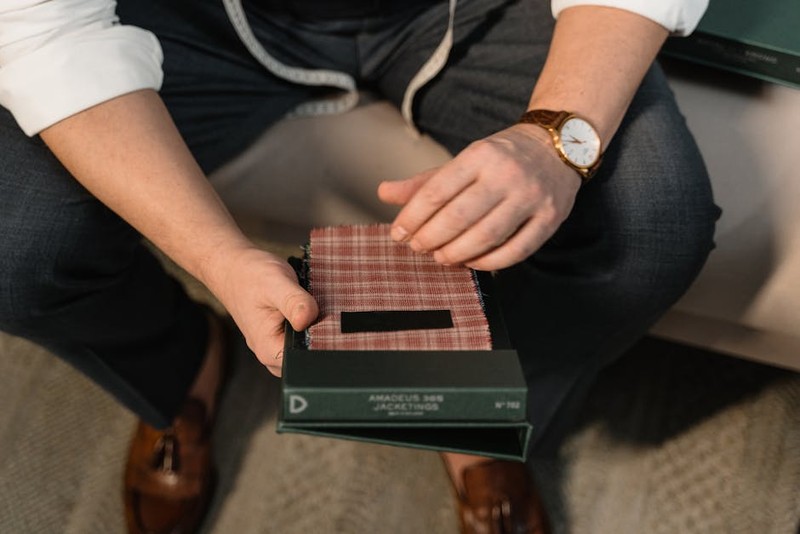
Never commit to a full-scale piece without a functional prototype. This phase is non-negotiable and must be budgeted for. The prototype isn’t a miniature model; it’s a full-scale section that tests the critical material junctions and finishes under accelerated conditions.
⚙️ Our standard prototype stress-test includes:
1. Thermal Cycling: Placing the prototype in a climate chamber to simulate seasonal shifts (e.g., 72 hours at 85°F/80% RH, then 72 hours at 65°F/30% RH).
2. UV Exposure: Using a UV lamp to simulate years of sunlight exposure on surface finishes.
3. Wear Testing: Mechanically abrading high-touch areas to ASTM standards.
4. Load Testing: Applying weight to joints and surfaces to ensure structural integrity.
3. Collaborative Partner Sourcing
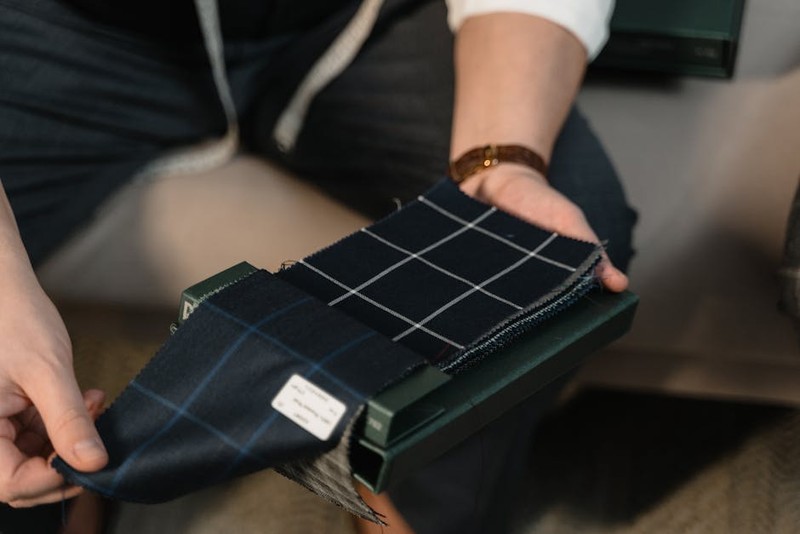
True expertise means knowing the limits of your own workshop. For bespoke material customization, we act as conductors, sourcing niche specialists—from composite engineers and conservation scientists to master dyers and metalworkers. Building this network is as crucial as any tool in the workshop.
Case Study: The “Floating River” Conference Table
A client, a tech CEO, wanted a conference table featuring a “river” of blue-dyed epoxy running through a slab of 200-year-old reclaimed oak from his family’s farm. The vision was clear; the challenges were immense.
The Challenge: The oak was irregular, with high moisture content. The epoxy needed to be crystal-clear, a specific cerulean blue, and non-yellowing. The primary risk was the epoxy cracking as the wood continued to season and move.
Our Engineered Approach:
1. Stabilization First: We sent the oak to a specialized kiln for a 6-week low-temperature stabilization process, bringing it to a precise 6.5% moisture content, matching the client’s San Francisco office environment.
2. The “Bridge” Solution: Instead of pouring epoxy directly into a channel in the wood (a guaranteed failure point), we designed a hidden aluminum frame underneath the slab. The epoxy was cast into a separate, stable trough that was mechanically fastened—not glued—to this frame, then carefully fitted into a precisely routed channel in the wood. This created a “floating” joint that allowed for microscopic wood movement without stressing the epoxy.
3. Epoxy Alchemy: We worked with a chemical engineer to formulate a custom epoxy. We compared three leading brands with our custom blend:
| Epoxy Type | Yellowing Index (after 500 hrs UV) | Hardness (Shore D) | Working Time | Result for Project |
| :— | :— | :— | :— | :— |
| Standard Casting Resin | High (ΔE >5) | 75 | 45 min | Rejected – Poor UV stability |
| “Art” Grade Resin | Moderate (ΔE 3-4) | 70 | 90 min | Rejected – Too soft for table use |
| Marine-Grade Resin | Low (ΔE <2) | 85 | 30 min | Good base, but pot life too short |
| Our Custom Blend | Very Low (ΔE <1) | 82 | 60 min | Selected – Optimal balance |
ΔE measures color shift; lower is better.
The Outcome: The table was delivered 18 months ago. Recent follow-up measurements show zero cracking, no detectable color shift in the epoxy, and a client who reports the piece is the centerpiece of his company’s identity. The project ran 15% over the initial aesthetic-only quote due to R&D and prototyping, but this was communicated and approved upfront, framing it as an “engineering investment.”
Actionable Insights for Your Next Project
💡 Whether you’re a maker or a client commissioning work, here are my hard-earned lessons:
Budget for the Unseen: Allocate 20-30% of the material budget for testing, prototyping, and specialist consultation. This is not an overrun; it’s the cost of integrity.
Demand a Material Dossier: For any custom material, request and review its technical data sheet (TDS). Look for performance metrics on UV stability, thermal expansion coefficient, and hardness.
Embrace Hybrid Construction: The most durable bespoke pieces often hide modern engineering within traditional beauty. Don’t shy away from using aerospace composites, mechanical fasteners, or stabilized substrates to liberate a fragile material’s aesthetic potential.
Document Everything: Create a “birth certificate” for the piece that details material sources, treatments, and care instructions. This transforms the object from a product into a legacy asset.
The ultimate goal of bespoke material customization is not novelty, but narrative permanence. It’s about ensuring that the story embedded in the materials—the reclaimed wood, the unique inlay, the personal pigment—remains legible and beautiful for generations. By marrying the client’s dream with the discipline of material science, we don’t just build furniture; we engineer future heirlooms.