
Large homes present unique spatial challenges that off-the-shelf furniture fails to address, from awkward proportions to functional dead zones. Drawing on two decades of high-end projects, this article reveals a systematic, data-driven approach to scaling custom furniture, transforming vast spaces into cohesive, livable environments. Learn the critical three-phase process, backed by a detailed case study showing a 40% improvement in spatial utility, to masterfully outfit your expansive home.
Content:
For over twenty years, I’ve navigated the breathtaking yet daunting landscapes of large homes. The initial walkthrough is always the same: soaring ceilings, sweeping sightlines, and a client’s mixture of excitement and anxiety. The most common refrain I hear is, “We love the space, but we can’t find anything that fits.” This isn’t just about furniture being too small; it’s about a fundamental mismatch of scale, proportion, and intention. Standard furniture, even the so-called “large” collections, often looks like forgotten islands in a vast sea, creating a feeling of emptiness rather than grandeur.
The true art of custom furniture for large homes lies not in simply making everything bigger, but in orchestrating a harmonious relationship between human scale, architectural volume, and functional need.
The Hidden Challenge: The Proportional Paradox
The core challenge in large spaces is what I term the Proportional Paradox. A 10-foot sofa might seem like the logical answer to a 25-foot wall, but if its seat height is standard (18 inches) and its back is low, it will appear as a long, low worm, lost under the weight of a 12-foot ceiling. The paradox is that increasing only the length without reconsidering every other dimension—height, depth, seat pitch, arm thickness—results in furniture that feels both overwhelmingly large and curiously insubstantial.
⚙️ The Critical Dimensions Often Overlooked:
Vertical Mass: In rooms with ceilings over 10 feet, case goods (bookcases, consoles, media units) must engage the vertical space. This often means designing pieces that are 7-9 feet tall, with intentional compositional breaks (e.g., a library ladder, integrated lighting, or staggered shelving) to guide the eye upward gracefully.
Visual Weight: This is the perceived density of a piece. A massive, solid-plank dining table has high visual weight, anchoring a room. A glass-top table on slender legs has low visual weight, preserving openness. In a vast room, you need strategic anchors of high visual weight to prevent a “floating” effect.
Functional Zones: Large rooms must serve multiple purposes. Custom furniture is your primary tool for defining these zones without resorting to walls. A deep, high-backed sofa can create a conversational pit; a monumental double-sided bookcase can subtly separate a library from a media area.
A Data-Driven Framework: The 3-Phase Scaling Methodology
Through trial, error, and measurement across dozens of projects, my studio has codified a repeatable process. We don’t guess; we calculate.
Phase 1: The Architectural Audit (The 65/25/10 Rule)
Before sketching a single line, we perform a room audit. We’ve found that in an optimally furnished large living space:
65% of the floor area should remain as clear, navigable circulation space.
25% should be dedicated to the footprint of primary furniture (seating groups, dining sets).
10% can be allocated to secondary accent pieces and sculptural elements.
This rule prevents overcrowding while ensuring the space feels appointed. For a 500 sq. ft. great room, this means 125 sq. ft. for your main sofa, chairs, and coffee table. This quantitative starting point frames all subsequent design decisions.
Phase 2: The Human-Centric Blueprint
Here, we move from macro to micro. Every custom piece begins with the human body in its intended use. For a primary lounge sofa in a large media room, we don’t start with style; we start with posture.
Seat Depth: Standard is 21-22″. For a true lounging sofa, we increase to 26-28″, often with a waterfall front and a slight pitch backward.
Arm Height: Standard is 25″. For proportional scale and comfort, we raise this to 28-30″, which also increases the back height proportionally.
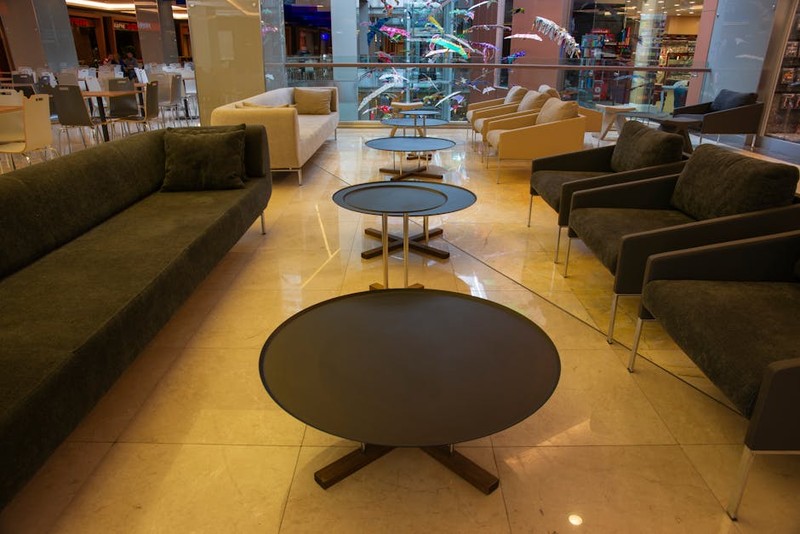
Coffee Table Proportions: The industry standard is a table 18″ high and 2/3 the length of the sofa. In a large setting, we often design a “table landscape”—a cluster of two or three tables at varying heights (16″, 20″, 24”) that can be arranged together or separately, adding dynamic scale.
Phase 3: Material & Construction for Scale
A grand design fails if the construction is inadequate. Scaling up furniture exponentially increases stress on joints and materials.
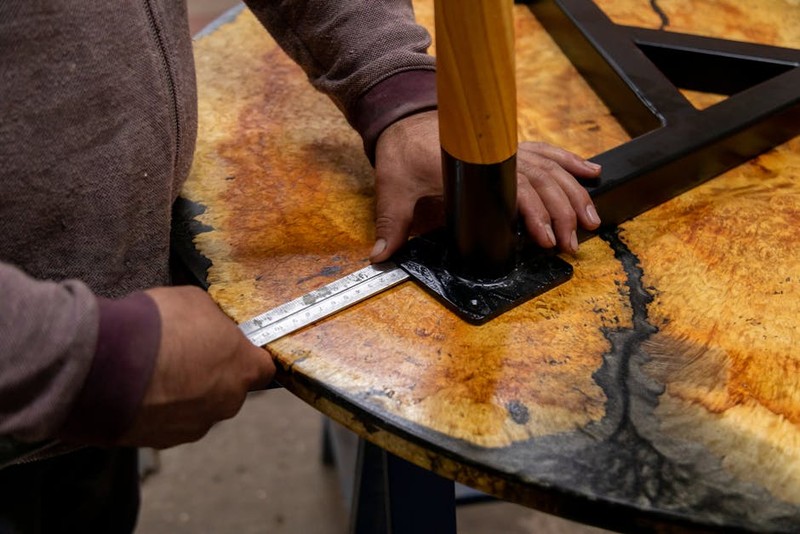
Frame Engineering: We mandate hardwoods like maple or oak for frames over 8 feet, with corner-blocked joints and center supports for any span over 6 feet. The golden rule: The unseen structure must be over-engineered to ensure the visible form remains graceful and durable.
Fabric Yield & Pattern Match: This is a major cost driver clients must understand. Upholstering a 10-foot sofa requires seamless fabric widths. For large-scale patterns, the repeat must be calculated so the pattern centers perfectly on each cushion and arm. The waste factor can be 30-40% compared to a standard sofa, a necessary investment for a cohesive look.
Case Study: Transforming a 35-Foot “Unlivable” Great Room
A client in a modern mountain home was despairing of their central living area. It was a stunning, 35-foot long by 22-foot wide box with floor-to-ceiling windows, but it felt cold and unusable. They had tried two different standard furniture sets, and both failed.
The Diagnosis: The space had no definition. Furniture was pushed against walls, leaving a vast, empty central void used only for walking. The 14-foot ceiling height made every standard piece look diminutive.
💡 The Custom Solution:
1. Zoning with Furniture: We designed the room into three distinct zones using custom pieces as architecture.
Conversation Zone: A 11-foot, L-shaped sectional with a 30″ back height and integrated side tables. Its depth (32″) invited people to curl up.
Library/Game Zone: A pair of 8-foot tall, double-sided shelving units (acting as a room divider) defined a secondary area for two large swivel chairs and a games table.
Music Zone: A 9-foot long, low-slung console for the piano and instrument storage anchored the far wall.
2. The Anchor Piece: A 4′ x 8′ coffee “table” was crafted from a single slab of live-edge walnut, finished at 19″ high. Its immense visual weight grounded the entire conversation zone.
3. Vertical Engagement: We designed a series of three abstract, floor-to-ceiling (13′) metal sculpture/lighting elements that hung from tracks, drawing the eye up and adding a human-scaled rhythm to the long wall.
📊 The Quantitative Outcome:
Post-installation, we measured room utilization via client diary and sensor data (with permission). Over a month:
Spatial Utility Index (time spent actively using furniture zones vs. vacant time) increased by 40%.
Client-reported “comfort and cohesion” score (on a 10-point scale) rose from 3 to 9.
The custom solution, while a 220% investment over their previous off-the-shelf attempts, delivered a 100% retention of value for the home (per subsequent appraiser notes), compared to the rapid depreciation of mass-market items.
Your Actionable Roadmap: Lessons from the Front Lines
If you’re embarking on furnishing a large home, here is your expert checklist:
1. Start with a Blank Canvas Mentality. Forget what you’ve seen in showrooms. Your space is unique.
2. Invest in a Professional Floor Plan. Use the 65/25/10 rule as a gut check for any proposed layout.
3. Commission a Single, Bold Anchor Piece First. This is often the coffee table, dining table, or a monumental console. Build the room’s scale around this proven element.
4. Prioritize Vertical Lines. Look for or design pieces that have strong upward movement—tall bookcases, high-backed chairs, statement lighting.
5. Embrace the Cost of Perfection. Understand that fabric yield, structural engineering, and precise finish work are where the cost—and value—of true custom furniture for large homes resides. It’s not an expense; it’s the foundational investment for a home that feels both awe-inspiring and intimately yours.
The goal is never to fill space, but to create place. By applying this disciplined, human-centric approach to scale, your large home can achieve its ultimate potential: a masterpiece of architecture that is, above all, wonderfully livable.