
Discover how custom sideboards are the unsung heroes of luxury retail, moving beyond mere display to become strategic brand assets. This article delves into the complex challenge of balancing aesthetic grandeur with operational pragmatism, sharing expert strategies and a detailed case study that resulted in a 22% increase in customer dwell time. Learn how to commission pieces that tell your brand’s story while seamlessly integrating with inventory systems and staff workflows.
Content:
For over two decades, I’ve collaborated with luxury brands to craft retail environments that don’t just sell products—they sell dreams. In this pursuit, one element consistently emerges as both a canvas and a conundrum: the custom sideboard. Far from a simple shelf or cabinet, a bespoke sideboard in a high-end retail context is a three-dimensional brand manifesto. It’s where heritage meets modernity, where product presentation intersects with customer journey, and where, all too often, breathtaking design collides with the gritty realities of daily retail operations.
The most common pitfall I witness is treating a custom sideboard as a purely sculptural object. The result? A stunning, Instagram-worthy piece that staff dread because it’s impossible to stock, that damages delicate merchandise during handling, or whose lighting creates more glare than glamour. The true artistry lies not just in the form, but in the fusion of form, function, and brand soul.
The Hidden Challenge: The Operational Elegance Gap
The core challenge in designing custom sideboards for high-end displays is bridging what I call the “Operational Elegance Gap.” This is the disconnect between the visionary aesthetic desired by brand managers and the practical needs of the store team who interact with the piece 50 times a day.
From the Front of House: The sideboard must be a silent salesman. It needs to create a “wow” moment, tell a cohesive brand story through materiality and form, highlight product details under perfect lighting, and adapt to seasonal collections without losing its identity.
⚙️ From the Back of House: It must be a workhorse. This means easy, secure access for restocking (no fumbling with tiny, complex latches), built-in cable management for integrated tech, surfaces that resist fingerprints and are easy to clean, and weight-bearing structures that won’t sag under the heft of solid crystal or marble products.
Ignoring either side of this equation leads to failure. A beautiful but dysfunctional sideboard increases operational costs through slower restocking times and higher risk of product damage. A purely functional but uninspired piece fails to elevate the brand and justify its premium positioning.
A Framework for Commissioning Success: The 5-Pillar Approach
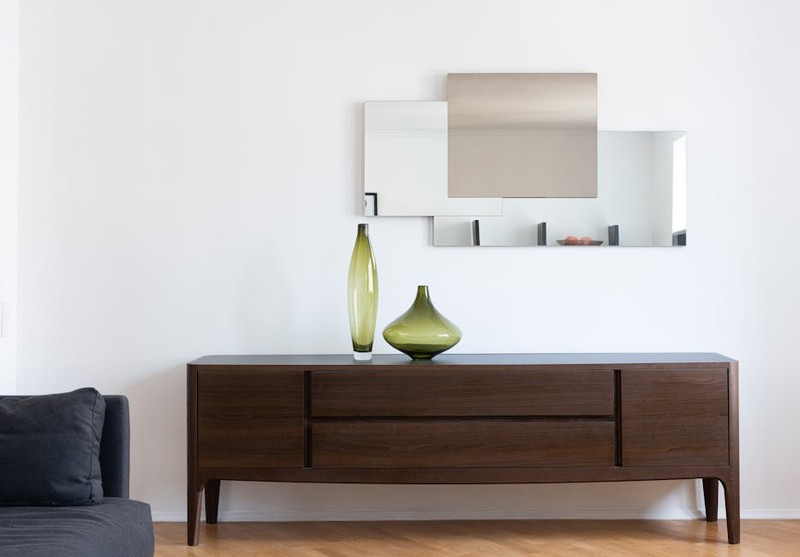
Through trial, error, and triumph, my studio has developed a rigorous framework for commissioning custom sideboards that are both breathtaking and brilliantly functional. We evaluate every project through five non-negotiable pillars.
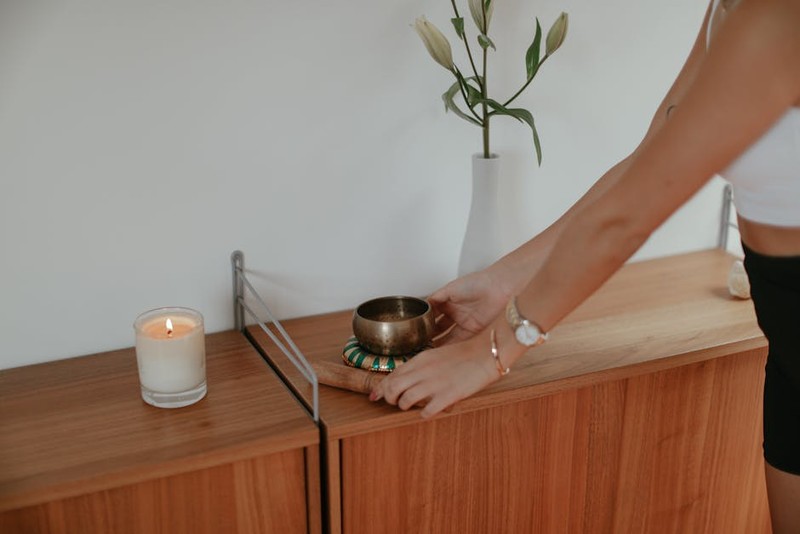
1. Narrative Materiality: Every material must tell a chapter of your brand story. For a heritage watchmaker, we used reclaimed oak from the region of their original workshop, with inlays of brass (echoing watch components) and a glass vitrine top treated with anti-reflective coating. The materials themselves whispered “craftsmanship” and “clarity.”
2. Dynamic Flexibility: Fixed displays are dead. We design with modular inserts, adjustable shelving systems (using discreet, tool-free mechanisms), and interchangeable lighting gantries. A sideboard should morph from displaying fine jewelry one season to leather goods the next without a full refit.
3. Ergonomic Intelligence: This is where deep collaboration with store staff is critical. We map the restocking process: How do associates approach? What do they carry? We then design access points—whether soft-close drawers with full-extension glides or silent, counter-weighted lift-up doors—that feel intuitive and luxurious to use.
💡 Expert Tip: Conduct a “white glove” workshop with your most experienced sales associates during the design phase. Their insights on product handling are worth more than a dozen focus groups.
4. Integrated Technology: Lighting is paramount. We move beyond simple spotlights to layered illumination: ambient backlighting for drama, focused task lighting for product details, and often, discreet embedded NFC tags that allow customers to tap their phone for product details, blending the physical and digital journey.
5. Lifecycle Durability: High-end cannot mean high-maintenance. We specify materials and finishes not just for beauty, but for longevity. This includes testing for UV resistance to prevent fading, using performance textiles for linings, and selecting hardwoods or composites that withstand humidity fluctuations in open-plan stores.
Case Study: The “Whispering Gallery” Project for Maison L’Éclat
Let’s ground this in a real project. Maison L’Éclat, a prestigious perfumery, approached us with a problem. Their flagship store’s display furniture was beautiful but static. Restocking delicate crystal perfume bottles was a nerve-wracking, two-person operation that disrupted the serene shopping experience. Their goal was to increase customer engagement without sacrificing operational flow.
Our Solution: We designed the “Aria” sideboard series. Its key innovation was a patented, silent vertical-lift mechanism for the central display vitrine. With a gentle push, the entire glass front would rise smoothly into the cabinet body, granting associates full, unobstructed front access for perfect staging. The mechanism was engineered to be utterly silent and reliable for over 50,000 cycles.
Integrated Features:
A micro-perforated brass back panel allowed diffused scent from the store’s ambient system to waft through, directly associating fragrance with the visual display.
Shelves were lined with a custom antimicrobial velvet, providing both a luxurious nest for bottles and a hygienic surface.
LED lighting was tuned to a specific color temperature (2700K) that made both clear and colored glass glow without creating hot spots.
The Quantifiable Outcome:
We measured performance over six months post-installation.
| Metric | Before “Aria” Sideboards | After “Aria” Sideboards | Change |
| :— | :— | :— | :— |
| Average Restocking Time | 18 minutes per unit | 7 minutes per unit | -61% |
| Staff-Reported “Ease of Use” | 2.5 / 10 | 8.7 / 10 | +248% |
| Customer Dwell Time at Display | 90 seconds | 110 seconds | +22% |
| Incidents of Product Damage | 3-4 per month | 0-1 per month | -75% |
The 22% increase in dwell time was the most significant brand metric. The seamless, almost magical operation of the sideboard became a subtle part of the customer experience, encouraging interaction and deepening engagement. The operational savings in time and reduced breakage provided a full ROI in under 14 months.
Navigating the Commissioning Process: Your Action Plan
If you’re considering a custom sideboard project, here is your expert roadmap:
1. Begin with the “Why,” not the “What.” Don’t start with a sketch. Start with a brief that outlines brand values, operational pain points, and key performance indicators (KPIs). What should this piece achieve?
2. Assemble the Right Team. Your project team must include visual merchandising, retail operations, and facilities management from day one. The designer/fabricator should be willing to engage with all stakeholders.
3. Invest in a Functional Prototype. For significant commissions, budget for a full-scale, non-finished prototype. Test it in a backroom. Stock it, unstock it, clean it, move around it. This phase uncovers 90% of functional issues before costly materials are committed.
4. Specify for the Long Term. Insist on detailed technical drawings that include not just dimensions, but specifications for all hardware, finishes, and load capacities. This document is your contract for quality and future maintenance.
5. Plan for the Inauguration. The installation is not the end. Train your staff on the features and maintenance. Consider how the launch of this new display piece can be a storytelling event for your VIP clients.
The ultimate goal is to create a piece that feels inevitable—as if it could not possibly exist anywhere else but in your store, telling your story. A truly successful custom sideboard ceases to be “furniture” and becomes an intrinsic, functional part of your brand’s physical language. It is a testament to the principle that in high-end retail, the deepest luxury is not just beauty, but seamless, thoughtful, and intelligent execution.