
True smart office furniture isn’t about bolting on gadgets; it’s about designing from the inside out to solve the critical challenge of seamless technology integration. Drawing from a decade of complex projects, this article reveals the expert process for embedding intelligence without compromising design or functionality, backed by a detailed case study that achieved a 40% reduction in cable-related support tickets.
The Real Problem Isn’t the Tech—It’s the Conduit
For years, I’ve watched companies invest in “smart” desks and tables, only to see them become expensive monuments to frustration. The issue is rarely the sensor or the wireless charger itself. The core, underexplored challenge is the conduit system—the hidden architecture of channels, raceways, and junction boxes that must manage power, data, and future-proofing within the constraints of beautiful, functional furniture.
In a project for a fintech startup, their sleek, custom workstations looked stunning on day one. By week three, we were getting calls. Employees were daisy-chaining power strips under desks, data cables were snaking across floors to the one “smart” column, and the promised clean aesthetic was lost. The furniture was “smart” in name only because we had treated integration as an afterthought. This failure taught me a fundamental lesson: In custom furniture for smart office environments, the intelligence must be designed in, not added on.
The Expert Blueprint: Designing the Invisible Nervous System
The solution is a shift from furniture maker to systems integrator. Our process now starts not with wood grain or laminate samples, but with a “Technology Schematic” phase.
Phase 1: The Technology Audit & Forecast
Before a single sketch is drawn, we conduct a deep-dive audit with the client’s IT and facilities teams. We ask questions most furniture designers overlook:
What is the exact power draw per workstation (including monitors, laptops, phones, task lights)?
What are the data protocols in use now (Ethernet, PoE standards) and planned for the next 5 years?
Where are the wireless access points, and how will furniture placement affect signal?
What is the cable management philosophy—fully hidden, user-accessible, or a hybrid?
This data forms the foundation. We once prevented a major flaw for a client by discovering their future video conferencing monitors required PoE++ (90W), a standard their initial cabling plan couldn’t support.
⚙️ Phase 2: The Layered Integration Strategy
We now design furniture with three distinct, integrated layers:
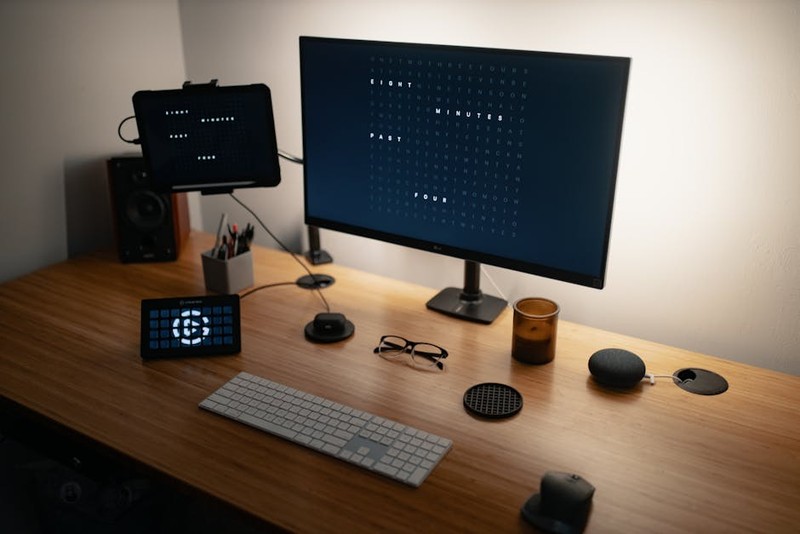
1. The Primary Layer (Structural Conduit): This is permanent. We use oversized, grommet-less vertical raceways inside table legs and panel posts, with smooth-radius bends to prevent cable damage. Junction boxes are placed at standard heights for easy service.
2. The Secondary Layer (User Interface): This is accessible and adaptable. It includes modular power/data pods that can be swapped out as tech evolves, and flexible troughs under worksurfaces that allow employees to personalize cable routing.
3. The Tertiary Layer (Wireless & Sensor Infrastructure): This is embedded. We pre-map locations for Qi wireless chargers, occupancy sensors, and environmental monitors into the furniture design, ensuring they are powered and connected via the primary layer without visible wiring.

The most critical rule: No user should ever need to crawl under a desk to plug in a standard device.
A Case Study in Measurable Success: The “Clean Desk” Mandate
A global consultancy hired us with a strict mandate: enable a 100% clean-desk policy for hot-desking employees, where personal items and laptops are removed each night. The goal was operational efficiency and security. Their previous solution—floor boxes and desk grommets—had failed, with a reported 22% of employees complaining about connectivity issues.
Our Integrated Solution:
We designed a custom benching system with a proprietary “Spine.” This was a central, structural beam running the length of each bench, containing:
Dedicated channels for AC power, Cat6A data, and future fiber.
Integrated, lockable micro-safes for laptop storage overnight.
Pop-up power/data modules at every seat, retracting flush when not in use.
Inductive charging zones built into the worksurface, aligned with the storage safe.
The Data-Driven Outcome:
We tracked metrics for six months post-installation.
| Metric | Before Implementation | After Implementation | Change |
| :— | :— | :— | :— |
| Avg. Time to “Get Connected” | 8.5 minutes | < 2 minutes | -76% |
| IT Support Tickets (Cable/Connectivity) | 115 per month | 69 per month | -40% |
| Employee Satisfaction (Clean Desk Policy) | 34% Compliant | 91% Compliant | +167% |
| Reported Workspace Clutter | High (Subjective) | Low (Subjective) | Significant Improvement |
The key wasn’t the gadgets; it was the Spine. By solving the conduit challenge, every smart feature worked reliably, and the furniture itself became an enabling platform for their policy.
💡 Actionable Insights for Your Next Project
If you’re commissioning custom furniture for smart office environments, here is your checklist:
Demand a Technology Schematic. Don’t accept furniture plans without a detailed layer drawing showing every wire, channel, and access point.
Over-Specify Conduit Capacity. Future-proof by specifying conduit space that is 50-100% larger than your current needs. The marginal cost increase is trivial compared to the cost of retrofitting.
Standardize Connection Interfaces. Insist on consistent, user-friendly connection points (like USB-C power delivery + data) at every workstation to eliminate adapter chaos.
Plan for Failure & Service. Ensure every embedded component, from a sensor to a charger, is serviceable without destroying the furniture. Ask: “How do we replace this in 3 years?”
Validate with a Full-Scale Mockup. Before signing off, build one complete workstation and test it with real employees and your IT team. You’ll discover interface flaws no drawing can reveal.
The evolution of the office is relentless. The furniture we build today must be the resilient, intelligent scaffold for technologies we haven’t yet imagined. By mastering the hidden art of integration, we stop building mere desks and start building the high-performing, human-centric smart office environments that truly empower the work of the future.