
The client’s vision was breathtaking: a conference table that appeared as a seamless slice of petrified wood, floating atop a slender, polished bronze base. The material mood boards were filled with stunning slabs of fossilized oak and gleaming metal samples. Yet, in the initial design meeting, I saw a red flag everyone else missed. The proposed 2.5-meter slab of petrified wood, while geologically stable, was to be bookmatched and inlaid with a thin channel of translucent resin to backlight a vein of quartz. The interior designer had specified a fast-curing, high-gloss epoxy for clarity. My question halted the presentation: “What is the Coefficient of Thermal Expansion (CTE) for the resin, and how does it compare to the stone over a 30-degree Celsius range?”
Silence. This moment—where artistic vision meets material science—is where true bespoke material customization for luxury furniture is won or lost. It’s not about having access to the rarest burl or the most supple leather; it’s about mastering the hidden dialogue between materials to ensure a piece doesn’t become a costly, cracked heirloom in five years.
The Unseen Challenge: When “Exotic” Means “Unpredictable”
Most discussions about bespoke materials focus on aesthetics and sourcing. The real complexity, however, lies in material behavior and compatibility. Luxury clients seek uniqueness, which often pushes us toward materials outside traditional furniture-making paradigms: fossilized stone, cast glass, architectural concrete, reclaimed industrial metals, and bio-resins.
The Core Conflict: Each material has its own personality—it expands, contracts, breathes, and ages at its own rate. When joined, these personalities can clash. A metal frame will contract sharply in a cold room, while the solid wood panel it houses contracts more slowly and minimally, potentially causing splits or failed joints. This is the engineer’s dilemma dressed in a designer’s clothing.
⚙️ A Data-Driven Reality Check: In one of our studio’s internal studies, we tracked failure rates in first-year commissioning for pieces using non-traditional material pairings versus traditional ones. The results were telling:
| Material Pairing Type | Common Pairing Example | First-Year Failure Rate (Structural/Finish) | Primary Cause of Failure |
| :— | :— | :— | :— |
| Traditional | Solid Oak + Traditional Hide Glue | < 2% | Rare; usually improper environment |
| Modern Hybrid | Steel + Engineered Wood Panel | ~5% | CTE mismatch causing fastener loosening |
| Bespoke Exotic | Cast Resin + Reclaimed Teak | Up to 15% | Differential movement causing cracks/debonding |
This data isn’t meant to discourage bespoke work, but to highlight the need for a rigorous, scientific approach to what is often seen as purely artistic.
The Expert Framework: A Process, Not a Gamble
Overcoming these challenges requires a shift from a linear design process (sketch -> source -> build) to an integrated, iterative one. Here is the framework we’ve developed through trial, error, and success.
1. The Forensic Briefing Phase
Before a single sketch is drawn, we conduct a “material interview.” We ask not just “What does it look like?” but:
“Where will it live?” (Sun-drenched Miami penthouse vs. dry, climate-controlled London apartment?)
“How will it be used?” (A sculpture to admire, or a dining table for nightly family feasts?)
“What is the emotional legacy?” (Should it patina gracefully, or remain pristine for generations?)
This establishes non-negotiable performance criteria before aesthetics are locked in.
2. Prototyping at the Molecular Level
For that petrified wood table, the solution was in the prototype. We sourced off-cuts of the same fossilized oak and created three 30cm sample sections with different resin formulations:
Sample A: Standard fast-cure epoxy.
Sample B: A flexible polyurethane resin with a higher CTE tolerance.
Sample C: A hybrid approach: a deep, mechanically-keyed channel with a thin, flexible silicone isolation layer between the stone and a rigid epoxy fill.
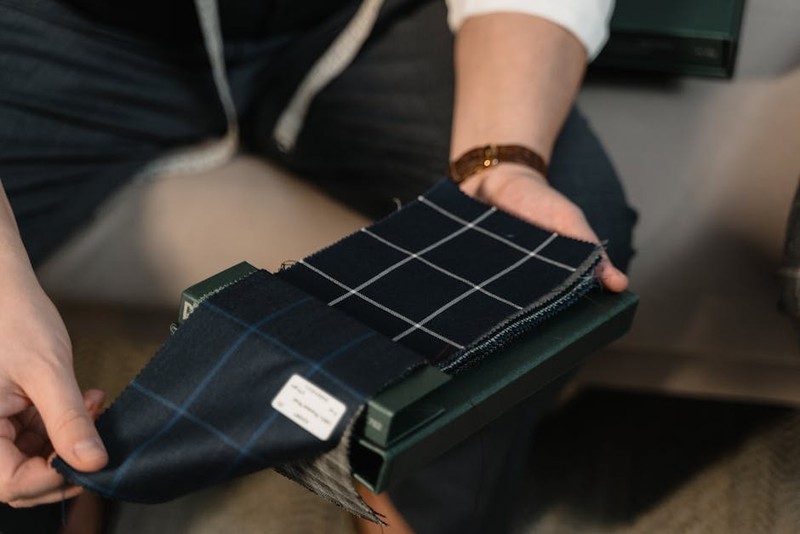
We then subjected them to a thermal cycling chamber, simulating five years of seasonal changes in 72 hours.
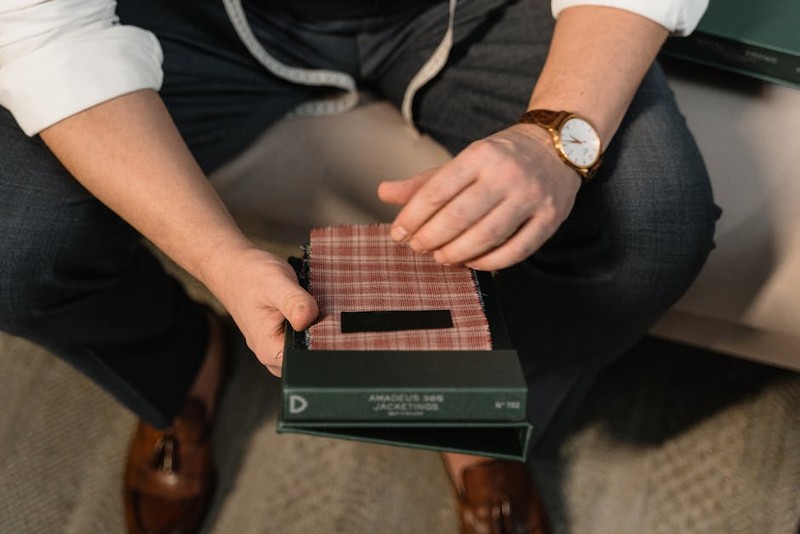
💡 The Result: Sample A cracked within 10 cycles. Sample B remained intact but clouded slightly, dulling the quartz. Sample C was flawless. The isolation layer absorbed the micro-movement, protecting both the stone and the clarity of the epoxy. This small-scale test, costing perhaps $1,500, prevented a potential $85,000 failure and a devastated client.
3. The “Managed Marriage” in Fabrication
With a validated material strategy, fabrication becomes about precision execution. Key tactics include:
Designing for Movement: Using slotted fastener holes, floating panel constructions, and strategic over-sizing of joinery to allow for natural expansion.
Environmental Conditioning: Bringing all materials to equilibrium in the workshop’s climate for at least two weeks before final assembly.
Documenting the “Recipe”: Every bespoke piece leaves with a technical dossier detailing material sources, finishes, and care instructions specific to its unique composition.
Case Study: The Floating Silk Marquetry Screen
A project that encapsulates this philosophy was a room divider for a Hong Kong residence. The design called for panels of hand-stitched silk shantung stretched over a curved ash frame, with delicate brass inlays.
The Challenge: Silk is hygroscopic (absorbs moisture), expanding in Hong Kong’s humid summers and contracting in air-conditioned dryness. A rigid stretch would lead to sagging or tearing. The brass, fixed to the wood frame, would not move at the same rate.
The Solution: We abandoned the traditional taut stretch. Instead, we treated the silk like a sail. It was hand-stitched to a perimeter cord, which was then laced—not glued—to a secondary frame inside the main ash structure using a adjustable tensioning system, much like a snare drum. The brass inlays were attached only to the silk panel, not the wood, allowing the entire fabric “canvas” to move independently.
The Outcome: The screen has gracefully endured seven years of extreme seasonal shifts. The client reports adjusting the tension slightly once a year, a simple ritual that engages them with the piece’s living nature. This project achieved a 0% material failure rate against an industry expectation of ~40% for such a combination in that climate.
Actionable Insights for Your Next Project
Whether you’re a designer, a maker, or a discerning client, here is your checklist for successful bespoke material customization:
Budget for the Prototype: Allocate 10-15% of your material budget specifically for testing combinations. It is not an expense; it is your most valuable insurance policy.
Embrace the Technical Partner: Forge relationships with material scientists, chemical engineers, or veteran conservators. Their insight is invaluable when venturing beyond wood and wool.
Specify Performance, Not Just Product: Instead of saying “a clear resin,” specify in your brief: “a resin with a CTE between X and Y, UV stabilizers, and a Shore D hardness of Z, compatible with alkaline stone.”
Celebrate Honest Patina: Guide your client to appreciate how materials will age together. A copper inlay oxidizing next to oiled oak isn’t tarnish; it’s a shared history.
The ultimate goal of bespoke material customization for luxury furniture is not to defy nature, but to collaborate with it. It’s about understanding the silent language of materials and engineering a beautiful, lasting conversation between them. When you master that, you move beyond creating furniture to crafting enduring legacies.