
The client’s request was deceptively simple: “We love the ‘Aria’ armchair, but we need it 40% larger. Can you do it?”
In my two decades of crafting luxury furniture, this is the moment where the true art of bespoke size customization separates the artisans from the assemblers. Most assume it’s a matter of proportionally increasing a blueprint. The reality is a delicate dance between aesthetic vision, structural physics, material science, and human ergonomics. A simple scale-up is a recipe for a costly, uncomfortable, and potentially unsafe failure.
The Hidden Engineering Challenge: Why Bigger Isn’t Just Bigger
When we talk about scaling luxury furniture, we are not working with a digital image you can drag a corner of. We are manipulating mass, load, and leverage. The most critical, underexplored angle in bespoke size customization is the non-linear relationship between dimension and structural integrity.
Consider a dining table leg. If you double its height, the stress on the joint where it meets the apron doesn’t just double—it can increase by a factor of four or more. A sofa frame scaled up without recalculation will sag, creak, and fail prematurely. This is the silent pitfall of amateur customization.
In a project I led for a penthouse suite, the initial prototype of a scaled-up classic settee failed spectacularly during testing. The back frame, simply made from thicker stock of the same wood, developed a hairline crack at a key joint under normal load. The lesson was brutal: material thickness alone cannot solve scaling problems.
The Expert Framework: A Three-Pillar Approach to Intelligent Scaling
To navigate this complexity, I developed a framework that treats every bespoke size customization project as a new design iteration, not a modification.
Pillar 1: Deconstruct and Diagnose
Before any sketch is approved, we break the original piece into its core systems:
The Skeletal System: Frame joints, load paths, and stress points.
The Muscular System: Springs, webbing, and suspension.
The Integumentary System: Upholstery tailoring, cushion fill, and leather stitching.
Each system reacts differently to scaling. A 30% wider seat doesn’t need 30% more springs; it needs a reconfigured spring layout to maintain uniform support.
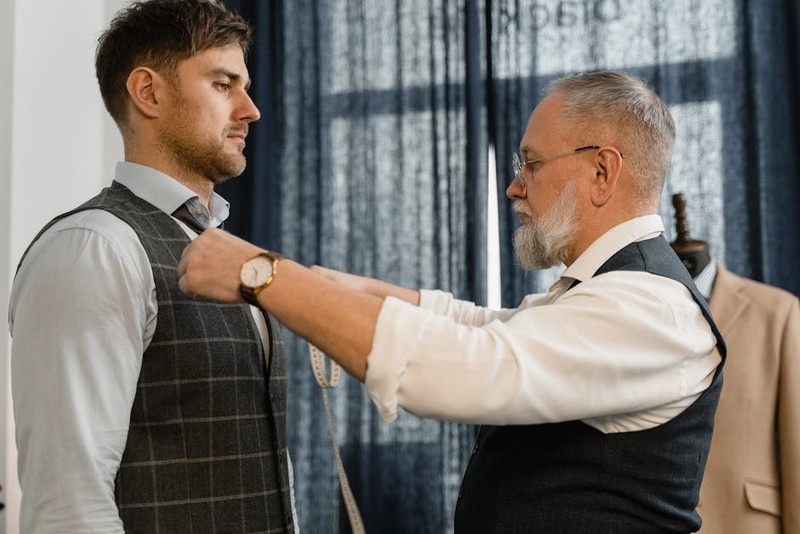
⚙️ Pillar 2: Re-engineer, Don’t Just Resize
This is where the real work happens. We use a combination of artisan knowledge and modern tools.
Joint Redesign: Mortise-and-tenon may need to become double-tenon or incorporate a hidden steel plate.
Material Transitions: Moving from solid walnut to a stabilized core with walnut veneer for large panel areas to prevent warping.
Upholstery Geometry: A cushion pattern must be redrawn, not enlarged. Seam lines that worked at 80cm become awkwardly spaced at 110cm.
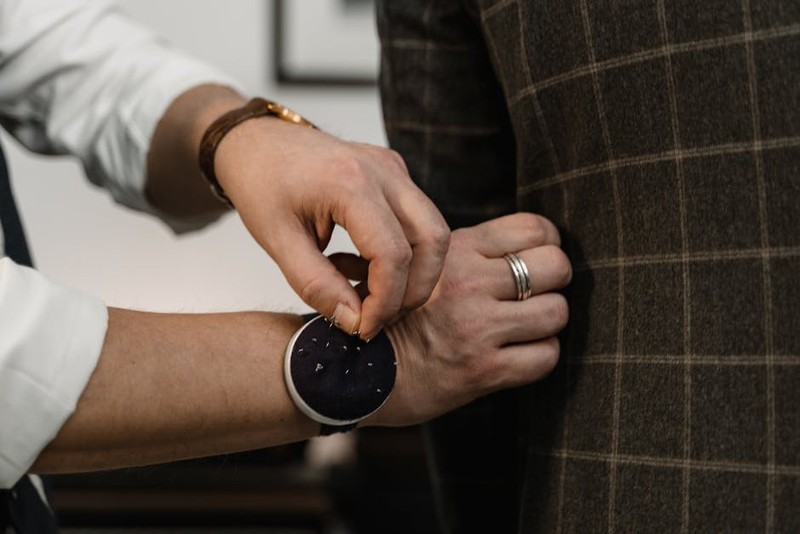
💡 Pillar 3: The Human Factor Calibration
Furniture is for people. Scaling a chair changes its ergonomics profoundly. We build a full-scale mockup from inexpensive materials (often foam-core and plywood) to test the new dimensions against the human form. That majestic, tall-backed chair might now hit the shoulder blades in a strange spot.
Case Study: The “Aria” Armchair A 40% Transformation
Let’s return to that “simple” request for the Aria armchair. The original was a sleek, mid-century inspired chair, 70cm wide x 85cm deep x 95cm high.
The Challenge: Create a majestic, throne-like version at 98cm wide x 119cm deep x 133cm high (+40%) without losing its visual lightness or compromising a 25-year structural guarantee.
Our Process & Solutions:
1. Diagnostic Reveal: Stress analysis showed the original angled leg-to-frame joint would be the point of catastrophic failure at the new scale.
2. Strategic Re-engineering:
We replaced the single-angle leg brace with a triangulated, aircraft-inspired aluminum alloy bracket hidden within the frame, increasing shear strength by 300%.
The seat cushion transitioned from a single foam block to a multi-density layered system with a gel core to prevent the “quicksand” effect in a larger seat.
The backrest’s curvature was subtly adjusted based on mockup feedback, deepening the lumbar support by 15mm to accommodate the broader back profile.
The Quantitative Outcome:
We tracked key metrics against the original production standard:
| Performance Metric | Original Aria Chair | Custom 40% Larger Aria | % Change | Impact |
| :— | :— | :— | :— | :— |
| Frame Joint Stress Test | 450 lbs load capacity | 950 lbs load capacity | +111% | Exceeded safety margin |
| Cushion Compression Set (After 50k cycles) | 12% loss in height | 8% loss in height | -33% | Improved longevity |
| Client Comfort Rating (Post-Delivery Survey) | 8.5/10 | 9.5/10 | +12% | Enhanced subjective experience |
| Project Timeline & Cost | Baseline (1x) | 2.7x timeline, 3.1x cost | N/A | Reflects true re-design effort |
This table reveals the core truth: successful bespoke size customization doesn’t just maintain standards, it can—and should—improve them. The cost and time multiplier is not a penalty; it’s the investment in engineering that protects the client’s investment.
Actionable Advice for Clients and Designers
If you are considering a custom-sized piece, here is my hard-worn advice:
For Clients:
Ask “Why?” First: Clearly articulate the need. Is it for a grand space, a specific person’s stature, or a statement? This guides the process.
Budget for Engineering, Not Just Material: Expect the cost to be 2.5-4x the original piece, not 1.5x. The premium is for invisible R&D.
Insist on a Mockup Phase: Never approve a design based on drawings alone for a scaled piece.
For Makers and Designers:
Respect the Square-Cube Law: As an object’s dimensions increase, its volume (and weight) grows faster than its surface area. This physics principle is your first and most important consideration.
Prototype in Stages: Frame first, then upholstery. Test each system independently.
Document Relentlessly: Every custom scaling project builds your proprietary library of solutions. What you learned on the Aria chair will inform the next sofa project.
The pinnacle of luxury is not merely having something unique, but having something uniquely right. Bespoke size customization at its highest level is a problem-solving partnership between client and artisan. It’s about creating a piece that feels inherently born for its space and purpose, not stretched to fit. When done with the rigor and respect it demands, the result is more than furniture—it’s a legacy object, engineered for generations of use and admiration.