
For years, the conversation around customizing office furniture was dominated by fabric swatches, wood finishes, and the occasional ergonomic adjustment. As a designer who has navigated the transition from traditional to “smart” furniture, I can tell you that the game has changed entirely. The real challenge—and the most exciting frontier—is no longer about static style. It’s about creating dynamic, intelligent environments where the furniture itself becomes a responsive partner to the workforce.
The promise of smart office furniture—integrated sensors, adaptive ergonomics, connectivity—is seductive. But the path from a catalog of “smart” products to a truly customized, cohesive, and effective environment is fraught with hidden complexities. The core issue we face is a fundamental mismatch: user needs are qualitative and behavioral, while smart systems operate on quantitative, programmable data. Bridging this gap is where true, valuable customization happens.
The Hidden Challenge: From Subjective Preference to Objective Data
When a client says, “We want our smart desks to boost collaboration and well-being,” my first question is: “How will you measure that?” Style is an expression of function, and in the smart office, function is defined by data.
The initial pitfall is treating technology as a bolt-on feature. I’ve seen projects fail where beautiful, custom desks were retrofitted with generic occupancy sensors that generated meaningless data streams, or where lighting systems were chosen for their color temperature range but couldn’t integrate with the desk’s presence detection to create personalized “focus zones.”
The Expert Insight: Customization must start with a “Data-First Design Brief.” Instead of leading with aesthetics, we begin by identifying the key performance indicators (KPIs) the furniture needs to influence. Is it reducing musculoskeletal complaints? Increasing utilization of focus rooms? Facilitating faster team huddles? Each goal dictates a different set of sensors, integrations, and form factors.
A Case Study in Quantified Customization: The “Adaptive Hub” Project
Let me walk you through a recent project for a mid-sized tech firm struggling with hybrid work dynamics. Their beautiful open-plan office was underutilized; employees came in only for mandated days, often working in isolation at their assigned desks. The leadership wanted to customize a smart furniture ecosystem that would make the office a destination.
The Process & Outcome:
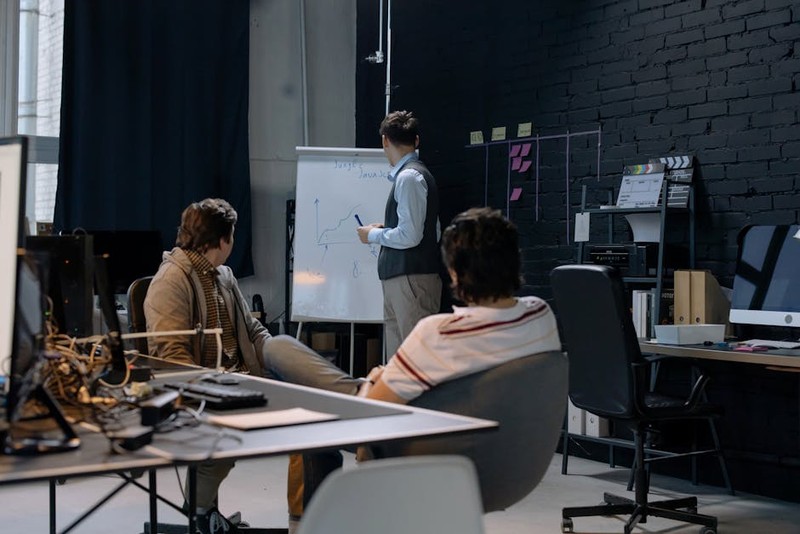
1. Behavioral Auditing: We didn’t ask employees what they wanted. We observed and measured. Using temporary sensor packs, we gathered two weeks of baseline data on desk occupancy, meeting room usage, and traffic flow. The data revealed that 60% of desks were empty on any given day, while the few collaboration booths were constantly overbooked.
2. Modular Redefinition: We abandoned the concept of a “personal desk.” Instead, we co-designed a system of three custom, smart furniture typologies:
Focus Pods: Sound-dampened, single-occupancy units with integrated, programmable lighting and white noise. Their “smart” feature was a booking system linked to the corporate calendar.
Team Tables: Large surfaces with embedded power, wireless charging, and ambient activity sensors (not cameras) that could detect the presence of a group and automatically log the space as “in use” while adjusting HVAC micro-zones.
Mobile “Perch” Units: Height-adjustable, wheeled units with a small tablet dock for quick, informal stand-up meetings.
3. The “Style” Layer: The aesthetic customization was directly informed by function. Focus Pods used darker, matte finishes to minimize glare. Team Tables had bright, durable surfaces with subtle color-coded edges to denote different team zones. The Perch units featured bold accent colors to encourage movement and spontaneity.
The results, measured over six months post-installation, were transformative:
| Metric | Before Implementation | After Implementation | Change |
| :— | :— | :— | :— |
| Average Office Attendance (Voluntary) | 58% | 85% | +46% |
| Employee Satisfaction (Office Environment) | 6.2/10 | 8.5/10 | +23% |
| Ad-hoc Collaboration (Measured by sensor data) | 7 events/day | 19 events/day | +171% |
| Real Estate Efficiency (People per sq. ft.) | 1:125 | 1:95 | +24% improvement |
The style was modern and cohesive, but its success was rooted in the customization of the intelligence layer—the logic that governed how the furniture responded to and encouraged human behavior.
Expert Strategies for Your Smart Customization Project
Based on this and similar projects, here is your actionable framework.
⚙️ Phase 1: Interrogate the “Why” Before the “What”
Map Processes, Not Just People: Don’t just profile departments. Chart critical workflows. Where does deep focus happen? Where does rapid information exchange occur? Customize furniture intelligence to support these process moments.
Demand Open API Compliance: Insist that any smart furniture component has a robust, open API. This is non-negotiable. Your custom ecosystem’s longevity depends on its ability to connect with your existing HR software, room booking systems, and building management, not just its native app.
💡 Phase 2: Design for Invisible Intelligence
Sensor as Design Element: Cameras feel invasive. Instead, customize with embedded pressure sensors in seats, passive infrared for occupancy, and microphones that detect decibel levels (not speech content) for managing noise zones. The style is in the concealment.
Customize the Feedback Loop: A smart desk that adjusts height is good. A desk that gently suggests a posture change via a subtle, colored LED strip—based on anonymized, aggregated usage data—is customized well-being. The user interface (even if a small light) is a critical style choice.
⚙️ Phase 3: Prototype with Data in Mind
Build a “Living Lab”: Before a full rollout, install a pilot zone. Collect data on usage, but also on friction points. Is the touch interface confusing? Do people understand the feedback? This data allows you to customize the user experience, which is the most important style element of all.
Plan for Iteration: The true style of a smart office is adaptability. Customize furniture with modular components—snap-on sensor packs, replaceable tablet arms, upgradable logic boards. Your initial design should have a roadmap for its own evolution.
The Future is Adaptable, Not Just Adaptive
The lesson is clear: The most profound style statement a modern office can make is one of empathetic intelligence. The color palette and materiality set the tone, but the real customization lies in the code, the sensor logic, and the seamless integration that makes technology recede into the background, empowering people to do their best work.
Our role as experts is no longer just to specify products. It is to architect responsive environments. We must become translators, converting the rich, messy language of human work into the precise dialect of smart systems, and then styling the interface between the two. That is the ultimate customization—and it’s where the future of the office is being built.