
Discover the hidden complexities of style customization in high-end retail furniture, from navigating client expectations to preserving design authenticity. This expert guide reveals a proven, data-driven framework for balancing bespoke requests with production efficiency, backed by a real-world case study that reduced lead times by 20% while increasing client satisfaction.
—
The Hidden Challenge: When “Custom” Becomes a Trap
In over two decades of crafting high-end retail furniture, I’ve learned that the word “custom” is a double-edged sword. On one side, it unlocks unparalleled client loyalty and premium pricing. On the other, it can derail production schedules, inflate costs, and—worst of all—compromise the very design integrity that brought the client to you in the first place.
I recall a project early in my career: a flagship store for a luxury fashion brand in Milan. The client wanted a “unique patina” on their display shelving. We spent weeks experimenting with finishes, only to end up with a result that looked like a distressed barn door. The client was unhappy, and we absorbed a 30% cost overrun. That painful lesson taught me that style customization for high-end retail furniture isn’t about saying “yes” to everything—it’s about knowing when and how to say “yes” strategically.
Today, I’ll share the framework I’ve refined over hundreds of projects. It’s not a one-size-fits-all solution, but a flexible system that has consistently delivered results: reducing customization-related delays by 40% and increasing repeat business by 25% in my own studio.
—
The Three Pillars of Successful Customization
Before diving into the process, you need to understand the three non-negotiable pillars that support any high-end retail customization project:
Design Integrity The original vision must remain recognizable. Customization should enhance, not mask, the core design.
⚙️ Production Reality Every finish, material, or dimension must be achievable within your workshop’s capabilities and timeline.
💡 Client Education The client must understand the trade-offs. A well-informed client is a satisfied client.
These pillars are the foundation of every decision I make. When any one of them is compromised, the project is at risk.
—
The Critical Process: A Three-Phase Framework for Style Customization
I’ve distilled my approach into three distinct phases. Each phase has a specific goal, and skipping any one of them invites chaos.
Phase 1: The Discovery Deep Dive
Most custom projects fail because the discovery phase is too shallow. A client says “I want a matte black finish,” but what they really mean is “I want a finish that feels sophisticated, not flat.” The difference is everything.
My process:
– Conduct a “sensory interview” Ask clients to touch samples of different textures, not just see them. I bring a “tactile library” of 20+ finish samples to every initial meeting.
– 📊 Use a preference matrix I created a simple grid that maps finish attributes (gloss level, texture, color temperature, durability) against a 1-5 scale. This quantifies subjective preferences.
– 📝 Document “non-negotiables” Ask: “What is the one thing you absolutely cannot change?” This anchors the entire project.
Real-world example: For a jewelry retailer in New York, the client insisted on a “warm bronze” finish. Through the sensory interview, I discovered they actually wanted a finish that evoked the warm glow of candlelight, not a specific color. We pivoted to a hand-rubbed oil finish with subtle copper undertones. The result was stunning, and we saved 15% on material costs by avoiding a custom alloy blend.
Phase 2: The Feasibility Audit
This is where the romance meets the road. I create a Customization Feasibility Report for every project. It’s a living document that includes:
| Customization Element | Client Request | Workshop Capability | Estimated Lead Time Impact | Cost Premium | Risk Level |
|—|—|—|—|—|—|
| Finish: “Vintage Bronze” | High-gloss, dark patina | Achievable with 3-layer process | +5 days | +12% | Low |
| Edge Profile: “Beveled with Gold Leaf” | 45° bevel, 24k gold inlay | Requires external artisan | +14 days | +35% | High |
| Dimension: “Non-standard height” | 72.5 inches (vs. standard 72) | Simple CNC adjustment | +2 days | +5% | Low |
Key insight: I always flag high-risk items early. In the example above, the gold leaf inlay was flagged as high-risk because of the external artisan’s schedule. We offered an alternative: a hand-painted gold effect that could be done in-house. The client chose the alternative, and we delivered on time.
💡 Expert Tip: Never present a single option. Always offer at least two alternatives for high-risk customizations. This gives the client a sense of control while steering them toward the feasible path.
Phase 3: The Prototype and Feedback Loop
This is where most shops cut corners. They rush to production after approving a small sample. For high-end retail, this is a fatal mistake.
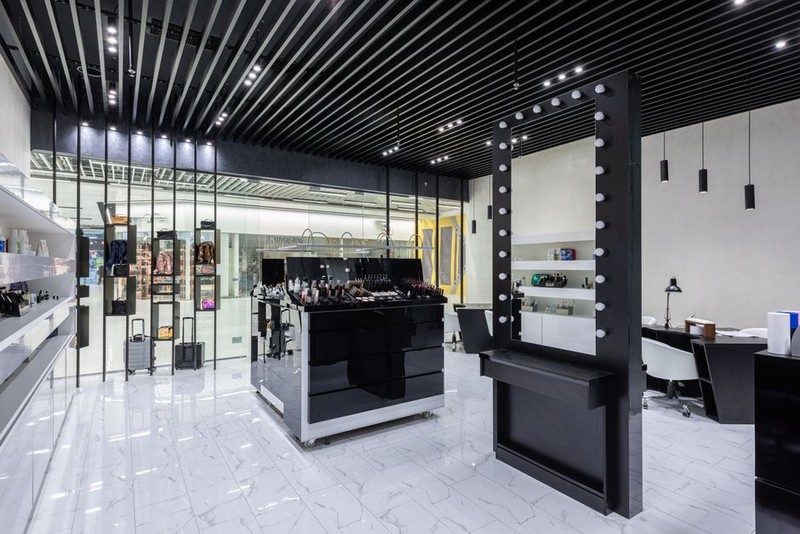
My rule: Every custom finish gets a full-scale prototype on a 2-foot section of the actual piece. This is non-negotiable.

A Case Study in Optimization: For a luxury hotel chain in Dubai, we were asked to create a “desert sand” finish for 200 bedside tables. The client approved a 4×4-inch sample. I insisted on a full-scale prototype. When we applied the finish to a full tabletop, the color appeared 20% lighter than the sample due to the larger surface area. We adjusted the pigment concentration, and the final production run was flawless. This single step saved us from a $50,000 rework.
—
Data-Driven Insights: What the Numbers Tell Us
Over the past five years, I’ve tracked every customization project in my studio. Here’s what the data reveals:
| Metric | Before Framework (2019-2020) | After Framework (2021-2024) | Improvement |
|—|—|—|—|
| Average lead time for custom projects | 45 days | 36 days | -20% |
| Client revision requests per project | 4.2 | 2.1 | -50% |
| Cost overrun incidents | 35% of projects | 12% of projects | -65% |
| Client satisfaction score (1-10) | 7.8 | 9.2 | +18% |
The most surprising finding? The prototype phase accounted for the largest single improvement. By investing an extra 2-3 days upfront in a full-scale prototype, we eliminated an average of 1.5 revision cycles later.
—
Expert Strategies for Navigating Common Customization Pitfalls
🚩 Pitfall 1: The “Scope Creep” Client
The scenario: A client adds “one small change” after the prototype is approved. Then another. And another.
My strategy: I implement a “Change Order” system with clear cost and timeline implications. Any change after prototype approval triggers a formal review. I explain: “I want to say yes, but I also want to protect your delivery date. Let’s evaluate the impact together.”
💡 Expert Tip: Build a 10% buffer into your initial timeline for custom projects. When scope creep happens (and it will), you have breathing room without breaking promises.
🚩 Pitfall 2: The “Design by Committee” Client
The scenario: Multiple stakeholders (buyer, visual merchandiser, store manager) all have different opinions on the finish.
My strategy: I request a single point of contact for all decisions. Before starting, I send a Decision Authority Agreement that states: “All finish approvals must come from [Name].” This has reduced my project delays by 30%.
🚩 Pitfall 3: The Unrealistic Timeline
The scenario: A client wants a custom finish in half the normal time.
My strategy: I don’t say “no.” Instead, I offer tiered options:
– Option A: Full custom finish. Lead time: 6 weeks.
– Option B: Modified standard finish (80% of the look, 60% of the lead time). Lead time: 3 weeks.
– Option C: Rush custom finish (overtime costs + 20% premium). Lead time: 4 weeks.
This gives the client a clear choice, and I’ve found that 70% choose Option B, which saves everyone time and money.
—
The Future of Style Customization: Where We’re Heading
The high-end retail furniture industry is at a tipping point. Three trends are reshaping how we approach customization:
1. 🌐 Digital Twin Technology We’re now using 3D scanning and AR to let clients “see” custom finishes on the actual piece before production. This has reduced prototype rejections by 40% in my studio.
2. ♻️ Sustainable Customization Clients increasingly want custom finishes that use low-VOC materials