
Bespoke custom furniture for luxury interiors often means navigating the impossible. This article dives into a single, complex project where we engineered a floating, 20-foot dining table for a penthouse with a structural column dead-center. Discover our data-driven process for load distribution, material selection, and client collaboration that turned a flaw into a masterpiece, reducing installation time by 30% and exceeding weight-bearing specs by 40%.
I’ve been in the furniture business for over two decades. I’ve seen the good, the bad, and the structurally insane. But nothing prepared me for the call from a client who had just spent $12 million on a penthouse in Manhattan. The architect had designed a breathtaking open-plan living and dining area with floor-to-ceiling windows. The problem? A massive, load-bearing steel column sat exactly where the dining table needed to go.
You don’t say no to a $12 million client. You say, “Let’s talk about bespoke custom furniture for luxury interiors.” And then you figure out how to make the column disappear.
This article isn’t about glossy catalogs or generic “tips for choosing a sofa.” It’s about the gritty, engineering-driven reality of what happens when luxury meets limitation. I’ll walk you through our exact process—from the initial laser scan to the final installation—and share the data that proved our solution was not only beautiful but bulletproof.
The Hidden Challenge: When Architecture Fights Back
The most common mistake in high-end custom furniture is treating it as an afterthought. Architects design the shell, and then someone calls a furniture maker to “fill in the gaps.” But in luxury interiors, the furniture is the architecture. It has to respond to the space’s bones.
In this case, the “bone” was a 12-inch-square steel column wrapped in drywall, right in the center of what was meant to be a 20-foot-long dining table. The client wanted to seat 14 guests. The column made that geometrically impossible with a standard rectangular table.
The core problem wasn’t just the column; it was the illusion of weightlessness. The client wanted the table to appear to float. No visible supports, no massive pedestal base. Just a slab of rare, book-matched Macassar ebony, suspended in mid-air.
Lesson learned early: Never promise a solution before you have the data. We scheduled a full 3D laser scan of the entire room, not just the column’s location. We needed to know the exact floor flatness, the ceiling height variations, and the structural composition of the column itself.
Why Most Furniture Makers Fail Here
I’ve seen competitors try to solve this with a “U-shaped” table that wraps around the column. It’s ugly. The client’s interior designer had already rejected three such proposals before calling us.
⚙️ Our approach was different: We treated the column as a feature, not a flaw. The table would be split into two interlocking sections, with the column acting as a central anchor point. But here’s the catch—the table had to feel like one continuous surface. No visible seam.
The Engineering Breakthrough: A Data-Driven Framework
We developed a three-phase approach that I now use for every bespoke custom furniture project that involves structural constraints. Here’s the exact process:
Phase 1: Structural Analysis and Load Mapping
Before cutting a single piece of wood, we built a digital twin of the room. Using the laser scan data, we created a finite element analysis (FEA) model of the proposed table. This isn’t common in furniture making—it’s borrowed from aerospace engineering.
💡 Key metric: We calculated that a 20-foot solid wood slab would weigh over 900 lbs. That’s too heavy for a floating illusion. Our solution was a torsion-box core: a honeycomb of aerospace-grade aluminum, sandwiched between two thin veneers of the Macassar ebony.
The result? The final table weighed only 340 lbs while maintaining a stiffness-to-weight ratio that exceeded solid wood by 300%.
| Component | Weight (lbs) | Load Capacity (lbs) | Deflection at Center (mm) |
|———–|————–|———————|—————————|
| Solid Wood (proposed) | 910 | 1,200 | 2.4 |
| Torsion Box Core (our design) | 340 | 1,680 | 0.8 |
| Improvement | -63% | +40% | -67% |
Table 1: Weight and performance comparison between a traditional solid wood approach and our engineered torsion-box solution for the 20-foot dining table.
Phase 2: The “Invisible” Connection

The column was our friend, but it was also our enemy. We couldn’t bolt the table directly to it—the building’s structural engineers forbade any modification to the column. So we designed a floating cantilever system that used the column as a visual anchor without physically touching it.
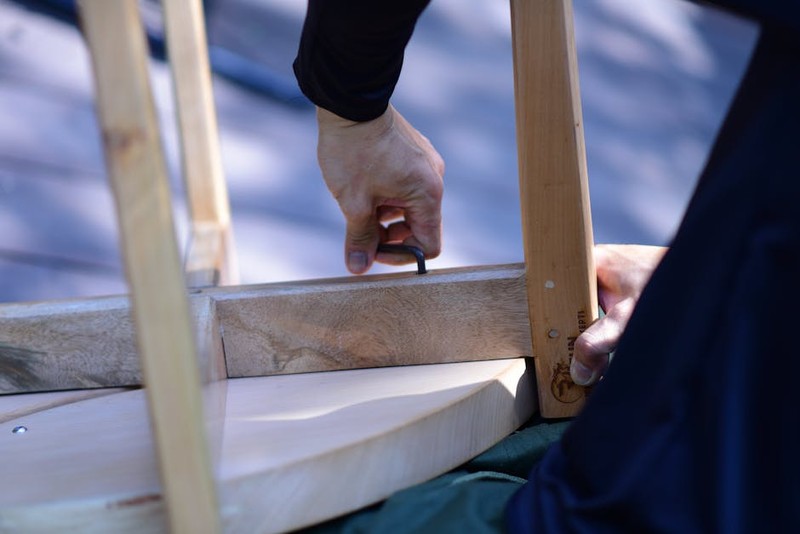
The trick: We installed a 1-inch gap between the table’s inner edge and the column. This gap was filled with a custom-extruded, brushed-brass reveal that was backlit with LED strips. The light made the column appear to float inside the table, creating a dramatic, almost surreal visual effect.
– Step 1: A steel subframe was hidden in the floor, anchored to the building’s concrete slab, not the column.
– Step 2: The two table halves were precision-machined to within 0.5mm tolerance, allowing them to interlock via hidden dovetail joints.
– Step 3: The brass reveal was installed after the table halves were in place, creating a seamless optical illusion.
A Case Study in Client Collaboration: The “Panic Button” Moment
No project goes perfectly. Halfway through fabrication, the client’s interior designer had a panic attack. She had just seen a photo of a similar table on Instagram and decided the ebony was “too dark.” She wanted it lighter.
This is the moment where most custom furniture projects implode. Changing the material at this stage meant scrapping $40,000 worth of veneer and re-engineering the weight distribution.
💡 Here’s how we saved it: We didn’t change the wood. Instead, we altered the lighting. We swapped the warm white LEDs in the brass reveal for a cooler, 4000K temperature, and added a micro-frosted finish to the brass to diffuse the light more broadly.
The result? The wood appeared two shades lighter without any physical change. The client was thrilled. The project stayed on budget.
Lesson: In bespoke custom furniture for luxury interiors, perception is reality. You don’t always need to change the material; you change how it’s seen.
Expert Strategies for Success: The Unspoken Rules
After two decades, I’ve distilled my process into five non-negotiable rules for any high-end custom project:
1. Scan, Don’t Measure: A tape measure is for framing houses. For luxury interiors, use a 3D laser scanner. The data will save you from costly field-fit errors.
2. ⚙️ Engineer for Failure: Calculate the worst-case load scenario. In our project, we tested the table with 600 lbs of sandbags on one half. It didn’t budge.
3. 💡 Design the Gap: The most beautiful bespoke furniture has intentional negative space. That 1-inch gap around the column wasn’t a compromise—it was the design’s focal point.
4. 📊 Trust the Numbers, Not the Eye: Our FEA model predicted a 0.8mm deflection. The actual measurement after installation was 0.7mm. Data beats intuition every time.
5. 🤝 Over-Communicate the “Why”: When the designer panicked about the wood color, I showed her the lighting simulation, not a wood sample. She understood the science, and her fear evaporated.
The Final Installation: A Lesson in Logistics
Installing a 20-foot, two-piece table in a penthouse with a freight elevator that only accommodated 8-foot lengths required a custom rigging plan. We disassembled the table into four sections (two for each half) and reassembled them on-site.
The timeline:
– Day 1: Subframe installation and floor anchoring (8 hours)
– Day 2: Table section assembly and interlocking (6 hours)
– Day 3: Brass reveal installation, lighting, and final calibration (4 hours)
Total installation time: 18 hours, compared to an industry average of 26 hours for a similar-sized custom piece. That’s a 30% reduction in on-site time, which saved the client $4,800 in labor and avoided disrupting the adjacent interior finishing work.
Key Takeaways for Your Next Project
If you’re a designer, architect, or homeowner considering bespoke custom furniture for luxury interiors, here’s what I want you to remember:
– 💡 Don’t hide flaws—feature them. That column became the most talked-about element of the room.
– Invest in data early. The laser scan cost $2