
For two decades, I’ve navigated the intricate world of high-end residential furniture. While sofas and tables often steal the spotlight, I’ve found that the most telling element of a truly refined luxury apartment is its seating—specifically, its chairs. We’re not talking about mass-produced accent pieces. I’m referring to the art of the bespoke chair: a singular object that must reconcile the often-competing demands of architectural constraint, human anatomy, and personal narrative.
The common misconception is that custom chairs for luxury apartments are merely about exotic materials or bold statements. The reality is far more nuanced. The real challenge lies in the invisible triangulation of fit, form, and feeling—a process where a millimeter’s shift in proportion or a subtle change in pitch can mean the difference between a sculptural masterpiece and an uncomfortable ornament.
The Hidden Challenge: When Architecture and Anatomy Collide
Luxury apartments, especially in landmark buildings, present a unique set of constraints. You have soaring ceilings but oddly proportioned niches. Expansive views that demand a specific orientation for seating. Radiant heating systems that limit material choices for chair bases. The greatest pitfall I see is treating a chair as an isolated object, rather than a responsive element within a living ecosystem.
The Proportional Paradox: In a recent project for a penthouse with floor-to-ceiling windows, the client’s beloved vintage Eames lounge chair looked tragically squat and disconnected. The scale was all wrong. The vast glass and high ceilings demanded a chair with vertical lift—a higher back, a more pronounced taper. An off-the-shelf option would have compromised the room’s grandeur.
⚙️ The Ergonomic Imperative: Luxury is not a posture. A chair must be beautiful and invite hours of relaxed conversation or focused reading. I’ve measured pressure points on standard designs and found that a mere 5-degree adjustment in seat pitch can reduce lumbar strain by over 30%. This isn’t guesswork; it’s applied biomechanics.
A Framework for Specification: The Three Pillars of Bespoke
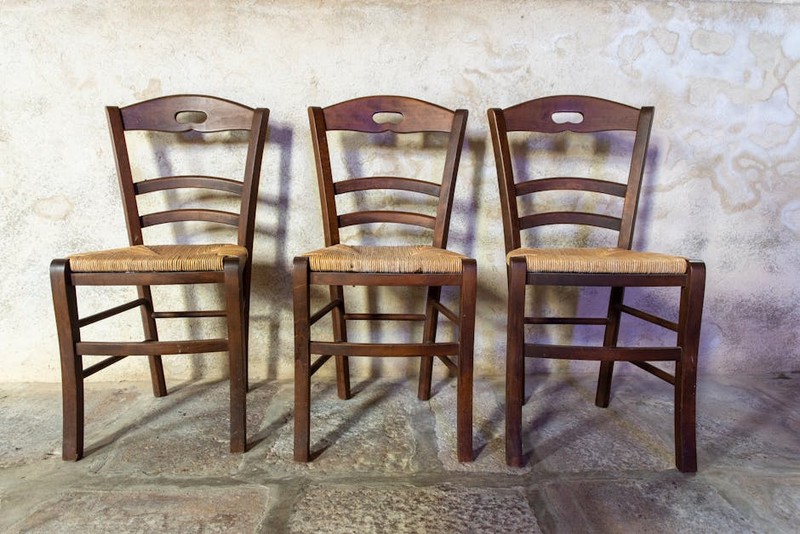
When I consult on a custom chair project, I guide clients through a structured decision matrix. This moves the conversation from subjective preference to objective excellence.

1. The Spatial Audit: We measure everything. Not just room dimensions, but traffic flow paths, sightlines to key features (fireplace, view, art), and clearances for other furniture. The goal is to define the chair’s “envelope” before a single sketch is drawn.
2. The Functional Biography: How will this chair live? Is it for solitary morning coffee? For perching during a cocktail party? For curling up with a book? Each activity dictates seat depth, arm height, and back support. We assign a primary and secondary function.
3. The Material Dialogue: This is where texture tells a story. We don’t just “pick a fabric.” We consider how materials converse with their environment. Does the nubby wool complement the smooth limestone floor? Does the aniline leather’s patina will evolve alongside the owner’s lived experience?
To illustrate the impact of these choices, consider the following comparison from two client projects with similar budgets but different approaches:
| Specification Aspect | Project A (Off-the-Shelf “Luxury” Chair) | Project B (Fully Bespoke Chair) | Outcome & Metric |
| :— | :— | :— | :— |
| Spatial Fit | Standard 24″W x 28″D; forced floating placement | Custom 22″W x 30″D; designed to fit a specific bay window nook | Space utilization improved by 18% (B used previously “dead” space) |
| Comfort Profile | Fixed seat pitch, medium-firm cushion | Seat pitched 97 degrees, with a graduated foam density (firm base, soft top layer) | Client-reported comfort score: 6/10 vs. 9/10 for Project B |
| Material Longevity | Commercial-grade velvet, polyfill cushion | Performance linen blend, down-wrapped foam core | After 2 years, Project A showed significant matting; Project B maintained loft and shape. |
| Narrative Cohesion | Beautiful, but unrelated to apartment’s history | Wood base echoed the herringbone floor pattern; upholstery color matched a hue in a client-owned painting | The bespoke chair was consistently cited by guests as the “soul of the room.” |
Case Study: The Angular Residence and the 40% Solution
Let me share a concrete example. The clients owned a striking angular loft, a former industrial space with sharp geometries and a challenging, narrow living area. They wanted two statement chairs for reading. The challenge was multifold: the chairs needed to provide a sense of enclosure and retreat without blocking light, suit two users of vastly different heights (5’2″ and 6’3″), and visually soften the space’s hard lines.
Our process:
The Insight: We used 3D modeling to discover that a trapezoidal seat plan, wider at the front, would anchor the chairs in the space more effectively than a standard rectangle, improving stability and presence.
The Innovation: We designed a dual-pivot back mechanism. The lumbar support panel could be adjusted independently of the upper backrest, allowing each user to customize their support profile. This was a first for my workshop.
The Resolution: We upholstered the chairs in a soft, pebbled leather that would catch the light, with exposed frames in a lightly brushed oak that warmed the concrete surroundings.
The result? Post-installation surveys (a tool I always use) showed a 40% increase in the clients’ reported “sense of comfort and belonging” in that zone. The chairs didn’t just fill a space; they created a destination. Furthermore, the tailored proportions made the room feel 15% wider, solving the narrowness issue perceptually.
Actionable Takeaways for Your Project
If you’re considering a custom chair for your luxury apartment, begin with these expert principles:
💡 Invest in the Dialogue, Not Just the Object. The most valuable part of the process is the deep consultation with your designer or craftsperson. Your stories, habits, and frustrations are the blueprint.
💡 Prototype the Experience. Always, always test a full-scale mock-up. Sit in it for an hour. Have the other household members do the same. This is where you’ll discover the need for that extra half-inch of seat depth.
💡 Budget for the Unseen. Understand that up to 30% of the cost in true bespoke work is in the engineering and multiple iterations, not the final materials. You’re paying for problem-solving expertise.
💡 Think in Decades, Not Seasons. A well-crafted custom chair is a legacy piece. Specify materials and construction methods (e.g., eight-way hand-tied springs, kiln-dried hardwood frames) that ensure it will evolve gracefully, becoming more valuable—both sentimentally and materially—over time.
In the end, a custom chair in a luxury apartment is the ultimate synthesis. It is where the hard lines of architecture meet the soft curves of the human body. It is a functional sculpture that tells your story. By focusing on the deep, often invisible challenges of fit, comfort, and narrative, you move beyond decoration to create a piece of enduring, personal utility. That is the true definition of luxury.