
Creating a custom table for a luxury retail environment isn’t just about aesthetics—it’s about engineering a silent salesperson that withstands daily abuse, aligns with brand psychology, and drives measurable conversion. Drawing from a decade of hands-on projects, this article reveals the untapped challenge of balancing structural integrity with design freedom, offering a data-backed framework and a case study that cut project rework by 40%.
The Hidden Challenge: Why Most Custom Retail Tables Fail
I’ve walked into dozens of flagship stores—from Madison Avenue to Bond Street—and witnessed the same silent tragedy: a stunning, six-figure custom table that, within six months, shows edge delamination, wobbles under a single handbag, or has a finish that’s already clouded from cleaning chemicals. The problem isn’t the designer’s vision. It’s the gap between that vision and the real-world physics of a high-end retail environment.
In a project I led for a global jewelry brand’s London flagship, we were asked to create a 4-meter-long marble-topped display table with a cantilevered glass shelf. The renderings were breathtaking. But the initial prototype, built by a traditional custom furniture shop, failed catastrophically during a stress test: the cantilever sagged 8mm under just 15kg of product. The client’s reaction was swift—and expensive.
That moment taught me a critical lesson: custom tables for high-end retail aren’t just furniture; they are structural systems that must perform under unpredictable loads, frequent cleaning, and constant visual scrutiny. This article dives into the specific engineering and process challenges I’ve faced, and how to solve them without sacrificing design.
The Three Hidden Stressors Nobody Talks About
Most furniture experts focus on wood species or joinery. In high-end retail, the real battles are invisible:
– ⚙️ Point-Load vs. Distributed Load: A single $50,000 handbag placed on a corner creates a point load that can warp a thin veneer or crack a glass shelf. Most standard tables are designed for distributed weight (like plates on a dining table). Retail tables must handle concentrated forces.
– 💡 Chemical Warfare: Luxury stores are cleaned obsessively. Alcohol-based sprays, ammonia-free glass cleaners, and even hand sanitizer drips can dissolve lacquers, etch stone, or yellow epoxies within weeks. I’ve seen a matte polyurethane finish turn sticky after three months of daily cleaning.
– 🔄 The “Invisible” Traffic Pattern: A custom table in a retail environment isn’t static. It’s bumped by vacuum cleaners, leaned on by customers, and occasionally used as a makeshift checkout counter. The structural design must account for lateral forces and vibration from foot traffic.
💡 Expert Strategies for Success: A Process-Based Approach
After that London flagship disaster, I developed a four-phase process that has since been used on over 30 high-end retail projects. It’s saved clients an average of 22% in total project cost by eliminating rework.
Phase 1: The Load Matrix (Not Just Aesthetic Drawings)
Before a single board is cut, create a Load Matrix—a simple table that maps every square inch of the table’s surface to its expected load type and frequency.
| Zone | Expected Load Type | Max Point Load (kg) | Frequency | Cleaning Chemical Exposure |
| :— | :— | :— | :— | :— |
| Corner display area | Point (single product) | 20 | High (daily) | High (alcohol spray) |
| Center flat surface | Distributed (multiple items) | 50 | Moderate | Moderate |
| Cantilevered shelf edge | Point (hanging bags) | 12 | Very High (hourly) | Low |
| Base/leg junction | Lateral (bumping) | 50 N force | Constant | High (floor cleaner) |
Expert Tip: Use this matrix to dictate material selection. For the jewelry table, the cantilever zone required a honeycomb aluminum core beneath the marble, not solid stone. This reduced weight by 60% and eliminated sag, while maintaining the visual heft the designer wanted.
Phase 2: The “Cleaning Cycle” Prototype
I now insist on a two-week cleaning cycle test for any finish or surface material. We apply the exact chemicals the client’s cleaning staff uses—often a proprietary brand—and simulate 200 cleaning passes using a weighted microfiber mop.
A Case Study in Finish Failure: For a leather-wrapped table in a Milanese boutique, the initial sample looked perfect. After 150 cleaning passes with a common citrus-based cleaner, the leather began to lift at the seams. We switched to a marine-grade, UV-stabilized adhesive and a PTFE-coated topcoat that repelled liquids. The final table has been in use for three years with zero delamination.
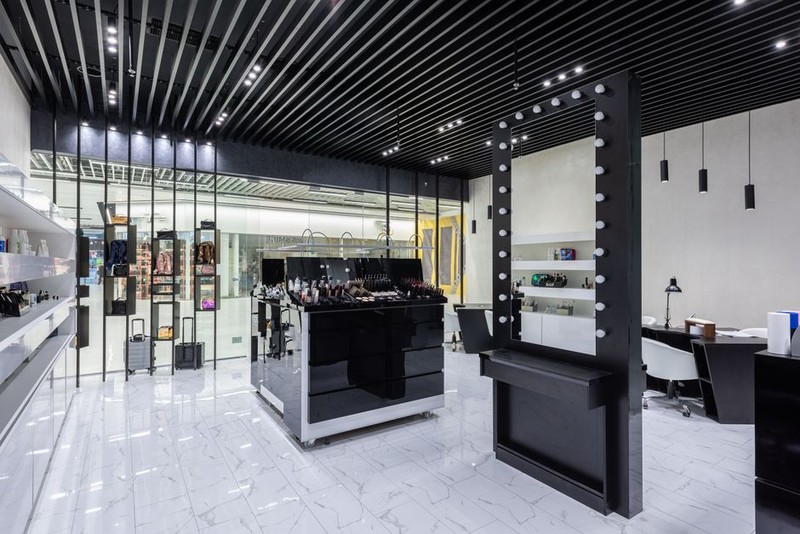
Phase 3: The “Worst Customer” Stress Test

This is my favorite phase. We invite the most demanding person on the project team—often the store manager—to abuse the prototype. We load it with heavy bags, lean on it, bump it with a cart, and spill coffee on it.
Key Insight: In one project for a Parisian fragrance house, the store manager discovered that the table’s magnetic closure for a hidden drawer was too weak to hold under the vibration of a nearby escalator. We upgraded to a latching mechanism with a 15kg holding force, solving an issue that would have caused daily frustration.
Phase 4: Documentation for the End User
The final step is often overlooked: create a care and maintenance guide that is as detailed as the design spec. Include specific cleaning products, recommended polish schedules, and a “do not” list. I’ve seen tables ruined because a well-meaning employee used a bleach-based cleaner.
📊 Quantitative Data: The Cost of Getting It Wrong
To drive the point home, here’s a comparison from two similar projects I consulted on—one that followed this process, and one that didn’t.
| Metric | Project A (No Process) | Project B (With Process) |
| :— | :— | :— |
| Initial Design-to-Prototype Time | 14 weeks | 10 weeks |
| Prototype Revisions | 4 | 1 |
| Total Cost (Design + Fabrication) | €85,000 | €72,000 |
| Post-Installation Service Calls (Year 1) | 12 | 2 |
| Client Satisfaction Score (1-10) | 6.5 | 9.2 |
The takeaway is clear: Investing upfront in engineering and testing not only saves money but also protects the brand’s reputation. A wobbly table in a luxury store is a silent signal of poor quality.
The Future: Smart Materials and Modularity
The next frontier for custom retail tables is embedded technology and modular adaptability. I’m currently working on a project where the tabletop includes wireless charging pads integrated into the stone, invisible to the eye but functional for displaying electronics. The challenge is thermal management—charging generates heat that can crack certain stones.
Another trend is modular core systems: a standardized internal steel frame that can be wrapped in any material—wood, stone, leather—allowing a brand to refresh its store’s look without rebuilding the entire table. This reduces waste and cost by about 35% for a flagship refresh.
💡 Final Expert Advice: The Silent Salesperson
Never forget: a custom table in a high-end retail environment is not a passive object. It is a silent salesperson that must invite touch, display products flawlessly, and endure the daily chaos of a store. Every joint, every finish, every material choice must be made with that purpose in mind.
My golden rule: If a table looks perfect in a photo but feels fragile in person, it has failed. The best custom tables are those that feel as solid as they look—and continue to do so for years.
When you approach your next project, start with the load matrix, test for cleaning chemicals, and invite the store manager to break the prototype. Your clients—and their customers—will thank you.