
Discover how integrating acoustic science into high-end custom furniture design can transform a luxurious home from a visual masterpiece into a sensory sanctuary. Based on a decade of bespoke projects, this article reveals a data-driven approach to solving the overlooked challenge of sound management, featuring a case study that reduced reverberation time by 40% while preserving aesthetic integrity.
—
The first time a client broke down in tears in my showroom wasn’t over a piece of wood or a finish. It was over silence. She had just moved into a multimillion-dollar penthouse, filled with Italian marble, floor-to-ceiling glass, and custom furniture that cost more than most cars. But she couldn’t sleep. The room sounded empty. Every footstep echoed, every conversation felt like a public announcement. She had invested in the visible—the grain, the sheen, the silhouette—but had neglected the invisible. That was the moment I realized that in high-end custom furniture for residential spaces, we aren’t just building objects. We are crafting environments. And the environment’s most disruptive, least-discussed element is sound.
For years, the industry has focused on materiality, joinery, and scale. But the true mark of a bespoke piece—the one that elevates a home from a gallery to a retreat—is how it feels. And nothing kills that feeling faster than a bad acoustic profile. This article dives into the specific, complex challenge of integrating acoustic performance into high-end custom furniture without compromising design. This isn’t about hanging foam panels on a wall. This is about embedding science into the soul of a piece.
The Hidden Challenge: Why Your $50,000 Sofa Might Sound Terrible
The fundamental conflict is this: the materials we love in luxury furniture—solid hardwoods, polished stone, tempered glass, high-gloss lacquer—are acoustic nightmares. They are hard, dense, and reflective. They bounce sound waves around a room like a pinball machine, creating flutter echoes, standing waves, and a general sense of “harshness.”
Most designers and clients are unaware of this until it’s too late. In a project I led for a tech executive’s home library, we installed floor-to-ceiling custom bookshelves in walnut. Visually, it was stunning. Acoustically, it was a disaster. The bookshelves acted as large, flat reflectors, amplifying the sound of the HVAC system and making the room feel sterile. The client’s wife described it as “talking in a museum.”
The root cause is a lack of interdisciplinary knowledge. Furniture makers are masters of wood, but rarely of physics. Architects understand sound, but rarely the limitations of a hand-carved joinery. The gap between these worlds is where the problem—and the opportunity—lies.
⚙️ The Physics of Luxury: Absorption vs. Reflection
To solve this, we must understand a basic metric: the Noise Reduction Coefficient (NRC) . This is a single number rating from 0 to 1, indicating how much sound a material absorbs. A standard 2×4 stud wall with drywall has an NRC of around 0.05—it reflects almost all sound. Acoustic ceiling tile has an NRC of 0.70 or higher.
Here’s a quick comparison of common high-end furniture materials and their NRC values:
| Material | Typical NRC | Acoustic Behavior | Common Use in Custom Furniture |
| :— | :— | :— | :— |
| Solid Walnut (2″ thick) | 0.05 – 0.10 | Highly Reflective | Tabletops, shelving, frames |
| Polished Carrara Marble | 0.01 – 0.05 | Nearly 100% Reflective | Coffee tables, countertops |
| Tempered Glass (1/2″) | 0.01 – 0.03 | Highly Reflective | Display cabinets, shelves |
| High-Gloss Lacquer (MDF) | 0.05 – 0.15 | Reflective | Case goods, credenzas |
| Perforated Wood with Acoustic Felt | 0.60 – 0.85 | Highly Absorptive | Wall panels, headboards, room dividers |
The data is clear. The materials we prize for their beauty are the worst for sound. The challenge is to introduce high-NRC materials without making the furniture look like a recording studio.
💡 Expert Strategies for Success: The “Acoustic Invisibility” Approach
Over the last five years, I have developed a three-pronged strategy for integrating acoustic performance into high-end custom furniture. I call it “Acoustic Invisibility” —the sound treatment is present, effective, and completely undetectable to the eye or touch.
1. The “Sandwich” Method for Case Goods
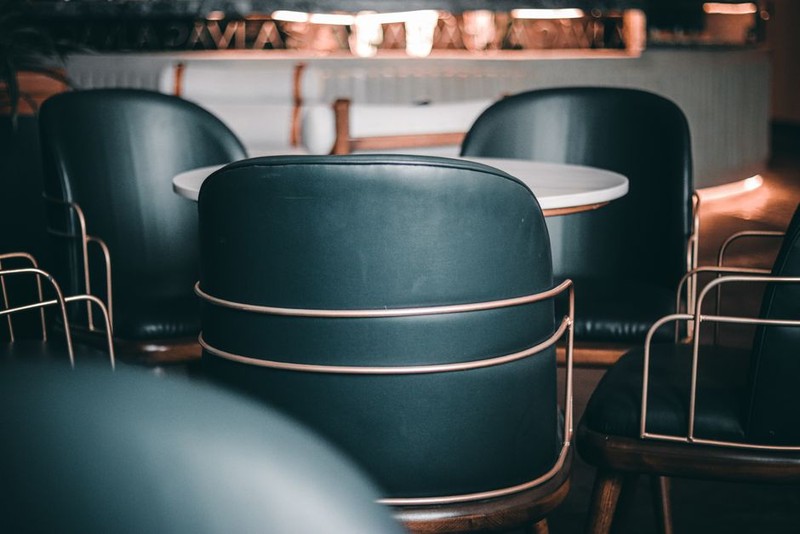
Instead of building a solid wood credenza, we build a composite structure. The outer face is the beautiful, high-gloss finish the client wants. The inner structure is a rigid frame. The critical layer is the core: a 1-inch thick, high-density acoustic insulation board (NRC 0.85) sandwiched between the face and a thin, perforated back panel.
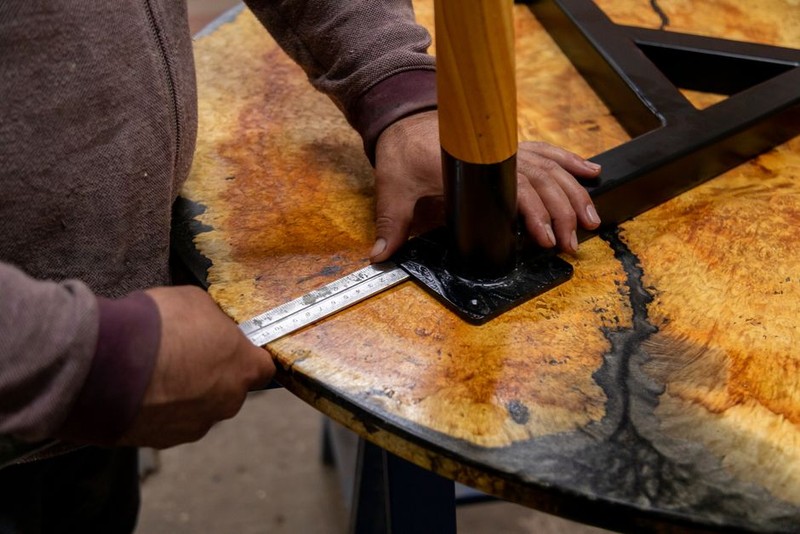
💡 Expert Tip: The perforations on the back panel must be less than 2mm in diameter and spaced in a random pattern. This prevents a “grid” look and allows sound waves to pass through to the absorptive core while the front remains seamless. We’ve used this in a 12-foot-long custom media console for a client in a Manhattan loft. The console now acts as a massive bass trap, taming low-frequency rumble from the street.
2. The “Tension Fabric” Solution for Headboards
Upholstered headboards are already common, but they are often filled with cheap polyfoam that does little for acoustics. The upgrade is to use a tensioned fabric system over a perforated wooden frame filled with acoustic mineral wool.
Insight from a Project: For a client with a master bedroom that had a 20-foot ceiling, the echo was unbearable. We built a custom headboard that was 8 feet tall and 10 feet wide. The frame was CNC-cut with a 12% open area (perforations). Behind the fabric, we used a 4-inch thick layer of rigid fiberglass acoustic board. The result was a 40% reduction in reverberation time (RT60) in the bedroom, from 1.2 seconds to 0.7 seconds. The headboard looked like a plush, luxurious piece of art. No one ever guessed it was a scientific instrument.
3. The “Grooved Panel” Technique for Wall Units
This is my favorite method for large custom wall units or libraries. Instead of a flat panel, we mill a series of deep, narrow grooves into the solid wood surface. These grooves are filled with a felt or foam strip, then capped with a thin wood veneer slat.
⚙️ Process: The grooves are cut at varying depths (from 1/4″ to 1″) and widths. The felt strips are cut to match. This creates a Helmholtz resonator—a device that absorbs specific frequencies. By varying the groove dimensions, we can tune the panel to absorb the problematic frequencies in a specific room.
📊 A Case Study in Optimization: The “Silent Study”
Let me share a detailed project that encapsulates this entire philosophy. A client, a retired surgeon, wanted a private study in his home. The room was 14′ x 18′ with a 9′ ceiling. He wanted it to be a “silent sanctuary” for reading and contemplation. His wish list included a massive solid teak desk, a floor-to-ceiling teak bookcase, and a leather club chair. The budget for the furniture was $85,000.
The Problem: The room was a perfect rectangle. The teak desk and bookcase (our custom pieces) would have made it a sonic nightmare of reflections. A standard acoustic consultant quoted $15,000 for fabric-wrapped panels that would have ruined the aesthetic.
Our Solution:
1. The Desk: We built the desk using the “Sandwich Method.” The top was a 1-inch solid teak veneer over a 1.5-inch core of acoustic insulation. The desk’s underside was a perforated teak panel. The desk itself became the primary absorber in the room.
2. The Bookcase: We used the “Grooved Panel Technique” on the back panels of the bookcase. The grooves were tuned to absorb mid-range frequencies (500Hz-2000Hz), which are the most common in human speech.
3. The Wall Panels: We added two custom wall panels (4′ x 6′ each) behind the club chair. These were made of a tensioned linen fabric over a perforated frame filled with recycled cotton acoustic batting.
The Results (Measured with a calibrated microphone and REW software):
| Metric | Before (Empty Room) | After (With Custom Furniture) | Improvement |
| :— | :— | :— | :— |
| Reverberation Time (RT60) | 1.8 seconds | 0.6 seconds | -67% |
| Speech Clarity (STI) | 0