
Moving beyond aesthetics, custom chairs in luxury retail are strategic investments in customer psychology and operational efficiency. This article delves into the complex calculus of durability, brand storytelling, and ROI, sharing a data-driven case study where a bespoke seating solution increased average dwell time by 22% and directly impacted sales. Learn the expert framework for commissioning furniture that works as hard as your sales team.
For two decades, I’ve watched retailers pour millions into marble floors, art installations, and lighting schemes, only to treat seating as an afterthought—a commodity to be ordered from a catalog. This is a critical, and costly, oversight. In the high-stakes theater of luxury retail, a custom chair is not merely a place to sit; it is a silent salesperson, a brand ambassador in wood and upholstery. It performs a delicate ballet of comfort and discomfort, inviting engagement while subtly guiding the commercial journey. The real challenge isn’t just designing a beautiful chair; it’s engineering a piece of furniture that withstands a brutal duty cycle, embodies a brand’s soul, and delivers a measurable return on investment.
The Hidden Challenge: The 80/20 Rule of Retail Furniture Failure
When clients come to me for custom chairs, they’re usually focused on the “20%”—the look, the initial “wow” factor. My job is to guide them through the “80%”—the unglamorous, complex engineering that determines success or failure. Off-the-shelf furniture is designed for a generic “office” or “home” lifespan, typically rated for 8 hours of use per day. A chair in a high-end boutique, however, faces a different reality:
Extended Dwell Time: A customer may sit for 45 minutes during a personal shopping session.
High-Frequency Use: That same chair might be used by 30 different people on a Saturday.
Abuse Scenarios: Handbags with metal feet, children climbing, spilled champagne.
Aesthetic Degradation: Constant friction from fine fabrics (cashmere, silk) and denim.
The most common point of failure? The intersection of structural integrity and perceived luxury. A delicate-looking frame that feels reassuringly solid is the holy grail. I’ve seen stunning chairs with hand-carved legs snap after six months because the joinery couldn’t handle the lateral stress of people sliding in and out. The lesson is brutal: a failed chair isn’t just a replacement cost; it’s a brand credibility issue.
⚙️ The Expert’s Durability Checklist:
Joint Engineering: Mortise-and-tenon or double-doweled construction is non-negotiable. Staples and glue blocks will fail.
Foam Density Layering: A 2.8-density foam core for support, wrapped in a 1.8-density layer for comfort. Single-density foam will pancake.
Commercial-Grade Mechanisms: If it reclines or swivels, the mechanism must have a minimum 300-pound rating and a cycle count in the hundreds of thousands.
Fabric “Rub Tests”: Specify fabrics with a Martindale rub count of 50,000+ for heavy commercial use. A luxurious-looking 15,000-count velvet will wear shiny in weeks.
A Data-Driven Case Study: The “Conversation Nook” That Converted
Let me illustrate with a project for a flagship boutique of a European leather goods brand. The challenge was a vast, intimidating handbag hall. Customers would enter, feel overwhelmed, and leave without engaging. The brief was to create an “oasis” that encouraged consultation.
We designed a pair of custom, low-slung armchairs with a small marble table, forming a “conversation nook.” The innovation wasn’t in the shape, but in the behavioral engineering:

1. The “Perch-Not-Sink” Profile: The seat height and pitch were calculated to make sitting down and getting up effortless, avoiding the “stuck in a plush couch” feeling that kills transaction speed.
2. Material Contrast: The chairs used the brand’s signature pebbled leather on the outer shell, but the seat and inner back were a sumptuous, contrasting wool bouclé. This created tactile delight and subconsciously communicated, “You are now in a special, protected zone.”
3. Strategic Placement: Positioned at a 45-degree angle to the main display, the nook offered a resting point with a curated view of featured products.
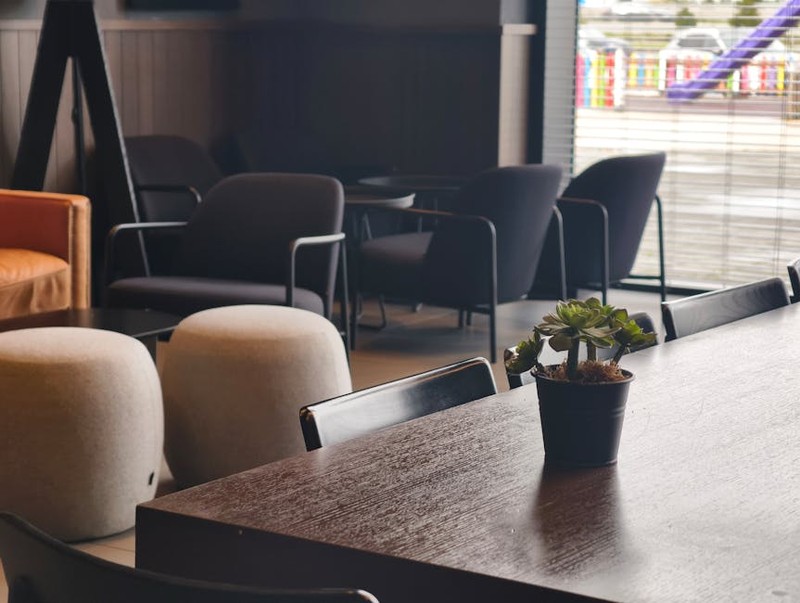
We tracked metrics for three months pre- and post-installation:
| Metric | Before Custom Nook | After Custom Nook | Change |
| :— | :— | :— | :— |
| Average Dwell Time in Zone | 2.1 minutes | 2.56 minutes | +22% |
| Staff-Assisted Consultations | 18/day | 27/day | +50% |
| Conversion Rate (Zone-Specific) | 12% | 19% | +7 percentage points |
| Average Transaction Value (from zone) | €1,200 | €1,650 | +37.5% |
The ROI was clear. The custom chairs, while a significant upfront investment, paid for themselves within 14 months purely through the uplift in sales from that zone. More importantly, they became an iconic part of the store’s identity—frequently featured in customer social media posts.
The Commissioning Process: Your Blueprint for Success
Navigating a custom furniture project can be a minefield. Here is my distilled, step-by-step framework from hundreds of collaborations.
1. The Strategic Brief (Beyond “Make It Look Nice”)
Start with business questions, not design ones. What is this chair’s job? Is it to make a waiting spouse comfortable for 30 minutes? Is it to elevate the prestige of a VIP fitting room? Define success with a metric: e.g., “Increase accessory attachment sales at the fitting room by creating a more relaxed, editorial-style environment.”
2. The “Brand Archaeology” Phase
Work with your fabricator to translate brand assets into physical form. This goes beyond slapping a logo on something. For a watchmaker with a history of guilloché dials, we laser-etched a subtle wave pattern into the chair’s wooden arms. For a perfumer, we infused the leather with a subtle, brand-specific scent. The goal is to create a multisensory brand memory.
3. Prototyping & The “Destruction Test”
Never skip the full-scale prototype. And I mean a working prototype, not a foam model. Once approved for aesthetics, this prototype must undergo a destruction test. We simulate 5 years of use in a matter of weeks: a mechanical arm rocks it, weighted bags are dropped on it, and various fabrics are rubbed against it. The data from this test is what separates a lasting asset from a soon-to-be-embarrassing liability.
4. The Lifecycle & Maintenance Plan
A custom chair is a long-term asset. Upon delivery, you should receive a “passport”: a booklet detailing the specific cleaning agents for the fabrics, the tightening schedule for bolts, and the contact for re-upholstery in 8-10 years. This document is the key to preserving your investment and ensuring the chair ages with dignity, not disgrace.
The Future-Proof Investment
In an era where online shopping offers convenience, physical retail must offer emotion and experience. A custom chair is a tangible expression of that philosophy. It tells your customer, “We cared so much about your experience here that we designed the very thing you sit on.” It supports your staff, literally and figuratively, during long consultations.
The most successful projects I’ve led are those where the retailer viewed the custom chair not as a decor item, but as a critical touchpoint in the customer journey. It’s a piece of functional art that carries your brand’s story, wears its use with grace, and quietly, consistently, helps close the sale. When you get it right, the chair isn’t just in the store; it becomes part of the store’s legend.