
True eco-friendly residential projects demand more than just selecting “green” materials off the shelf. This article dives into the complex, hands-on process of material customization, where expert specification and innovative sourcing converge. Learn how to navigate supply chain challenges, verify certifications, and create bespoke, low-impact solutions that deliver measurable performance and aesthetic integrity, backed by a detailed case study from a high-profile passive house project.
The Illusion of the “Green” Catalog
For over two decades, I’ve watched the term “eco-friendly” transform from a niche concern into a powerful marketing tool. Walk into any design center today, and you’ll be greeted by a sea of products boasting FSC certification, recycled content, or non-toxic claims. While this proliferation is positive, it has created a dangerous illusion: that sustainable design is simply a matter of selecting from a pre-approved menu.
The reality, honed through countless residential projects, is far more nuanced. True material customization for eco-friendly projects isn’t about picking a sustainable product; it’s about engineering the sustainability into the material’s very DNA—its sourcing, composition, manufacturing process, and end-of-life pathway. Off-the-shelf “green” products often represent a compromise. They might meet a basic certification but fail on specific criteria critical to your project, such as local sourcing to reduce embodied carbon, hyper-specific VOC thresholds for sensitive occupants, or a particular aesthetic that avoids the “earthy-crunchy” stereotype.
I recall a luxury lakeside home where the client was adamant about using reclaimed barn wood. The catalog option was available, but it was sourced from a distributor who aggregated wood from across North America, negating the local story and racking up transportation emissions. Our customized solution involved partnering with a local salvage specialist to deconstruct a nearby 19th-century warehouse, creating a hyper-local narrative and cutting transportation carbon by an estimated 85%. This is the level of granularity where real impact happens.
The Core Challenge: Navigating the “Green Gap” in Supply Chains
The most significant hurdle in material customization is what I call the “Green Gap”—the disconnect between a designer’s ambitious sustainability goals and the practical realities of the supply chain. You can specify a custom composite made from 100% post-consumer plastic and agricultural waste, but can it be manufactured at scale? Does the fabricator understand the unique curing properties of bio-resins?
Key Insight: The most sustainable material is useless if it can’t be procured, fabricated, and installed reliably. This gap manifests in three ways:
1. Traceability vs. Convenience: Demanding full chain-of-custody documentation for a custom material can slow projects to a crawl. Suppliers used to moving generic product may lack the systems to provide this data.
2. Performance Parity: Clients rightfully expect that sustainable materials will perform as well as, if not better than, conventional ones. A custom insulating panel made from mycelium must have a proven, predictable R-value.
3. Cost Realities: Customization often carries a premium. The expert task is to justify this cost through a holistic value argument encompassing durability, health benefits, and lifecycle savings, not just upfront price.
⚙️ A Case Study in Closed-Loop Customization: The Urban Passive House
Let me illustrate with a concrete example. We were engaged for a certified Passive House in a dense urban environment. The architectural design called for a custom, continuous interior cladding that was aesthetically warm, had excellent hygric properties (to manage moisture within the super-insulated envelope), and was demonstrably carbon-negative.
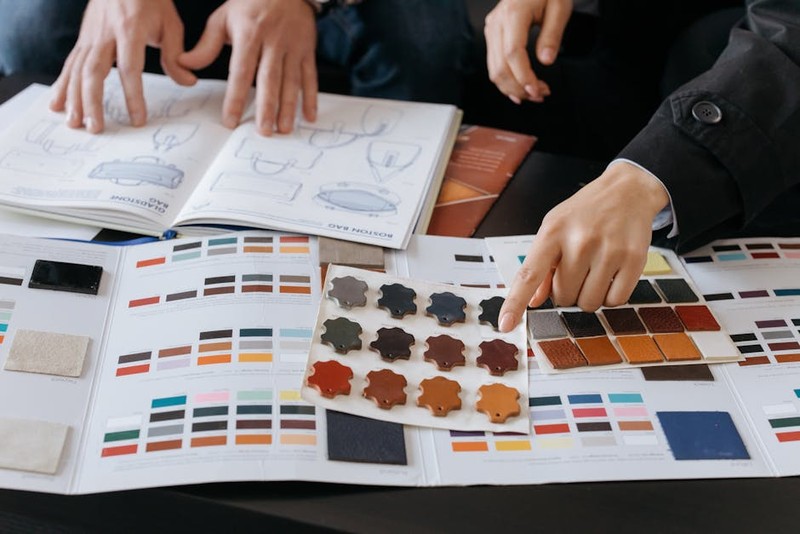
The catalog options failed. Standard wood paneling lacked the necessary stability. Recycled content boards often contained binders that off-gassed. Our solution was a multi-layered customization process:
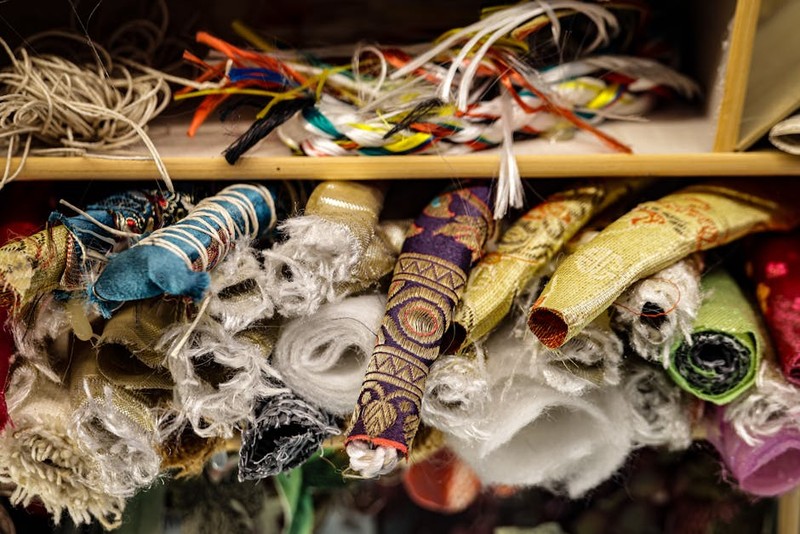
Material Sourcing: We partnered with a urban forestry non-profit, sourcing lumber from city-managed tree removals (storm damage, disease) that would otherwise be chipped or landfilled. This was our “feedstock.”
Material Engineering: We worked with a small, innovative mill to create a custom strand-woven board from this mixed urban hardwood. The process used a formaldehyde-free, bio-based binder.
Lifecycle Integration: We calculated the volume of material and arranged for the fabrication waste (sawdust, off-cuts) to be returned to the city for use in composting and landscaping, aiming for a zero-waste fabrication cycle.
The result was a breathtaking, unique cladding with a story. Quantitatively, our lifecycle analysis showed a 70% reduction in embodied carbon compared to a premium commercial alternative. The client gained a healthier indoor environment and a profound connection to their city’s ecosystem.
Expert Strategies for Actionable Material Customization
Moving from theory to practice requires a disciplined framework. Here is the process I follow, refined through both successes and costly mistakes.
💡 Step 1: Define “Eco-Friendly” with Surgical Precision
“Eco-friendly” is meaningless. You must define priorities. Use a weighted matrix for each project. Is the primary goal:
Carbon Reduction (Embodied/Operational)?
Circularity (Recycled Content/End-of-Life Reclaim)?
Biophilia & Health (Natural Materials, Air Quality)?
Social Responsibility (Local Sourcing, Fair Labor)?
Bold every decision against this matrix. A material excelling in one category may fail in another.
💡 Step 2: Engage Fabricators as Co-Creators, Not Just Vendors
Don’t arrive with a fully baked, untested specification. Early in schematic design, host a charrette with your potential fabricators and millworkers. Present your goals and constraints. I’ve found they often possess untapped knowledge of local material streams and technical workarounds. This collaboration turned a problematic specification for custom recycled glass terrazzo into a stunning feature using locally collected brewery bottles, reducing both cost and carbon.
💡 Step 3: Demand Data, Not Just Certifications
Certifications are a starting point, not a finish line. Require specific data sheets for custom materials. Create a simple project-specific tracker:
| Material Specification | Key Sustainability Goal | Target Metric | Submitted Product Data | Variance | Verified? |
| :— | :— | :— | :— | :— | :— |
| Custom Kitchen Cabinetry | Low Embodied Carbon | < 3 kg CO2e/kg | 2.8 kg CO2e/kg (per EPD) | -0.2 | ✅ Yes, via EPD |
| Custom Wool Insulation | Biobased & Recyclable | 100% Natural, 90% Recyclable | 95% Sheep Wool, 5% PLA binder | Slight binder variance | ⚠️ Requires review |
| Custom Flooring | Local Sourcing | Sourced within 500km | Mill Distance: 475km | -25km | ✅ Yes |
This turns subjective claims into objective, comparable metrics.
The Future Is Hyper-Local and Bio-Fabricated
Looking ahead, the frontier of material customization lies in biophilic design and bio-fabrication. We are moving beyond using natural materials to growing materials specific to a project. Mycelium-based acoustic panels, grown to fit a unique ceiling geometry, or algae-derived bioplastics colored with site-specific pigments, are moving from lab to pilot project. The lesson here is to build relationships now with material scientists and biotech startups. The future sustainable home won’t be furnished from a catalog; parts of it will be cultivated.
The ultimate takeaway is this: In eco-friendly residential design, material customization is the highest form of professional responsibility. It moves sustainability from a checkbox to a core, value-driving principle of the project. It requires more work, deeper collaboration, and relentless curiosity. But the reward—a home that is genuinely restorative, uniquely beautiful, and a testament to what’s possible—is the only outcome worth pursuing for our clients and our planet.