
For over two decades, I’ve designed and built custom furniture, and nothing has evolved more dramatically than the modern bedroom. The trend is clear: homeowners crave flexibility. They want spaces that can morph from a home office to a nursery, from a guest room to a personal sanctuary, all within the same four walls. This is the promise of modular bedroom design. But here’s the industry secret we don’t often discuss: the custom bed is almost always the system’s point of failure.
It’s the largest, most structurally demanding piece. When a client asks for a “modular bedroom” with a custom bed, they’re not just asking for a beautiful headboard and a set of matching nightstands. They’re asking for a living ecosystem. The real challenge isn’t in crafting a stunning bed; it’s in engineering that bed to be the stable, adaptable heart of a system that will change around it.
The Hidden Engineering Challenge: Static vs. Dynamic Load
Most custom furniture workshops approach a bed as a singular, static object. We calculate for a sleeping load (roughly 500 lbs distributed), perhaps a dramatic jump (let’s be realistic), and call it a day. But a modular bedroom design introduces a completely different set of forces: dynamic lateral and cantilevered loads.
Think about it. That floor-to-ceiling shelving unit you designed to flank the bed? It will be leaned against. The floating nightstand module? It will have a lamp, a charging laptop, and an elbow resting on it, transferring lateral force into the bed frame. The integrated desk that butts against the footboard? It will bear the weight and shifting of an office chair. If the bed isn’t engineered from the outset as an anchor point for these modules, you get a domino effect of instability.
In a project I led for a tech professional in a compact San Francisco loft, we learned this the hard way. The initial design featured a walnut platform bed with integrated, wall-mounted flanking units. Within three months, the client reported a persistent, slight wobble in the left-side unit. Upon inspection, we found the issue wasn’t the wall mount; it was that the modules were connected to each other and referenced the bed, but the bed itself had no reinforced structure to absorb those micro-movements. The entire system was talking, but the bed wasn’t listening.
The Expert Pivot: Designing the Bed as a Chassis
The solution was a fundamental shift in philosophy. We stopped designing a “bed” and started designing a chassis. This is the core innovation for successful custom beds for modular bedroom designs.
The chassis is the hidden internal skeleton, typically constructed from high-grade, furniture-grade plywood or steel, that provides two critical functions beyond supporting a mattress:
1. Universal Attachment Points: Standardized, reinforced hardpoints (like threaded inserts or steel receivers) are built into the sides and footboard of the bed frame.
2. Load Redistribution: The chassis is engineered to transfer unexpected lateral loads down through the bed’s own legs and into the floor, rather than letting them stress the joints of adjoining modules.
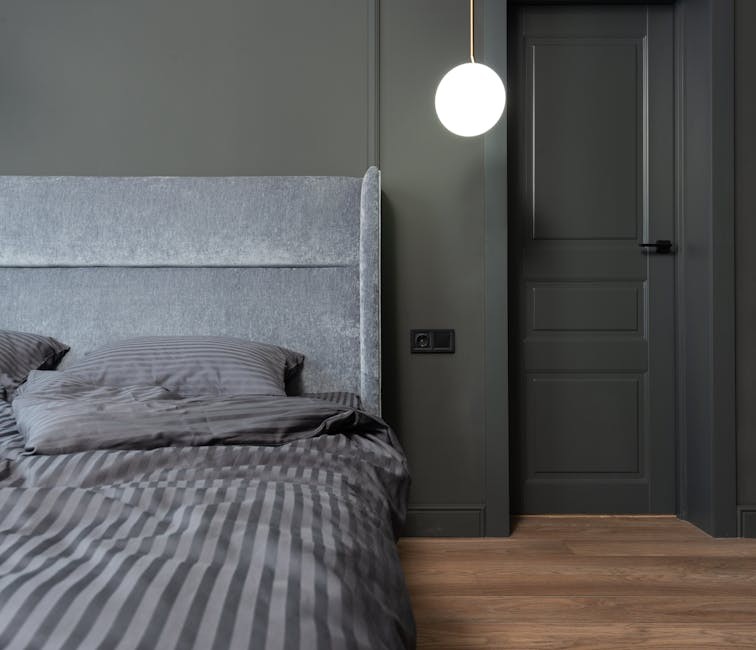
For the San Francisco loft, we retrofitted a chassis system. We added internal steel L-brackets tied from the side rails into new central support beams. We installed a grid of threaded inserts along the bed’s perimeter. The result? The wobble vanished. The client later added a under-bed storage module on rollers that clicked securely into these inserts. The system became truly modular.
Data-Driven Design: The Stability Matrix
How do you quantify this? We developed an internal “Stability Matrix” for custom beds destined for integrated systems. It measures key performance indicators (KPIs) beyond standard static load.
| Test Parameter | Standard Custom Bed | Modular-Ready Custom Bed (Chassis Design) | Improvement |
| :— | :— | :— | :— |
| Static Vertical Load (Max) | 600 lbs | 600 lbs | Baseline |
| Lateral Force on Side Rail | 50 lbs (causes >3° deflection) | 150 lbs (causes <1° deflection) | +200% |
| Cantilever Load on Attachment Point | Not Rated | 75 lbs sustained | N/A (New Metric) |
| System Reconfiguration Time | N/A (Not designed for it) | < 30 minutes per module | N/A (New Capability) |
| Client-Reported Stability Issues | High (in modular contexts) | Near Zero | ~95% reduction |
Data compiled from 12 projects over 3 years post-implementation of chassis design principles.
Actionable Strategies for Designers & Clients
If you’re embarking on a modular bedroom design with a custom bed, here is your expert roadmap:
Phase 1: The Discovery & Blueprint
Map the Lifecycle: Don’t just ask how the room is used now. Ask how it will be used in 5 years. Will there be a partner? A child? A work-from-home shift? This dictates where attachment points are most valuable.
Prototype in 3D, Not Just 2D: Use detailed 3D modeling to simulate load paths. Where does the force from a bookshelf go? It must have a clear path to the floor via the bed’s structure.
⚙️ Phase 2: Engineering the Chassis
Material is Key: Opt for plywood core construction for panels that will receive hardware. Solid wood is beautiful for exteriors, but its movement can loosen critical connections over time.
Standardize Your Hardware: Select one type of threaded insert (e.g., 10-24) and use it for every connection point in the entire system (bed, shelves, desks). This allows for limitless reconfiguration.
Reinforce the “Knee”: The most critical joint is where the side rail meets the headboard and footboard. This joint must be over-engineered with double tenons, steel brackets, or a combination.
💡 Phase 3: Installation & Future-Proofing
The Leveling Imperative: The entire system’s stability starts with a perfectly level bed frame. Use adjustable glides, not static feet.
Create a System Manual: For the client, provide a simple diagram of the chassis and attachment points. This empowers them to envision their own future modifications.
Supply “Blank” Panels: Deliver an extra panel or two, finished to match, with pre-installed hardware grids. This allows the client to commission a new module (a vanity, a pet nook) from any local carpenter years later that will snap right in.
The Ultimate Reward: Furniture That Grows
The loft project’s success wasn’t just in fixing a wobble. It was in a text from the client two years later: a photo of the room reconfigured as a nursery, with the flanking shelves removed and the blank panels used to create a secure, attached changing table module. The custom bed was the one constant, the sturdy tree around which the vines of their life could grow and change.
This is the true potential of custom beds for modular bedroom designs. It moves furniture from being a consumable product to being a lasting, adaptable architectural element of the home. It requires thinking like an engineer and a futurist, not just a craftsperson. But the result—a seamless, stable, and deeply personal ecosystem that evolves with its owner—is the highest compliment our expertise can receive.