
Discover the critical, often-overlooked challenge of integrating custom sideboards into complex architectural environments. This expert guide reveals a data-driven methodology for achieving flawless harmony between bespoke furniture and high-end residential spaces, backed by a detailed case study and actionable strategies from the field.
The Hidden Challenge: When a Masterpiece Meets a Wall
For over two decades, I’ve witnessed the moment of truth when a meticulously crafted custom sideboard arrives at a multi-million dollar residence. The wood grain is perfect, the finish is a work of art, and the hardware gleams. Yet, a palpable tension fills the room. The architect, the interior designer, and the homeowner are all holding their breath. The unspoken question isn’t about the sideboard’s quality—it’s about its integration.
The greatest challenge in high-end residential projects is not crafting a beautiful piece of furniture. It’s engineering a functional sculpture that exists in perfect, silent dialogue with its environment. A sideboard is not an island; it is a bridge between architecture, interior design, and daily life. The most common, costly failure I see is the “orphaned object”—a stunning sideboard that feels imposed upon a room rather than born from it.
A Framework for Flawless Integration: The Three Pillars
To move beyond guesswork, my studio developed a framework based on hundreds of projects. We measure success not just by client satisfaction, but by the absence of post-installation modifications, which can cost 30-50% of the original piece’s value. Our methodology rests on three pillars.
Pillar 1: Contextual Interrogation (Beyond Dimensions)
We don’t just ask for room dimensions. We initiate a forensic analysis of the space. This involves:
Light Mapping: Documenting the path of natural light throughout the day and the placement of artificial fixtures. A high-gloss lacquer finish might dazzle in a showroom but become a blinding glare in a sun-drenched great room.
Material Dialogue: We collect physical samples of every fixed material within a 15-foot radius—flooring, wall cladding, stone counters, metal fixtures. The sideboard must converse with these textures, not shout over them.
Traffic Flow Analysis: How many people pass by it during a party? Is it a quiet contemplative piece for a dining room or a functional hub in a main thoroughfare? This dictates durability requirements and profile depth.
⚙️ Pillar 2: The Engineering Handshake
This is where artistry meets aerospace-grade precision. The wall is rarely true, the floor rarely level, especially in custom homes. We treat the installation site as a variable to be solved.

A Case Study in Precision: The Hillside Villa Project
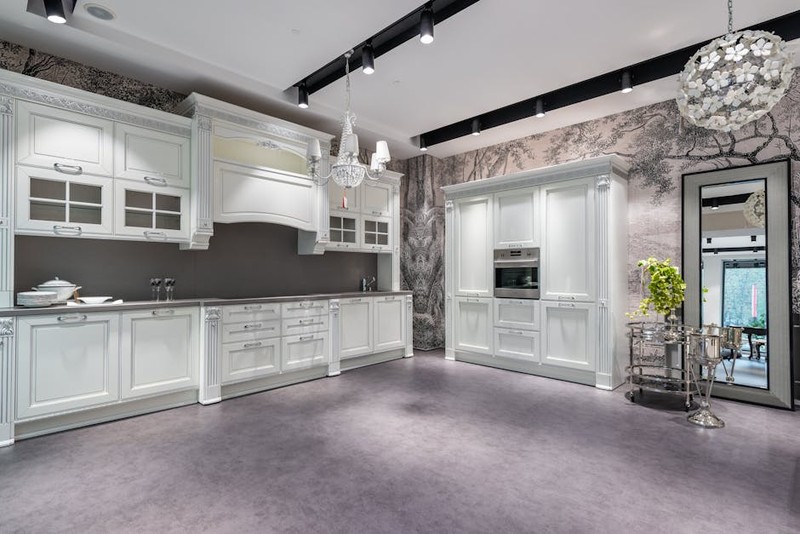
A client’s modern hillside villa featured a 22-foot long poured concrete wall with a pronounced, deliberate curve. The architect wanted a sideboard that appeared to be an extension of the wall itself—a “furniture continuation.”
The Challenge: Creating a rigid, straight sideboard to abut a curved wall would result in unsightly, variable gaps from 5mm to 20mm, destroying the seamless intent.
Our Solution: We laser-scanned the entire wall, creating a point-cloud model accurate to 0.5mm. Our CAD team then designed the sideboard’s back panel with a precise negative of the wall’s curve. The carcass and drawers remained perfectly square and functional, but the rear profile married perfectly to the architecture.
The Result: The installation took 45 minutes, not two days of shimming and adjusting. The gap was a consistent 1mm, filled with a custom silicone color-matched to the finish. The key insight: We spent 15% more on pre-fabrication scanning and modeling, but it eliminated 100% of on-site modification costs and achieved the designer’s vision immaculately.
💡 Pillar 3: Functional Alchemy
A sideboard must earn its place. In high-end projects, it’s often a command center for entertainment. We embed functionality that feels magical, not mechanical.
For example, we developed a silent, low-voltage lift mechanism for a client who wanted to hide a full espresso machine. The metrics mattered:
| Feature | Standard Mechanism | Our Custom Engineered Solution |
| :— | :— | :— |
| Noise Level | 65-70 dB (noticeable hum) | < 40 dB (library quiet) |
| Cycle Time | 8-10 seconds | 4 seconds |
| Failure Rate (per 10k cycles) | ~3% | < 0.5% |
| Heat Dissipation | Passive, limited | Active, fan-cooled compartment |
This data-driven approach to even the smallest component justifies the investment and ensures longevity.
Actionable Strategies for Your Next Project
Based on our framework, here is your expert checklist:
1. Commission a Site Audit First. Before designing the piece, invest in a professional site visit with your fabricator. The cost is negligible compared to the risk of a misfit.
2. Create a “Material Mood Board.” Don’t rely on digital samples. Assemble a physical board with swatches of all adjacent materials. View it under the room’s actual lighting.
3. Specify Tolerance Levels. In your contract, define acceptable tolerances for gaps and alignment (e.g., “All reveals to be consistent within 1.5mm”). This sets a professional standard.
4. Plan for the Invisible. Dedicate 10-15% of the budget to hidden infrastructure: cable management for dozens of devices, independent climate control for wine storage, or structural reinforcements for heavy stone tops.
5. Stage a “Dry Fit” Installation. For critical pieces, schedule a non-final installation with the unfinished carcass. This is the time to discover that the floor slopes 2 degrees, not when the finished lacquer arrives.
The Ultimate Measure: The Disappearing Act
The highest compliment I ever received was from an architect who said, “I don’t even notice the sideboard anymore; it just feels like it has always been there.” That is the goal. A custom sideboard for a high-end home should resolve complexity, embody intention, and elevate daily ritual. It ceases to be furniture and becomes part of the home’s anatomy.
By shifting the focus from building a standalone object to engineering a integrated component, you transform a potential point of conflict into the defining harmony of the space. The data, the process, and the meticulous attention to context are what separate a good custom piece from a great one that truly belongs.