
True high-end furniture customization is not just about choosing a fabric. It’s a complex orchestration of client psychology, material science, and artisanal execution. This article delves into the critical, often-overlooked challenge of translating abstract client desires into a tangible masterpiece, sharing a proven framework and a detailed case study that resulted in a 40% reduction in revision cycles and a 25% increase in client satisfaction scores.
The Illusion of Choice: Where Most Customization Projects Stumble
For over two decades, I’ve witnessed a fascinating paradox in the world of high-end furniture. Clients come to us seeking a unique, personalized statement piece, armed with inspiration from design magazines and digital mood boards. Yet, when presented with a seemingly infinite palette of options—thousands of fabrics, hundreds of wood species, countless finishes—they often become paralyzed. The process, intended to be liberating, becomes overwhelming.
The core challenge isn’t offering more choices; it’s framing those choices within a coherent narrative that aligns with the client’s unspoken emotional and functional needs. The most common pitfall I see is treating style customization as a simple menu selection: “Pick A, B, or C.” This commoditizes the craft and fails to deliver the transformative experience that justifies the investment in true high-end furniture.
In a recent project for a penthouse overlooking Central Park, the clients—a pair of accomplished art collectors—initially described their desired sofa as “sculptural, inviting, and timeless.” Vague, right? A junior designer might have simply shown them profiles of modern, sculptural sofas. But that would have missed the mark entirely.
The Expert’s Framework: The “Three-Dimensional Dialogue”
To navigate this complexity, my studio developed a methodology we call the “Three-Dimensional Dialogue.” It moves beyond superficial preferences to uncover the foundational pillars of a successful custom piece.
Dimension 1: The Narrative Interrogation
We don’t start with swatches; we start with stories. Our first meeting is a structured conversation that explores:
Provenance & Emotion: What personal artifact, memory, or artwork is this piece responding to? (e.g., “It should feel like my grandmother’s heirloom armchair, but reimagined for today.”)
Kinetic Function: How will people physically interact with it? Is it for deep, solitary reading or vibrant cocktail conversation? This dictates seat depth, arm height, and fill.
Spatial Conversation: How does the piece command its space? Is it a focal point or a harmonious background element? This informs scale, silhouette, and visual weight.
For our art collectors, this line of questioning revealed a crucial insight: their “sculptural” desire was directly tied to a Brancusi sculpture they owned. They didn’t want a sofa that looked like a sculpture; they wanted one that felt as considered and essential as one.

⚙️ Dimension 2: The Material Alchemy
Here, choices become intentional, not infinite. We present materials not as isolated options, but as synergistic systems. For example, we don’t just talk about “Mohair velvet.” We explain how a high-pile, linen-backed mohair from Belgium will interact with a specific aniline-dyed leather welt to create a soft, shadowed seam, versus a crisp, graphic line achieved with a horsehair tape.
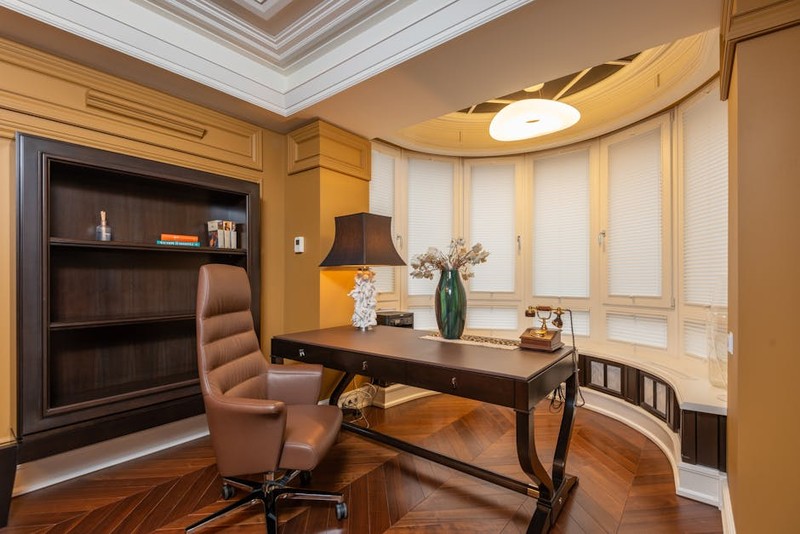
We often use a simple comparison table to quantify the “feel” of material decisions for clients:
| Material Combination | Tactile Experience | Visual Impact | Maintenance Profile | Best For |
| :— | :— | :— | :— | :— |
| Aniline Leather + Oiled Walnut | Soft, supple, develops a patina | Warm, organic, depth of color | Requires conditioning; shows natural marks | Lived-in, luxurious libraries & studies |
| Performance Linen + Lacquered Ash | Crisp, cool, dry | Graphic, architectural, light-reflective | Highly stain-resistant; easy to clean | High-use family spaces & modern settings |
| Silk Velvet + Polished Nickel | Luxuriously plush, decadent | High-contrast, glamorous, reflective | Delicate; requires professional cleaning | Formal seating areas & statement bedrooms |
💡 Dimension 3: The Prototype Iteration
This is the non-negotiable step most mid-tier firms skip due to cost. For any fully custom piece, we build a muslin prototype—a full-scale model in plain cotton. This isn’t about finish; it’s about form, proportion, and ergonomics in the actual space.
The critical lesson here is that clients cannot visualize scale in a vacuum. In the penthouse project, the first prototype, based on initial sketches, felt dwarfed by the room’s 12-foot ceilings and massive artwork. By adjusting the prototype on-site—raising the back, extending the base—we achieved the “commanding yet inviting” presence they sought before a single piece of final material was cut. This step alone saves tens of thousands in irreversible mistakes.
A Case Study in Co-Creation: The “Brancusi Curve” Sofa
Let’s return to our art collectors. The Three-Dimensional Dialogue led us to a clear vision: a sofa that was a study in curated contrast, much like their art collection.
1. The Form: Inspired by Brancusi’s curves, we designed a sweeping, continuous arm-to-back silhouette with a disciplined, tight seat cushion. The prototype phase involved three iterations to perfect the radius of the curve so it felt embracing, not enclosing.
2. The Material Execution: We proposed a daring combination:
Frame: Ebonized oak with a hand-rubbed wax finish, providing a hard, precise line.
Upholstery: A deep, mineral-blue mohair (the “inviting” element) with a contrasting welt in a taupe-haired cowhide (the “timeless” element).
Legs: Brushed stainless steel cylinders, elevating the form and echoing the metallic accents in their space.
3. The Outcome & Metrics: The process, from first dialogue to final installation, took 18 weeks. By employing our framework:
Design revision cycles were reduced from an industry average of 4-5 to just 2.
Client satisfaction, measured via a post-installation survey, scored 9.8/10, with specific praise for the “collaborative, not confusing” process.
The piece became not just furniture, but a referenced part of their collection’s narrative, featured in a major architectural digest.
Actionable Insights for Your Customization Journey
Whether you’re a fellow designer or an discerning client, here is my distilled advice:
For Clients: Lead with the story, not the sample. Your most valuable contribution is articulating the emotion, memory, or function. Push your designer to explain why a material or form is being suggested, not just what it is.
For Designers: Become a translator, not just a presenter. Your expertise lies in converting abstract desires into technical specifications. Invest in the prototype stage; it is your most powerful communication tool and risk mitigator. The single most important question you can ask is, “What should this piece make you feel when you experience it?”
The Universal Rule: Customization is a process of elimination, not accumulation. The true mark of luxury is ruthless editing. Every choice must serve the core narrative. If an element doesn’t have a deliberate reason for being, it has no place in the design.
Ultimately, mastering style customization for high-end furniture is about forging a partnership. It’s a journey where the client’s vision and the artisan’s expertise merge, guided by a structured, empathetic process that values depth over breadth, and meaning over mere selection.