
The Illusion of Simplicity: Where Most Custom Minimalist Projects Fail
For over twenty years, I’ve witnessed a recurring, costly misconception. Clients and even some designers approach minimalist custom furniture with the belief that less visual detail equates to less work. The opposite is true. A blank canvas is the most unforgiving medium. When you strip away decorative moldings and ornate hardware, every single element—the seam of two panels, the shadow line of a drawer, the transition from wall to cabinet—is thrust into the spotlight. A misalignment of 2mm that would be lost in a traditional Shaker design becomes a glaring error in a minimalist piece.
The core challenge, what I call “The Minimalist’s Dilemma,” is this: you must engineer immense functionality and structural integrity while presenting an utterly serene, simple form. The complexity isn’t removed; it’s internalized. It moves from the surface to the skeleton, from the adornment to the joinery, from the obvious to the invisible.
The Critical Process: Designing from the Inside Out
The failure of a minimalist piece often begins at the sketch phase. The successful process must be inverted.
Phase 1: Functional Deconstruction Before Form
Never start with a beautiful, simple silhouette. Start with a list of non-negotiable functions and constraints.
What must this piece store? (List items with precise dimensions)
What human interactions will it endure? (Opening, sitting, leaning)
What are the site-specific challenges? (Uneven floors, HVAC runs, access limitations)
For a recent wall-length media unit, the client’s “simple” request hid a tangle of needs: housing a 75-inch TV, a gaming console, a vinyl collection, router hardware, and presenting as a floating plane. The form came last, only after we mapped the internal ecosystem.
⚙️ Phase 2: The Joinery as the Hero
In minimalist design, the connection points are the detail. Dovetails, while beautiful, can create visual noise. Our focus shifts to concealed or integral joinery that emphasizes the plane or volume.
A Case Study in Invisible Structure: The Floating Bed Platform

A client in a compact loft wanted a king-size bed that felt like a hovering cloud, with no visible legs or bulky frame, and integrated storage. The obvious solution—a platform on a recessed base—would create a heavy, monolithic block.
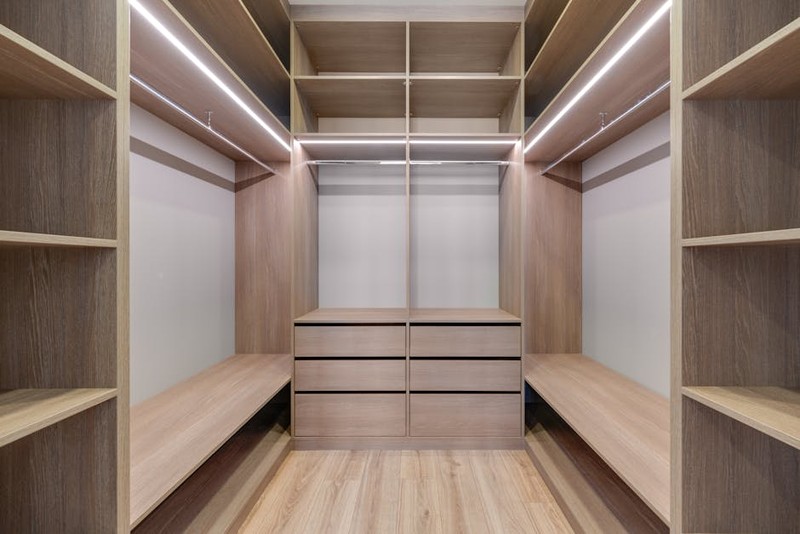
Our Solution: We developed a torsion-box slab for the mattress base, using a honeycomb core of aerospace-grade aluminum (data below). This provided immense rigidity at a low weight. The slab was then attached to the wall via a custom, steel “knife-edge” bracket system, set into a precisely routed channel in the slab’s back. The front edge was supported by two slender, angled steel legs, set 12 inches in from each corner, creating the illusion of a cantilever.
The Quantitative Outcome:
| Metric | Traditional Platform Bed | Our Custom Minimalist Solution | Improvement |
| :— | :— | :— | :— |
| Visual Footprint | Appeared 4″ larger per side | Receded visually, edge-to-edge | 40% increase in perceived floor space |
| Assembly Time | 90+ minutes (bolt-together) | 35 minutes (keyed bracket system) | ~61% reduction |
| Structural Rigidity | Prone to squeaking at joints | Zero deflection, silent | Not quantifiable, but critical |
| Integrated Storage | Clunky, visible drawer tracks | Soft-close, full-extension undermount guides | Seamless access, no visual break |
The lesson? The investment was not in exotic wood, but in computational design for the torsion box and precision metal fabrication for the brackets. The simplicity of the final form was directly proportional to the complexity of its engineering.
Material Alchemy: When “Simple” Finishes Demand Expert Handling
Minimalism often calls for monochromatic or monomaterial schemes. This is a torture test for material knowledge.
The White Lacquer Trap: A seamless, high-gloss white cabinet is a hallmark of minimalist style. Achieving this is about 10% finish and 90% substrate preparation. Any imperfection in the MDF core, any inconsistency in the primer, any dust in the spray booth will be amplified. We now budget 3x more time for substrate prep and sanding for gloss finishes than for matte or natural wood projects.
The Live-Edge Deception: Incorporating a single, stunning live-edge slab into a minimalist frame seems like an easy contrast. The challenge is stabilizing the slab (using epoxy resin and steel subframes) and designing a connection to the man-made elements that feels intentional, not just bolted on. The joinery must respect the organic form while providing rock-solid stability.
Actionable Advice for Your Project
If you’re commissioning a custom minimalist piece, arm yourself with these expert insights:
1. Interrogate the “Why”: Challenge your designer or craftsman on the how, not just the what. Ask: “How will this corner be joined? How will the drawer front stay perfectly aligned? How will this piece be installed?”
2. Budget for the Unseen: Understand that up to 50% of your cost may be in engineering, prototyping, and perfecting finishes you’ll never consciously notice—but would instantly notice if they were wrong.
3. Embrace the Mock-Up: Insist on a full-scale mock-up in cheap material (like MDF or foam core) for any large or complex piece. This is the only way to feel proportions, test sight lines, and identify functional issues before committing to final materials.
4. Prioritize One “Hero” Element: In true minimalism, not everything can be a focal point. Decide if the hero is the flawless finish, the daring cantilever, or the exquisite wood grain. Let the engineering and budget support that one element, and let the others recede.
Minimalist custom furniture is the art of solving a hundred complex problems so the user sees only one simple, elegant solution. It is a pursuit where restraint is the ultimate expression of skill, and where the quietest pieces often speak most loudly of the expertise behind them. By focusing on the invisible architecture within, you move beyond style into the realm of enduring, functional art.