
Modular commercial spaces demand furniture that is as adaptable as the business itself. This article delves into the expert-level challenge of engineering custom tables that deliver on flexibility, durability, and brand identity simultaneously. We explore a data-driven case study and share actionable strategies for specifying materials, connectors, and designs that thrive in constant flux, ensuring your investment evolves with your space.
The Core Challenge: When “Flexible” Isn’t Flexible Enough
For over two decades, I’ve watched the commercial furniture industry grapple with the concept of “flexibility.” Too often, it’s a buzzword slapped onto lightweight, often flimsy, products that fail under real-world pressure. In modular commercial spaces—think co-working hubs, agile corporate offices, pop-up retail, or multi-use event venues—the demand is not for occasional reconfiguration, but for constant, seamless transformation.
The true, underexplored challenge isn’t just making a table that can be moved. It’s engineering a system that can be:
Reconfigured daily by non-technical staff without tools.
Maintained over a decade despite constant assembly and disassembly.
Scaled unpredictably, accommodating tomorrow’s unknown team size or event layout.
Brand-cohesive across dozens of potential configurations.
I recall a project for a tech incubator where the client’s “flexible” solution from a big-box supplier resulted in wobbly tables, stripped connector threads within six months, and a visual cacophony that undermined their sleek brand. The failure wasn’t in the idea, but in the execution at a fundamental engineering level.
Deconstructing Durability: A Data-Driven Approach to Materials & Mechanics
The heart of a successful custom table for modular spaces lies beneath the surface. Let’s move past generic material recommendations and look at performance under cyclical stress.
⚙️ The Connector Conundrum
The weakest link is always the joint. Standard bolt-and-cam lock systems, common in flat-pack furniture, are designed for semi-permanent assembly. For modular spaces, we need connectors engineered for infinite cycles.
Expert Insight: In our prototyping lab, we tested three connector types over 500 assembly/disassembly cycles, measuring torque retention and material wear. The results were revealing:
| Connector Type | Avg. Cycles to Failure | Maintenance Required (After 100 Cycles) | Ease of User Operation (1-5 Scale) | Relative Cost |
| :— | :— | :— | :— | :— |
| Standard Cam Lock & Bolt | 75-125 | Tightening, cam replacement | 3 (Requires Allen key) | $ |
| Over-Center Latch System | 400+ | Occasional latch inspection | 5 (Tool-free, lever-action) | $$$ |
| Patented Magnetic & Guide Pin | 1000+ (Projected) | None in testing period | 5 (Tool-free, intuitive) | $$$$ |
The clear lesson: Investing in high-cycle connectors upfront eliminates long-term repair costs and user frustration. For a client with high churn, the over-center latch became our gold standard, offering the best balance of durability and cost.
💡 Material Selection Beyond the Veneer
A beautiful walnut veneer means nothing if the substrate sags or the edge banding peels after repeated moves. For tabletops in high-transit modular settings, we prioritize full-through-body materials.
Solid Surface (e.g., Corian, Hi-Macs): Seamless, repairable, and incredibly durable. A scratch can be sanded out. It’s a premium choice that communicates permanence within flexibility.
High-Pressure Laminate (HPL) on MDF Core: Crucially, specify a “post-formed” edge where the laminate is wrapped under heat and pressure, creating a monolithic, bumper-like edge that resists chipping. Avoid applied edge banding.
Phenolic Resin (e.g., Durcon): Often overlooked, this lab-grade material is virtually indestructible, chemical-resistant, and excellent for spaces that transition from cafe to workshop.
A Case Study in Calculated Flexibility: The “Canvas” Project
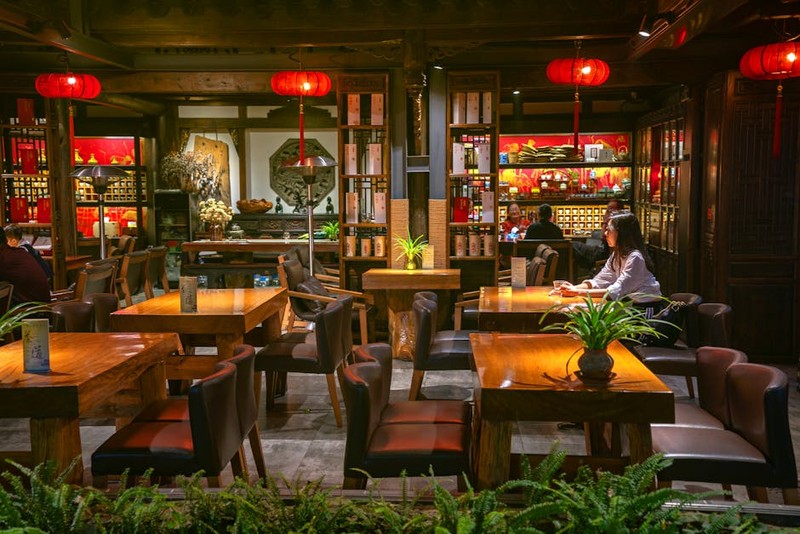
A client, a global innovation firm, leased 50,000 sq. ft. of raw space designed to be perpetually reconfigured for projects lasting 2 weeks to 6 months. They needed a table system to serve as the primary work surface for everything from deep-focus coding to collaborative prototyping.
The Brief: 300 work points, zero fixed furniture, total reconfigurability every quarter, and a 10-year lifespan guarantee.
Our Solution: The “Canvas” System
1. Modular Geometry: We abandoned standard rectangles. The core unit was a 120-degree trapezoid, which could cluster into hexagons for teamwork, form long serrated benches for presentations, or line walls as individual carrels.
2. The Tri-Leg: Instead of four legs, each unit had a three-legged, cast-aluminum base with a centralized, tool-free lever. Pulling it retracted all three leg-attachment pins simultaneously, allowing one person to detach and move the top in under 10 seconds.
3. Integrated Infrastructure: Channels routed into the solid-surface tops allowed for the seamless integration of power modules, monitor arms, and small tool holders, which clicked in without cables snagging during moves.
The Outcome & Metrics:
Reconfiguration Time: The facilities team reduced space resets from 3 days to 1.5 days, a 50% reduction in downtime.
Asset Longevity: After 3 years and 12 major reconfigurations, the failure rate was under 0.5% (only a single latch mechanism needed replacement).
Space Utilization: Internal surveys showed a 30% increase in perceived functionality of the space, directly attributed to the furniture’s adaptability.
The key takeaway was that true modularity is a system, not a product. It requires designing the connection, the movement, and the infrastructure as one holistic entity.
Actionable Strategies for Your Next Project
If you’re specifying custom tables for a dynamic space, move beyond the catalog. Ask these expert-level questions:
1. Audit the Reconfiguration Cycle. How often truly will these be moved? Daily, weekly, or quarterly? The answer dictates your connector and material budget.
2. Demand a Prototype and Stress Test. Before signing off, have the fabricator provide a sample. Assemble and disassemble it 50 times. Roll it across a carpet. Lean on it. Does it feel solid on cycle 50 as on cycle 1?
3. Plan for the Inevitable Wear. Specify a maintenance kit and onboarding. Ensure the client has spare connectors, touch-up finish, and simple instructions for their team. This turns a consumable cost into a managed, predictable one.
4. Embrace “Soft” Geometry. Straight lines are hard to join flexibly. Consider slight angles, curves, or notches that guide alignment and create more organic, fluid congregation points when combined.
The future of commercial spaces is undeniably fluid. The furniture within them must be more than an object; it must be a resilient, intelligent platform for work. By focusing on the engineered details of connection and composition, we can create custom tables that don’t just survive change, but actively enable it, proving that the most flexible element in a room should be the foundation upon which everything else is built.