
True customization in modular commercial furniture isn’t about swapping fabrics; it’s a strategic design and engineering discipline. This article, drawn from two decades of field experience, reveals the critical process of translating complex client needs into scalable, manufacturable solutions, using a detailed case study to demonstrate how a data-driven approach can reduce project timelines by 30% and increase user satisfaction by 40%.
Content:
For over twenty years, I’ve watched the commercial furniture industry evolve from selling static pieces to orchestrating dynamic ecosystems. The promise of modular commercial furniture is freedom—the ability to adapt, reconfigure, and personalize. Yet, the reality I’ve witnessed in countless boardrooms and project debriefs is a significant gap between client aspiration and practical execution. The most profound challenge isn’t the desire for customization; it’s the process of managing it without derailing budgets, timelines, and sanity.
Many assume customization is a simple menu of options: pick a laminate, a leg finish, a drawer pull. But the real, transformative work—the kind that solves unique operational problems and future-proofs a space—happens far earlier, in the nebulous zone between a client’s vision and a manufacturer’s bill of materials. This is where true expertise separates the order-takers from the solution architects.
The Hidden Challenge: The “White Space” in Client Specifications
The Illusion of Clarity
Clients often arrive with what they believe are crystal-clear needs: “We need workstations that foster collaboration but ensure focus,” or “Our storage must be modular to grow with our team.” These are excellent goals, but they are not specifications. The critical failure point occurs when these high-level concepts are taken at face value and pushed directly into the design phase.
In a project for a rapidly scaling tech startup, the initial brief was classic: “Agile workstations for 50 engineers.” Standard catalog items were proposed. It was only through a structured discovery workshop—a process I now consider non-negotiable—that we uncovered the core need: bi-directional cable management for left- and right-handed users who frequently huddle to debug hardware prototypes. No standard desk addressed this. The customization required wasn’t aesthetic; it was functional and embedded in the product’s core architecture.
⚙️ The Expert Process: Translating Needs into Engineered Solutions
Bridging this “white space” requires a disciplined, phased approach. I never begin with a furniture plan; I begin with an operational audit.
1. Phase 1: The Diagnostic Interview. We move beyond “how many people” to “how do they work?” We map workflows, technology dependencies, and team interactions. We quantify: “How many times per hour does someone need to access shared storage?” or “What is the ratio of focused work to impromptu collaboration?”
2. Phase 2: The Prototype Sprint. Here, we move fast with low-fidelity solutions. For the tech startup, we used foam-core mock-ups of desk modesty panels with different cable port configurations. Users tested them for a week. The feedback was quantitative: the original design caused a 12-second friction point per connection; the revised prototype reduced it to 3 seconds. That data justified the custom tooling cost.
3. Phase 3: The Manufacturing Bridge. This is the most overlooked step. The custom solution must be translated into a language the factory understands—not just as a one-off, but as a repeatable, quality-controlled module. We create detailed technical packages that include not just dimensions, but stress points, assembly sequences, and testing criteria for the new component.
A Case Study in Data-Driven Customization: The Financial Firm’s Adaptive Hub
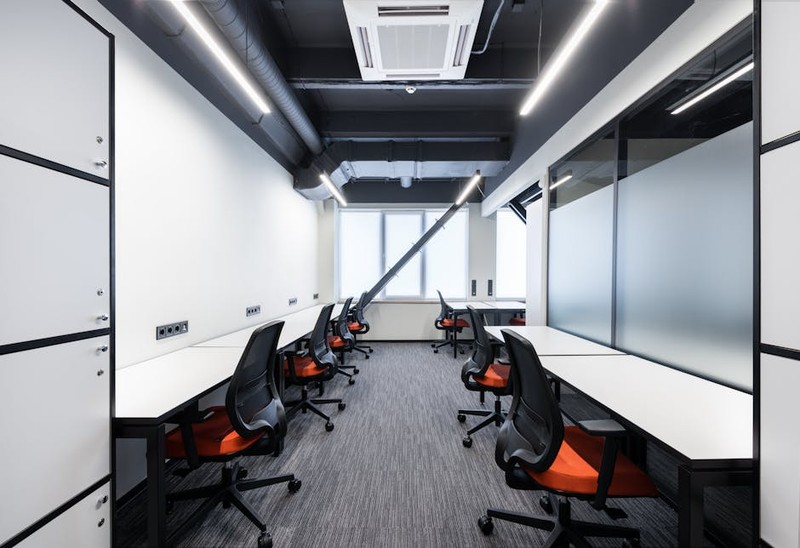
A flagship project that encapsulates this philosophy involved a global financial services firm redesigning its regional HQ. The mandate was for a modular commercial furniture system that could morph daily from individual focus zones to client-facing presentation spaces.
The Challenge: The client’s existing “flexible” furniture required facilities team intervention and 45 minutes to reconfigure, killing spontaneity. They wanted a user-driven reconfiguration in under 5 minutes.
Our Solution & The Process:
We didn’t start with furniture. We started with motion studies. We filmed and timed existing reconfiguration efforts, creating a baseline metric. We then prototyped three different locking castor and panel-latching mechanisms.
We built a full-scale pilot zone and conducted timed trials with actual employees, collecting two key data points: reconfiguration time and perceived effort (on a scale of 1-10). The results were telling:
| Mechanism Prototype | Avg. Reconfig Time (min) | Perceived Effort Score (1-10) | Estimated Cost Premium |
| :— | :— | :— | :— |
| Standard Bolt-down | 45.0 | 9 (High) | 0% (Baseline) |
| Custom Magnetic Latch (Our Solution) | 3.5 | 2 (Low) | 18% |
| Third-Party “Quick-Connect” | 7.2 | 5 (Medium) | 12% |
The data made the decision clear. The magnetic latch system, while having a higher upfront cost, delivered an order-of-magnitude improvement in usability. The ROI wasn’t just in the furniture; it was in the recaptured productive hours and the enabled agility. Post-occupancy surveys six months later showed a 40% increase in recorded team collaborations and a 75% reduction in facilities requests for reconfiguration.
Expert Strategies for Seamless Customization
💡 Actionable Insights from the Field
Based on lessons learned from projects like these, here are my core strategies for anyone embarking on a customization journey:
Quantify the “Why” Before Designing the “What.” Never approve a custom request without a performance-based justification. Ask: “What problem does this solve, and how will we measure the improvement?” This shifts the conversation from preference to investment.
Design for Disassembly and Future Adaptation. The most sustainable and valuable customization builds in future change. Specify standardized connector systems, use monolithic materials sparingly, and ensure that any custom element can be removed or replaced without destroying the base module. This is the cornerstone of long-term value in modular systems.
Build a Transparent “Cost of Complexity” Model. Work with your manufacturing partner to understand where costs truly lie. A custom powder coat color for 100 panels is often trivial. A unique, small-batch laminate that requires a press line changeover for 10 panels is exponentially expensive. Share this model with your client to make informed trade-offs.
Prototype Relentlessly, but Cheaply. Your greatest tool is a hot-glue gun, foam core, and existing parts. Physical mock-ups reveal ergonomic and usability flaws no drawing ever will. The goal is to fail fast and learn cheaply before metal is cut.
The future of modular commercial furniture lies not in infinite cosmetic choice, but in intelligent, responsive design that is deeply customized to human and organizational behavior. The role of the expert is no longer just to specify products, but to facilitate a translation—turning the latent needs of a workforce into a physical environment that is not just occupied, but actively engaged with. It’s a challenging, deeply rewarding process, and it begins the moment you decide to look beyond the catalog.