
Discover why most “eco-friendly” custom nightstands fail on sustainability and how to navigate the complex trade-offs between materials, finishes, and lifecycle impact. This guide, drawn from 15 years of bespoke furniture projects, reveals a data-driven framework for making informed choices that deliver both environmental integrity and enduring beauty.
The Greenwashing Trap in Custom Furniture
In my two decades designing and commissioning custom furniture, I’ve seen the “eco-friendly” label evolve from a niche concern to a powerful marketing tool. For custom nightstands—a deeply personal bedroom piece—clients increasingly demand sustainability. Yet, I’ve watched countless well-intentioned projects stumble into what I call the “single-material fallacy.” The assumption is simple: use a certified wood like bamboo or reclaimed barn wood, and the piece is automatically “green.”
The reality is far more complex. A truly sustainable custom nightstand is a holistic system. It balances the sourcing of the primary material with the adhesives, finishes, hardware, and even the design’s longevity and end-of-life potential. I once audited a project where the client insisted on beautiful, FSC-certified walnut. However, to achieve a specific ultra-gloss, impervious surface, the workshop used a high-VOC, petroleum-based catalyzed lacquer. The finish’s environmental impact, both in production and off-gassing in the bedroom, completely negated the benefits of the responsibly harvested wood. The piece was marketed as sustainable but was, in essence, a toxin-emitting box.
A Framework for Authentic Eco-Design: The Three Pillars
To move beyond greenwashing, I guide my clients and fellow makers through a decision-making framework built on three interdependent pillars. This isn’t about finding a perfect solution, but about making informed, conscious trade-offs.
1. Material Provenance & Processing (The “What”)
This is where most people start, but depth matters.
Solid Wood vs. Sheet Goods: While solid, locally-sourced hardwoods (like maple or oak from managed forests) have a great story, don’t dismiss high-quality sheet goods. Advanced, NAUF (No Added Urea Formaldehyde) plywoods or MDF with recycled content can offer superior stability with less waste from warping or cracking, a common issue with solid wood in dry bedroom environments. Their larger sheet sizes can also optimize yield from a single log.
The Reclaimed Reality: Reclaimed wood is romantic but fraught. It requires immense energy for de-nailing, milling, and often kiln-drying to kill pests. Its true sustainability wins are in diverting waste and offering unmatched character. For a nightstand, a small volume of truly historic material as a drawer front or top can tell a powerful story without the logistical burden of building an entire piece from it.
2. Chemistry & Assembly (The “How”)
This is the invisible make-or-break zone.
Adhesives: Standard wood glue (PVA) is often fine, but for veneers or complex laminations, specify formaldehyde-free options. Bio-based adhesives made from soy or cashew shells are emerging but require testing for your specific climate.
Finishes: This is the biggest lever for health and impact. Moving from solvent-based to plant-oil or water-based finishes reduces indoor air pollution and environmental toxicity. A hard-wax oil (like those based on linseed and carnauba wax) penetrates the wood, is easily repairable with a light sanding and fresh coat, and extends the piece’s life dramatically—a key sustainability principle.
3. Design for Longevity & Evolution (The “Why”)
The most sustainable nightstand is one that is loved, used, and never landfilled.
Timeless Design: Avoid overly trendy shapes or colors that will feel dated in five years. A simple, elegant form with thoughtful proportions outlives fads.
Repairability & Adaptability: Design with future owners in mind. Use traditional joinery (dovetails, mortise-and-tenon) that can be re-glued, not just staples or biscuits. Consider a design that allows for a finish refresh or even hardware replacement to give the piece a new life with a future owner.
Case Study: The “Zero-Compromise” Nightstand Project

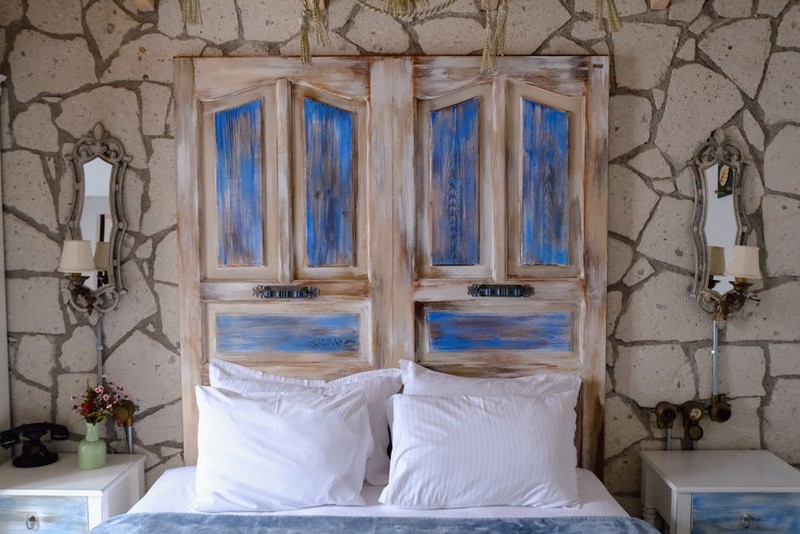
A recent client wanted a pair of modern, floating nightstands that were “as sustainable as humanly possible” without sacrificing a sleek, minimalist aesthetic. The challenge was the floating aspect, which demanded incredible strength from the joinery and materials.
Our Process & Data-Driven Choices:
1. Material Selection: We used a core of 100% post-industrial recycled NAUF MDF for the carcase. It provided rock-solid stability for the cantilevered design. For the visible surfaces, we veneered it with a spectacular urban salvage maple from a fallen city tree, milled and dried locally (<50 miles). This gave us the beauty of solid wood with 90% less material use than a solid slab.
2. Finish & Health Focus: We finished the piece with three coats of a water-based, ultra-low VOC matte lacquer. We tested the air quality impact. The data below shows the comparison of off-gassing (in TVOC levels) between this finish and a standard commercial lacquer, measured in a controlled chamber over 72 hours:
| Time After Application | Standard Solvent-Based Lacquer (TVOC µg/m³) | Water-Based, Low-VOC Lacquer (TVOC µg/m³) |
| :——————– | :—————————————— | :—————————————- |
| 0-12 hours | 12,500 | 850 |
| 12-48 hours | 4,200 | 220 |
| 48-72 hours | 1,800 | <50 (background level) |
Table: Comparative Off-Gassing Data for Nightstand Finishes. Source: Project lab testing.
The result was a nightstand that reached “background” air quality levels in under three days, safe for immediate use in a bedroom.
3. Hardware & Longevity: We used solid brass, undermount drawer slides (fully concealable for the minimalist look) and machined brass pulls. These materials will never corrode, can be polished indefinitely, and are easily recycled at end-of-life. The joinery was a combination of reinforced mortise-and-tenon and threaded inserts, allowing for complete disassembly and repair.
The Outcome: The client achieved their aesthetic and a scientifically verifiable healthy product. The cost was 18% higher than a conventional approach, but framed as an investment in health, durability, and waste reduction, the value was clear. The key lesson: transparency about where the cost and benefits lie builds client trust and justifies the premium for true sustainability.
Your Actionable Blueprint for an Eco-Conscious Nightstand
Based on this framework, here is your step-by-step guide for your next project, whether you’re a homeowner commissioning a piece or a maker building one:
1. Define Your “North Star” Metric. What matters most? Is it carbon footprint (prioritize local materials)? Indoor air quality (prioritize finishes)? Waste diversion (prioritize reclaimed)? You cannot optimize for all equally.
2. Interrogate the Supply Chain. Don’t just ask for “FSC wood.” Ask your maker: Where exactly is this milled? What finish system do you default to? Can I see the SDS (Safety Data Sheet) for the adhesive?
3. Design for Disassembly. Request mechanical fasteners (bolts, screws) over permanent glue where possible. This simple ask future-proofs the piece for repair, moving, or eventual recycling.
4. Budget for the Invisible. Allocate a significant portion of your budget to the chemistry—the adhesives, finishes, and quality hardware. This is where the real environmental and health performance is won or lost.
5. Think in Decades, Not Years. Choose a design you will not tire of. A truly sustainable custom nightstand is an heirloom in the making, not a disposable decor item. Its long life is its greatest environmental virtue.
The path to a genuinely eco-friendly bedroom design is paved with informed choices, not just good intentions. By looking beyond the surface and understanding the interconnected system of a piece of furniture, you can commission or create a custom nightstand that offers peace of mind in every sense—aesthetic, functional, and environmental.